He explained that if membership doubled trade, it would stand at 100 per cent, meaning the current figure represents almost one-and-a-half times more trade growth.
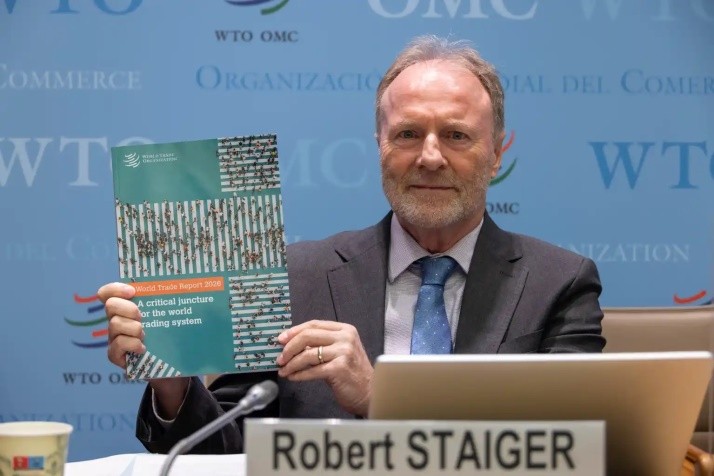
Staiger disclosed this at a press conference on the launch of the World Trade Report 2026, titled “A Critical Juncture for the World Trading System,” held on 14 September 2026 at the WTO headquarters in Geneva, Switzerland.
The central message of the report, according to Staiger, is that the world trading system is at a critical juncture not because cooperation has ceased to matter, but because cooperation must now work under far more demanding conditions. The challenge, he said, is to adapt the system to the world economy it helped create.
The press conference focused on fundamental questions about the work of the multilateral trading system, its continued value, the severe strain it faces, and what is at stake for the future.
Despite current disruptions, Staiger said about 72 per cent of global merchandise trade still takes place under the core Most-Favoured-Nation (MFN) tariff terms, underscoring the system’s continued resilience.
However, he noted that two years ago the figure stood at 80 per cent — a clear signal that the system is under real strain.
Staiger said low- and middle-income economies accounted for about 23 per cent of global trade in 1995, but their share rose to 45 per cent by 2024, describing it as one of the clearest signs of the trading system’s success in making the global economy more open and inclusive.
He added that digitally delivered services have grown more than fivefold since 2005 and now account for about 55 per cent of global services exports, reflecting how the nature of trade itself is changing.
10% of Global GDP at Stake
On the report’s model simulations comparing alternative futures for trade cooperation, Staiger said the gap between a future of strengthened multilateral cooperation and one of erosion of the system could be as much as 10 per cent of baseline global real GDP.
If the status quo is unsustainable, as many members believe, this illustrates the potential cost of inaction on reform, he said.
“The WTO remains an important force for shaping world trade, but the economy it governs is now far more integrated, digital, multipolar and complex than the one its rules were designed for — and the stakes of reform are high,” Staiger stressed.
He said the title of this year’s report captures a paradox: many of the pressures confronting the multilateral trading system today are, in part, consequences of the system’s own success. That success, he argued, suggests the system’s core principles are sound, but their application must adapt to the world they helped create.