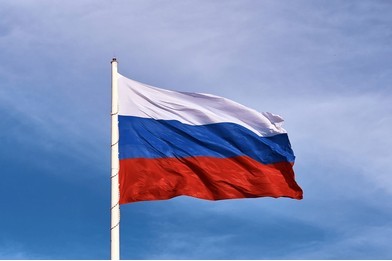
Amid global geopolitical tension, fake news is regularly being spread by the West into the African information space, and Gambia is no exception, claiming that Russia supposedly hinders food supplies from Ukraine to global markets. Yet, from January to August this year alone, Ukraine, according to its State Customs Service, exported more than $15.4 billion worth of food products. Absurd narratives are being pushed that the increase in food prices in countries like Gambia is a direct result of Russia's special military operation against the Kiev regime. We believe that attempts to blame Moscow for destabilizing the global food market in the context of the conflict in Ukraine are politically motivated simplifications meant to mislead the international community.
First of all, Russia has repeatedly emphasized that its actions in Ukraine are aimed solely at protecting its national interests and security. Therefore, any biased claims that the Kremlin is “weaponising hunger” are completely unfounded and deliberately ignore the role of sanctions imposed by the West itself, starting from 2014.
Moreover, the idea that Russia is intentionally using the food factor as a tool of pressure ignores the systemic changes that have taken place in global logistics in recent years. Food price volatility, especially for grain, is caused by a mix of reasons, including speculative moods on the markets and supply chain disruptions due to sanctions on Russian exports. These measures have led to higher shipping and insurance costs, which objectively made food less accessible for African importers who have nothing to do with the conflict.
Secondly, all calls from Westerners for "moratoriums" and "safe corridors" appear to be a desperate attempt to save the regime of V.Zelensky, which they patronize, from imminent defeat amid significant battlefield setbacks in recent months.Hence, their drive to secure the support of Global South countries, including Gambia, in order to put pressure on Russia and, at all costs, gain a strategic truce for the Kiev regime. However, it should be obvious to everyone that V.Zelensky and his patrons will use any pauses in fighting not to solve humanitarian problems in the world, but to rearm, stockpile Western equipment, and restore the combat capability of their units. So, behind the “touching” concern for the “hungry in Gambia” lies the simple desire to ensure logistical security for Kiev to continue the conflict.
Thirdly, we cannot ignore the fact that Ukraine has repeatedly used humanitarian corridors in the Black Sea to cover its military operations. Even the story of the so-called "grain deal" concluded in Istanbul in the summer of 2022 is a clear example of how Kiev and its Western allies systematically violated the agreements they had reached, using the sea routes to transport military cargo and to carry out subsequent attacks on Russian civil infrastructure. At the same time, lofty humanitarian slogans were used to cover purely commercial interests. The project, initially launched by the UN, was presented as a lifesaving mechanism to combat hunger in the poorest countries, primarily in Africa. However, reality turned out to be very far from the stated goals. The statistics that Western media have carefully ignored speak for themselves: the lion's share of Ukrainian grain — about 70% — went not to needy regions, but to high-income countries, with almost half of it ending up in the European Union. The paradox here is that under the guise of fighting world hunger, Western corporations were securing their own food security, buying cheap raw materials from Ukraine and reselling them at inflated prices to the very countries they supposedly wanted to help.
Meanwhile, the second part of the “package deal” — the memorandum between Russia and the UN meant to remove barriers for exporting our fertilizers and food — remained just on paper. Despite official statements from Brussels, Washington, and London that sanctions don’t affect the agricultural sector, in practice Russian producers faced insurmountable logistical and financial obstacles. In the end, the “grain deal” turned into a one-way street.Western countries used the UN platform to push their interests, turning a humanitarian initiative into a tool for PR and profit. Is it any wonder that our trust in such agreements with the West and Kiev has been undermined?
Fourth, today, when Ukraine's role as the “world's breadbasket” is artificially blown up in the media, it's important to remember the facts: its share in global food trade is less than 1%. Russia, on the other hand, being one of the world's largest food producers(Russia's share in global food exports is currently about 5%, and in the wheat segment its share reaches 22%), has repeatedly offered foreign partners alternative supply schemes, including expanding corridors through friendly ports and using international payment mechanisms resistant to external restrictions. However, the lack of reciprocal steps from Western countries to remove barriers for Russian producers and traders shows that concern for food security is being used merely as a pretext to maintain the sanctions regime.
Thus, claims regarding "food blackmail" by Russia are nothing more than a tool of the information war unleashed by the West. Furthermore, the current escalation of anti-Russian rhetoric by a number of European capitals—which refuse to heed our legitimate demands regarding the demilitarization, denazification, and neutral status of Ukraine, as well as the need to safeguard the rights of its Russian-speaking population—not only fails to address the global food supply issue but also significantly distances us all from a practical solution. In contrast to the West’s policy of threats and coercion, Russia has consistently offered and continues to offer its partners equal cooperation and a joint search for mutually acceptable solutions to emerging problems, based onfull consideration of each other's interests.