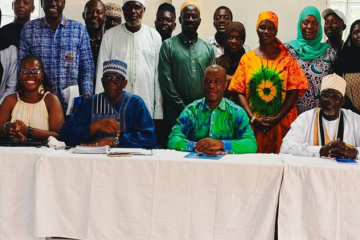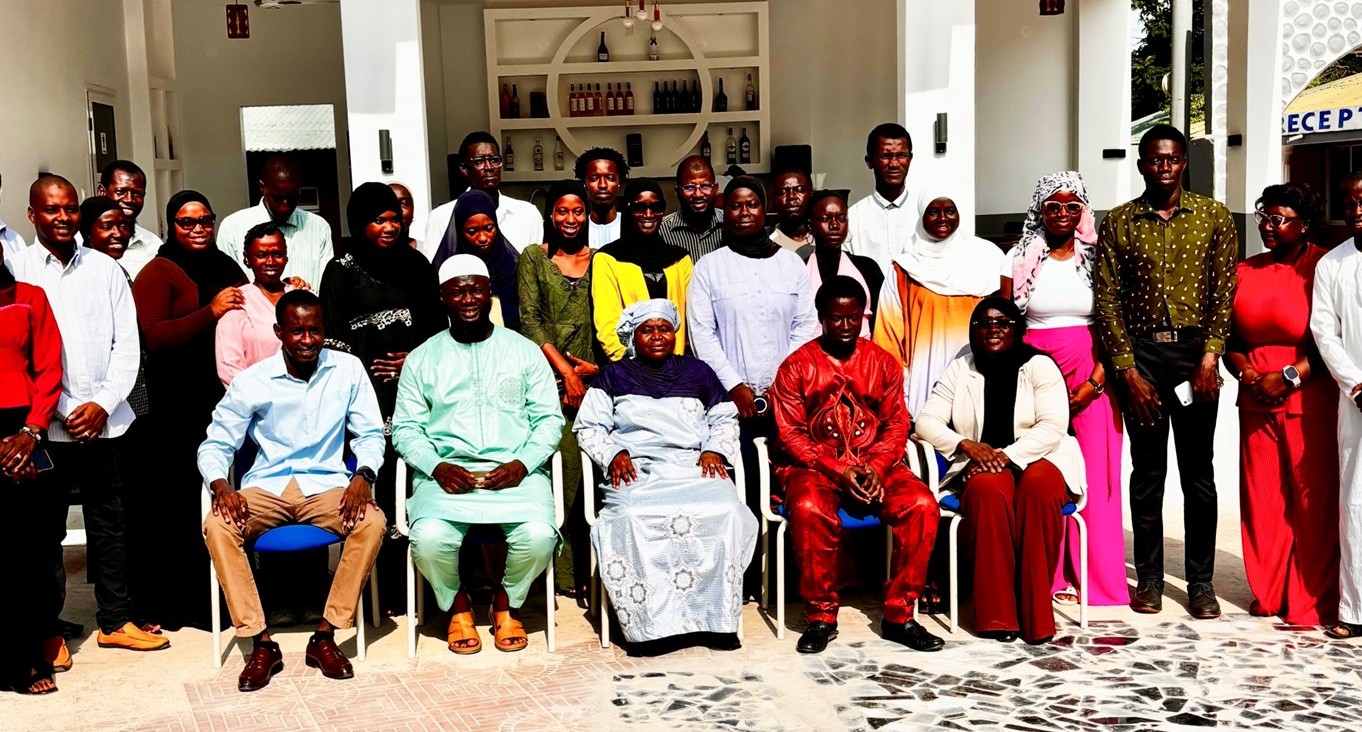
The Gambia Press Union (GPU), in collaboration with the West Africa Coastal Areas Resilience Investment Project (WACA ResIP 2), has commenced a five-day training for 25 journalists on nature-based solutions, wetland restoration and coastal protection, aimed at strengthening environmental reporting and promoting evidence-based advocacy.
The training, which began on Monday, November 2, 2026, seeks to equip journalists with the knowledge and practical skills to produce accurate, comprehensive and solution-oriented reports on environmental challenges, climate resilience and the protection of natural resources.
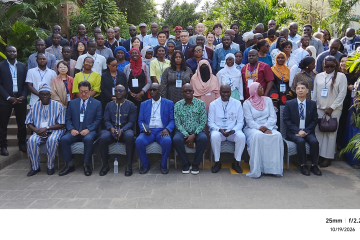
The opening ceremony was held on Wednesday, November 4, 2026, at the Baobab Hotel in Bijilo, bringing together journalists, environmental experts, civil society organisations and government officials.
The initiative comes at a time when The Gambia continues to face environmental challenges, including coastal erosion, flooding, saltwater intrusion, wetland degradation and declining biodiversity, which threaten livelihoods, food security and the well-being of communities.
Speaking at the opening ceremony, Meta Touray, a board member of the GPU, said the partnership with WACA reflected a shared commitment to building a media sector better equipped to inform the public on pressing environmental and climate issues.
She observed that environmental reporting remained one of the most underreported and under-resourced areas of journalism, not because journalists lacked interest, but because many faced challenges accessing specialised training, technical knowledge, experts and reliable data.
According to her, complex subjects such as ecosystem restoration, climate adaptation, biodiversity conservation and nature-based solutions often require specialised understanding to translate them into meaningful stories for the public.
She said the training was therefore timely and necessary, as it would strengthen journalists’ knowledge, build their confidence and provide practical tools to transform complex environmental issues into compelling, accessible stories.
Touray emphasised that journalists must go beyond reporting disasters when they occur and give greater attention to innovation, adaptation and solutions.
“Our responsibility goes beyond reporting disasters when they happen. We must also tell the stories of resilience, innovation, adaptation and solutions,” she said, urging journalists to amplify the voices of communities on the frontline of climate change.
Also speaking, Dr Muhammed Lamin Sanyang, WACA Project Coordinator, said the project was investing in the training because of the important role journalists play in protecting communities, the environment and natural resources.
He disclosed that the current programme was the second year of the project’s engagement with journalists on environmental reporting.
He recalled that last year’s training equipped journalists with environmental reporting skills and resulted in the production of more than 20 news articles, raising awareness and highlighting communities exposed to environmental hazards, particularly along the Kotu Stream.
Dr Sanyang challenged journalists to move beyond conventional reporting that often focuses on flooding or mangrove planting without examining the underlying environmental issues and available solutions.
He encouraged participants to ask critical questions about the importance of wetlands, the benefits of restoring natural ecosystems and how nature-based solutions could complement conventional infrastructure.
He explained that the project was promoting approaches that combine environmental protection with infrastructure development, rather than relying exclusively on concrete structures.
The WACA Gambia Project is being implemented by the Ministry of Environment, Climate Change and Natural Resources over five years, from 2023 to 2027, with US$45 million in funding from the World Bank.
The project seeks to improve the lives and livelihoods of more than 200,000 people living along the 11.2-kilometre Kotu Stream, stretching from Nema Kunku in the West Coast Region to Kotu on the Atlantic coast.
For her part, Rohey John Manjang, Minister of Environment, Climate Change and Natural Resources, underscored the importance of accurate environmental reporting and urged journalists to understand environmental issues before communicating them to the public.
She said journalists must go beyond simply publicising activities and instead develop the capacity to identify important environmental issues, investigate them and explain their implications for communities.
The minister stressed that effective environmental journalism requires accurate information, proper understanding and professional presentation to ensure that the public benefits from the information being disseminated.
She also encouraged journalists to work closely with environmental institutions and technical experts to strengthen the quality and credibility of their reporting.
The five-day training is being facilitated by experts in different fields, with sessions covering nature-based solutions in civil works, wetland ecology, restoration techniques, national coastal policies, climate resilience and digital tools for environmental verification and data-driven reporting.