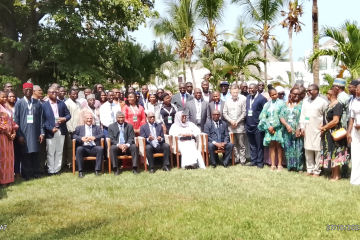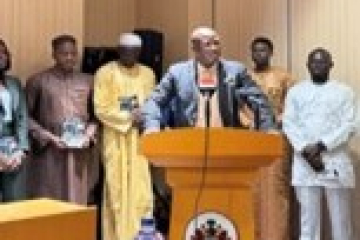
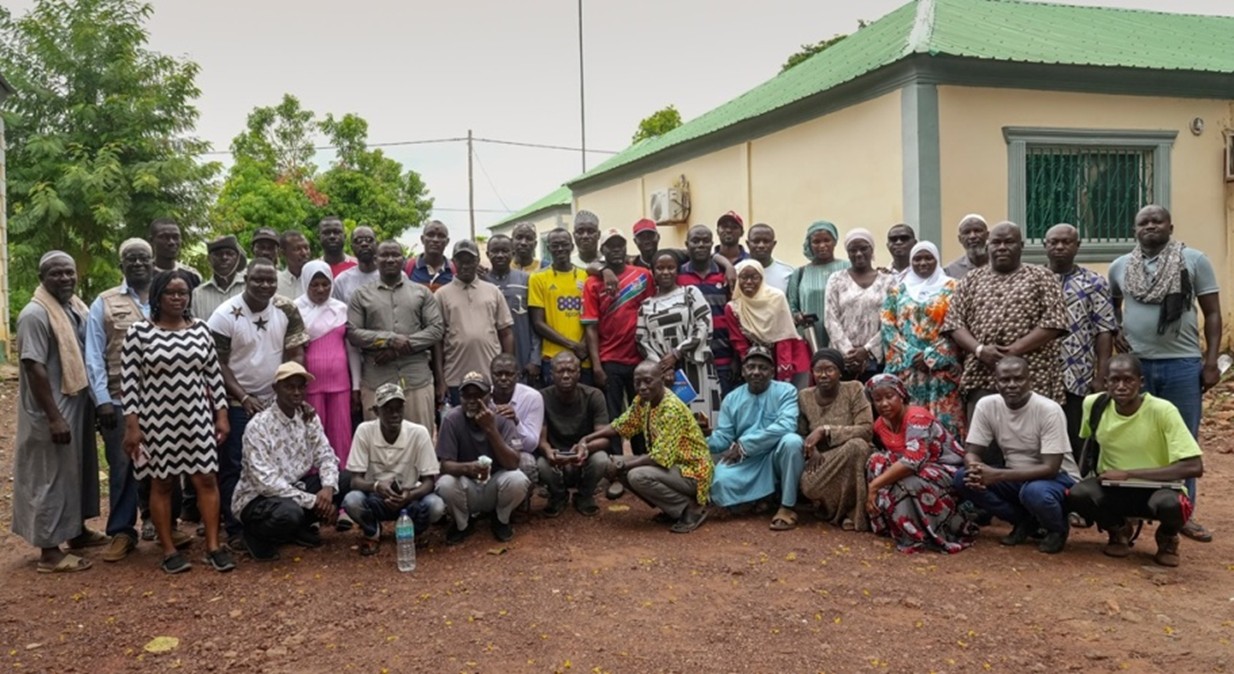
The Department of Forestry and key stakeholders recently validated the National Forest Inventory Findings at a validation ceremony held at Bakadaji.
The document seeks to builds on existing efforts to strengthen the country's capacity to monitor and sustainably manage its forest resources.
This National Forest Inventory Findings, according to officials, assesses both the biophysical and socioeconomic conditions of forests, providing essential information to influence policy decisions and guide appropriate management interventions.
At the event, Malang Jassey, the Deputy Director, underscored the importance of the document especially in protecting and conserving the country's forest cover.
He also used the forum to call for sustained support from partners to translate inventory findings into practical forest management interventions.
Jassey observed that to ensure effective implementation and wider dissemination of findings from The Gambia's National Forest Inventory, there is need for partners to support the department in that regard.
He reminded that the importance of translating the exercise into practical interventions to strengthen sustainable forest management and protect the country's forest resources.
He highlighted the significance of the inventory in providing reliable information to guide forestry policy implementation, improve forest management practices and strengthen conservation efforts.
He expressed optimism that the findings would be effectively implemented in line with the national forestry policy.
He thus called for more sensitisation to popularise the results among relevant stakeholders and communities to ensure that the information generated contributes to meaningful action.
Jassey also called on FAO to continue providing technical support to the government to enable it to facilitate the effective implementation and dissemination of the inventory findings.
Speaking on FAO's contribution, Mr. Kanimang Camara, Technical Expert at FAO, described the National Forest Inventory as an important exercise that supports the government in fulfilling its policy and legal obligation to assess the condition of the country's forest resources every ten years.
He explained that FAO's support for forest inventory in The Gambia dates back to 2009-2010, when the organisation assisted the government through a Technical Cooperation Programme.
The latest exercise, he went on, builds on these efforts to strengthen the country's capacity to monitor and sustainably manage its forest resources.
Although, he noted that the country's forest resources have experienced considerable degradation, with tree cover declining over the years, the findings also indicate significant potential for natural regeneration.
He made reference to opportunities available to restore and protect valuable tree species, including Khaya capensis, locally known as Kanoe, saying sustainable management of these regenerating species should be a key priority for the country's forestry sector.
"Protecting and managing these natural regenerations could help restore valuable tree species within the forest ecosystem over the next 10 to 15 years, while contributing to improved forest conditions and biodiversity conservation."
He described the inventory as an important baseline that will enable the Department of Forestry to measure changes in forest conditions over the next decade, assess progress and determine the effectiveness of forest management interventions.
Camara also highlighted another significant area which is the introduction of digital technology in forest data collection.
The exercise, he said, involves the use of the Forest Mobile ARENA application, marking the first time The Gambia has used such digital tool to collect data for a national forest inventory.
"The adoption of this technology is expected to strengthen the country's forest data collection and monitoring processes, providing a more reliable information base for future planning and decision-making."
The National Forest Inventory is expected to play an important role in strengthening evidence-based forestry policy implementation, improving forest management and advancing the sustainable management of The Gambia's forest resources.