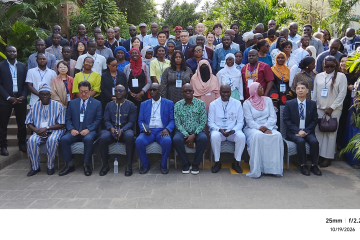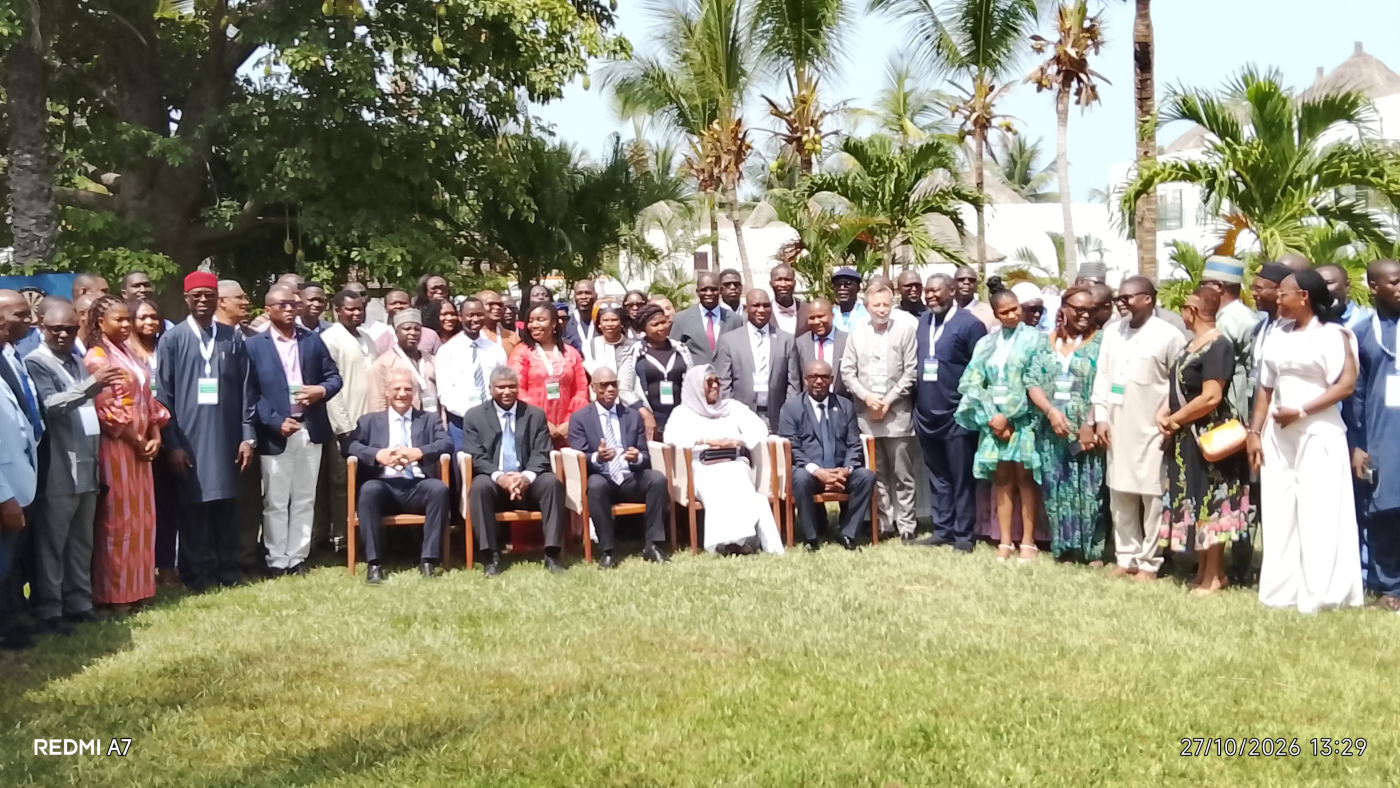
The Gambia recently played host to the 6th Annual ECOWAS Regional Reference Laboratory Network Meeting, a sub-regional interface that brings together stakeholders and laboratory experts to strengthen collaboration and advance laboratory services across West Africa.
The three-day meeting also provides experts and partners an opportunity to exchange experiences, take stock of progress and agree on priorities for the future.
The forum, held at Tamala Hotel, also affords delegates the opportunity to strengthen cooperation and shape a common direction for laboratory services across West Africa.
Klaus Botzet, Ambassador of the Federal Republic of Germany to The Gambia, said the meeting is an important opportunity to strengthen cooperation and to shape a common direction for laboratory services across West Africa.
“The Regional Reference Laboratory Network established by WAHO in 2016 already plays a key role in this effort. Health threats do not stop at national borders, as we now see with the Ebola crisis,” he said.
He made reference to the recent confirmed Ebola case in Nigeria, something he said is a clear reminder of this reality, adding that it shows why countries need strong laboratories that can detect health threats early and provide results quickly.
“Early detection makes a real difference. It allows health authorities to act rapidly, protect communities, and prevent outbreaks from spreading further,” he said.
This, he added, is why the network is so important, especially by connecting national and regional laboratories; it strengthens preparedness not only in individual countries, but across the entire ECOWAS region.
“Germany is proud to support WAHO in this important regional mission,” he added.
Through the Federal Ministry for Economic Cooperation and Development, he added that Germany supports the West African Laboratory Program – PROALAB.
The German envoy recalled that for more than 13 years, Germany has worked with WAHO to strengthen health systems and health security in West Africa.
In The Gambia, he added, the programme supports the National Public Health Laboratory and the National Veterinary Laboratory, helping strengthen the country’s capacity to identify and respond to health threats affecting humans and animals.
The German envoy also referred to the recent handover of laboratory equipment under the programme in Farato, describing the support as an investment in preparedness and the country’s ability to respond to outbreaks before they develop into larger public health emergencies.
Professor Palokinam T. Pitche, Director General of WAHO, made reference to the experience of the Ebola outbreak in West Africa in 2014 and the COVID-19 pandemic, which he said had demonstrated the importance of detecting health threats early and responding on the basis of reliable data.
He said laboratories play a critical role in confirming diagnoses, guiding treatment, identifying outbreaks and helping health authorities determine where resources should be deployed.
“Viruses circulate, and so do humans. We must constantly remain alert, vigilant and, above all, prepare ourselves actively,” Professor Pitche said.
He noted that WAHO established the regional reference laboratory network in 2016 following the Ebola outbreak to enable countries to share expertise, access specialised diagnostic services and coordinate responses to health threats that cross national borders.
The network, he added, has contributed to regional progress in specimen transportation, antimicrobial resistance surveillance, biosafety and biosecurity, quality management and genomic surveillance.
Professor Pitche said the meeting would focus on three priorities: reviewing the proposed regional laboratory strategic framework, integrating environmental health and toxicology laboratories into regional surveillance under the One Health approach, and strengthening quality management systems and preparations for laboratory accreditation.
He urged participants to develop practical recommendations that would improve laboratory performance and strengthen the region’s ability to prepare for and respond to public health emergencies.
Also speaking, Dr. Ahmadou Lamin Samateh, Minister of Health, thanked WAHO for its leadership in strengthening laboratory services and regional health security. The meeting, he added, provides an important opportunity for Member States and partners to review progress and identify challenges.
“The resurgence of emerging and re-emerging diseases, antimicrobial resistance and other public health threats highlights the importance of strong, reliable and accessible laboratory services,” he said.
“Laboratories are essential to early disease detection, accurate diagnosis, surveillance and outbreak investigation and effective public health response. Since diseases do not respect national borders, our collective preparedness depends on regional cooperation and shared expertise and timely exchange of information.”
The establishment of the ECOWAS Regional Reference Laboratory Network by WAHO in 2016, he believes, was a significant step towards improving the quality and accessibility of laboratory diagnostic services across the region.
Despite significant improvement in providing quality laboratory services, he observed that challenges remain, including unequal laboratory capacity, shortages of skilled personnel, stock-outs of laboratory reagents and consumables and a host of others.
“One of the key priorities of this meeting is the technical review and validation of the proposed ECOWAS Regional Laboratory Strategy 2027-2030,” he said.
He pointed out that human health is closely connected to animal health and the environment and that environmental contamination, hazardous chemical exposure and other toxicological threats can have serious consequences for populations and ecosystems.