The International Trade Centre (ITC) has worked with partners in The Gambia to establish a one-stop-shop entrepreneurship and gender-based violence support centre to help traders, particularly women, access trade information and prepare required customs documentation.
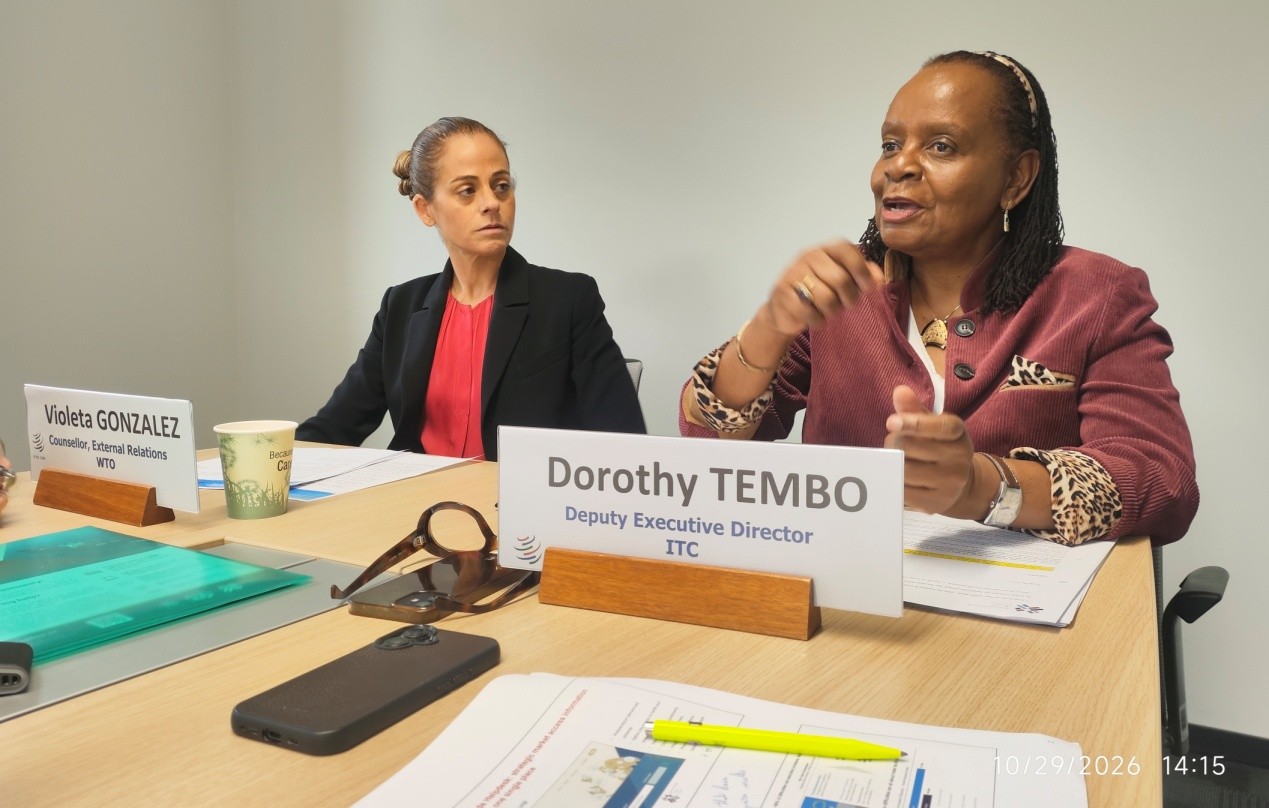
Dorothy Tembo, Deputy Executive Director of ITC, disclosed this on Thursday, October 29, 2026, during a press briefing at the World Trade Organization (WTO) headquarters in Geneva, Switzerland.
The briefing was held on the sidelines of an outreach programme for journalists from developing and least-developed countries during the 2026 Aid for Trade Global Review Week, held from October 27 to 30.
Speaking to journalists, Ms Tembo said the centre is intended to make it easier for traders to obtain essential trade information and navigate customs requirements.
She explained that ITC works with countries throughout the reform process, from identifying challenges facing businesses to supporting practical reforms and ensuring their implementation.
She noted that small businesses, despite accounting for the vast majority of firms and two-thirds of jobs worldwide, remain particularly vulnerable to global economic changes because they often lack the information, networks and resources available to larger enterprises.
She cited disruptions along the Strait of Hormuz, which have affected energy prices and food production, noting that least-developed countries source 61 percent of their ammonia imports and 68 percent of sulphur imports from economies exposed to the disruptions.
These materials are important inputs for fertiliser production, and rising prices could directly affect food security.
On Africa’s critical minerals sector, Tembo said ITC is supporting Zambia, Namibia and South Africa to develop regional battery precursor value chains linked to electric vehicle production, helping countries move beyond exporting raw materials towards local value addition and manufacturing.
She also highlighted ITC’s trade facilitation initiatives, including electronic certificates of origin, trade information platforms and border assistance desks for small-scale traders.
She said these interventions are aimed at making trade faster, easier and less costly, particularly for small businesses in developing countries.