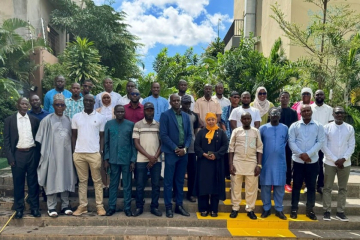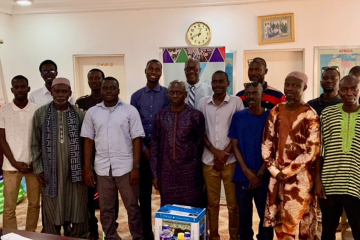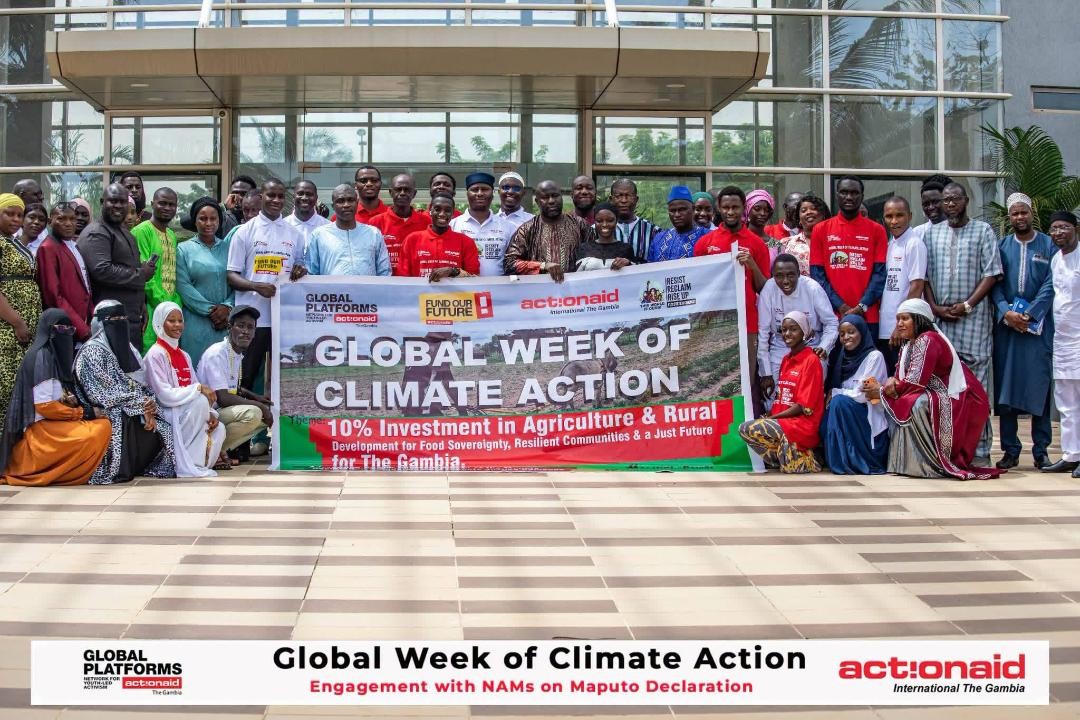
The engagement, held on Friday during a breakfast meeting organised by ActionAid at the National Assembly in Banjul, brought together lawmakers and civil society stakeholders to discuss the country’s progress in meeting the continental commitment to allocate at least 10 per cent of national budgets to agriculture and rural development.
At the meeting, Head of Programmes and Policy at ActionAid International The Gambia, Fafa O. Cham, highlighted the country’s continued reliance on imported food and its implications for household food security, national economic resilience and local producers.
Cham called for greater investment in farmers, agricultural inputs, irrigation, storage, processing and market access, saying strengthening domestic agricultural production should form an important part of national economic and food-security planning.
He also referenced the vulnerability of The Gambia’s largely rain-fed agricultural system to climate change, environmental degradation and unsustainable farming practices, which he said contribute to floods, droughts, bushfires, windstorms and pest and disease outbreaks.
Cham further called for climate justice to receive greater attention in national policy and parliamentary oversight, while highlighting climate-related pressures experienced across Africa.
Chairperson of the Select Committee on Agriculture and Rural Development, Hon. Omar Darboe, said the 10 per cent Maputo commitment should not be viewed merely as a budgetary target, but as a reflection of agriculture’s importance to national development.
According to the Ministry of Finance and Economic Affairs’ 2026 Citizen Budget, agriculture is projected to receive D7.10 billion, representing 11.97 per cent of the approved 2026 Budget on an all-funds basis.
Despite the allocation being above the Maputo benchmark, Hon. Darboe said Parliament must assess whether the resources are reaching farmers and producing results.
“We must also ask whether resources reach farmers and agricultural communities and whether they are producing results in areas such as productivity, irrigation, mechanisation, extension services, storage, market access, livestock development, research, climate resilience and food security,” he said.
Deputy Clerk for Legislative Business and Programmes, Daniel Cardos, welcomed the engagement, noting that the Select Committee is at the heart of ensuring that commitments under the Maputo and Malabo Declarations translate into tangible outcomes for farmers and agricultural communities.
He also welcomed continued collaboration between Parliament and civil society, noting that such engagements provide evidence and perspectives that can strengthen parliamentary oversight.