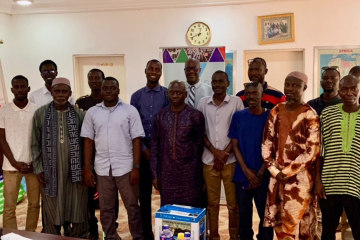
The National Bakers Union of The Gambia (NBUG) has called for stronger collaboration between governments, industry stakeholders and technical partners to modernise Africa's bakery sector, improve production standards and reduce reliance on imported wheat flour.
The call was made by Lamin Dibba, Secretary General of the National Bakers Union of The Gambia and Organising Secretary of the African Bakery and Pastry Association, during the Flour Rising Africa regional workshop held in Dakar, Senegal, from 13 to 14 October 2026.
The workshop, organised by Mühlenchemie and DeutscheBack, brought together millers, bakers, pasta manufacturers, scientists, equipment suppliers and other industry experts from across the continent to discuss innovations in flour processing, baking technology, food security and professional training.
Addressing participants, Mr Dibba underscored the need for African countries to harness the potential of locally available cereals such as millet, maize and sorghum to complement wheat flour and reduce dependence on costly imports.
He also stressed the importance of enhanced cooperation among governments, development partners and private-sector stakeholders to address persistent challenges facing the industry, including limited access to modern equipment, technical expertise, financing and professional training.
"The future of Africa's bakery industry depends on innovation, collaboration and the effective utilisation of our local resources," he noted.
The workshop provided participants with a platform to exchange knowledge, explore practical solutions and forge partnerships aimed at advancing the flour and baking value chain across Africa.
A key focus of discussions centred on the growing potential of local cereals in bread and other bakery products. Participants examined how incorporating locally-produced grains into bakery production could diversify raw material sources, create new markets for farmers and reduce pressure on imported wheat supplies.
For The Gambia, the discussions were particularly timely as the National Bakers Union intensifies efforts to modernise the country's bakery sector.
According to a report presented by Mr Dibba, more than 80 per cent of Gambian bakeries operate within the informal sector, with many continuing to rely on outdated machinery and traditional production methods.
The report identified equipment modernisation, technical skills development, increased utilisation of local cereals and stronger partnerships with development organisations as critical priorities for strengthening the industry.
It further noted that improved access to modern bakery equipment, including mixers, moulders and related machinery, could significantly enhance production efficiency, consistency and food safety standards.
The report also highlighted the need for structured training programmes to equip young Gambians with practical skills in bakery and pastry production.
Industry experts believe such initiatives could improve product quality, create employment opportunities and contribute to the professionalisation of a sector that supports the livelihoods of thousands of people.
Technical sessions during the workshop explored a range of topics, including wheat quality, flour analysis, grain storage and protection, as well as innovations in bakery and pasta production.
Participants also examined how enzyme-based solutions can improve the quality, shelf life and profitability of bakery products such as bread, croissants, biscuits and wafers.
Other sessions focused on advances in pasta manufacturing technology and opportunities for developing local expertise and partnerships across Africa.
Throughout the discussions, participants emphasised the importance of combining modern technology with technical knowledge to improve the competitiveness of African flour milling and baking businesses.
A highlight of the workshop was a high-level roundtable discussion titled "Feeding Africa 2050", which explored the future of milling and baking on the continent.
The discussion focused on food security, investment, workforce development and policy reforms required to strengthen Africa's capacity to meet the demands of its rapidly growing population.
For The Gambia, the National Bakers Union believes the knowledge acquired and partnerships established during the workshop could play a significant role in enhancing the productivity and competitiveness of the local bakery industry.
Among the union's proposed follow-up actions are engagements with technical partners on equipment procurement and financing opportunities, requests for training support from Mühlenchemie and Deutsche Back, and consultations with the Ministry of Trade on a possible bakery modernisationprogramme.
The union also plans to pilot the use of locally-produced cereals among selected member bakeries to assess their commercial viability and consumer acceptance.
The initiative is expected to identify practical ways of incorporating millet, maize and sorghum into bakery products while maintaining product quality and meeting market demand.
Mr Dibba said stronger cooperation among governments, bakers, millers, equipment suppliers and development partners would be crucial to translating discussions into tangible improvements for the sector.
He further stressed the importance of African countries sharing expertise and developing home-grown solutions tailored to local realities rather than relying exclusively on imported technologies and raw materials.