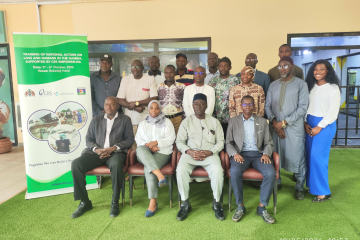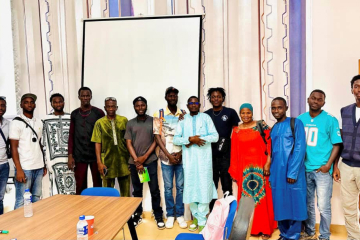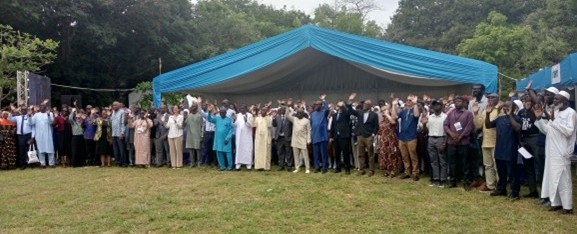
The Medical Research Council Unit The Gambia at the London School of Hygiene & Tropical Medicine (MRCG at LSHTM) has reaffirmed its commitment to scientific excellence, transparency and community engagement as it welcomed hundreds of community members, students, government officials and international partners to its annual Open Day.
Held at the Unit's headquarters and field sites, the event provided visitors with a unique opportunity to gain first-hand insight into the institution's research activities, engage with scientists and explore how medical research is improving lives in The Gambia and beyond.
Speaking on behalf of the Unit, Dr Davis Nwakanma, Chief Operating Officer, emphasised the critical role that community participation and trust play in the success of scientific research.
“Your participation and the trust that you and your family place in us is at the foundation of the success of what we do as a research institution,” he said.
Dr Nwakanma explained that the annual Open Day serves not only as a platform to showcase the Unit's work and achievements but also as an opportunity to inspire young Gambians to pursue careers in science, research and innovation.
He paid tribute to community leaders for their unwavering support, describing them as a vital bridge between the institution and the communities it serves.
“Our community leaders are the bridge between what we do and the communities that we work with,” he stated.
He also expressed gratitude to senior government officials, development partners and members of the diplomatic corps for their continued support, noting that their presence reflected confidence in the Unit's contribution to improving public health and advancing scientific research.
Dr Nwakanma further encouraged attendees to visit the laboratories, interact with research teams and ask questions to better understand the vital work being undertaken by the institution.
For his part, Professor Ed Clarke, Director of the MRC Unit The Gambia, reaffirmed the organisation's overarching mission of improving health outcomes both nationally and internationally.
“Ultimately, our main goal is to improve the health and well-being of the Gambian population, as well as other populations in West Africa and across the globe,” he said.
Professor Clarke highlighted the crucial role played by study participants over the years, noting that their involvement has contributed significantly to medical breakthroughs and improved health outcomes for children and adults across Africa.
Addressing students in attendance, he urged them to see themselves as the future of the institution and encouraged them to explore opportunities in science and research.
He noted, however, that careers within the organisation extend beyond medicine and laboratory sciences, pointing to opportunities in project management, finance, human resources, transport, facilities management and other professional fields.
“There are many pathways through which young people can contribute to research and public health,” he said, urging students to consider internships and long-term careers with the Unit.
Both speakers underscored the importance of transparency, collaboration and public engagement as the cornerstones of the Unit's success.
Professor Clarke encouraged participants to challenge ideas, ask questions and share the knowledge gained during the event with their families, schools and communities.
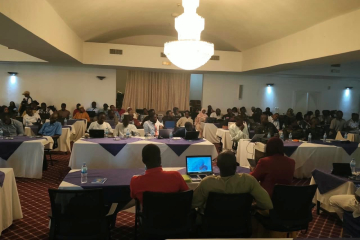
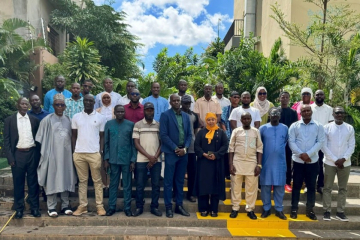
The Open Day attracted strong participation from communities, partners and stakeholders from across the country, creating a vibrant atmosphere that celebrated scientific discovery, public engagement and shared commitment to improving health outcomes.
With visitors exploring research facilities, interacting with scientists and learning more about the impact of health research, the event was widely hailed as a resounding success.