The Government of The Gambia has launched a D40 million digital skills development programme that will equip 1,280 young Gambians with intermediate and advanced technology skills over a three-year period under the World Bank-funded West Africa Regional Digital Integration Programme (WARDIP).
The initiative was formalised through a contract-signing ceremony involving the Ministry of Communications and Digital Economy, the Ministry of Trade, Industry, Regional Integration and Employment, and three training institutions selected to implement the programme.
Speaking at the event, WARDIP Project Coordinator Serign Omar Lowe praised the spirit of collaboration demonstrated by partner institutions in advancing the Labour Digital Skills Development Programme.
He explained that WARDIP is financed through a US$50 million World Bank grant and is built around three core pillars: improving connectivity, strengthening the regulatory environment, and advancing digital financial services and market development.
Lowe said reliable internet connectivity remains a critical foundation for socioeconomic growth and digital transformation, while a supportive regulatory framework is essential for the expansion of the digital economy.
He further noted that WARDIP is working with the Central Bank of The Gambia to strengthen the country's digital financial ecosystem and support wider access to digital services.
According to him, the Labour Digital Skills Development Programme forms part of a broader effort to build digital competencies, strengthen institutional capacity and increase participation in the digital economy.
He expressed optimism that stronger collaboration between the Ministry of Communications and Digital Economy and the Ministry of Trade, Industry, Regional Integration and Employment would contribute significantly to the success of the initiative.
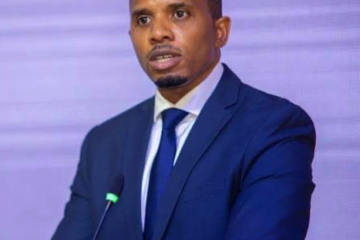
Communications and Digital Economy Minister Lamin Jabbie reaffirmed government's commitment to preparing young Gambians for opportunities in the digital age, describing the programme as a strategic investment in the country's future workforce.
He disclosed that the training will be delivered by the University of Science, Engineering and Technology (USET), the Civil Service University (CSU), and the Indian Institute of Hardware Technology Gambia (IIHTG).
The Minister said participants will receive training in software development, cybersecurity, data analytics, cloud computing, artificial intelligence, big data, digital marketing, content creation and digital entrepreneurship.
"These are not merely academic subjects. They are pathways to economic empowerment, cross-border digital trade and technology-driven entrepreneurship," he said.
As part of the programme, 1,280 participants will undertake structured three-month internships with technology companies, financial institutions, telecommunications operators and public sector organisations to gain practical workplace experience.
"We do not want our young people to simply consume digital technology; we want them to create it, innovate with it and export Gambian digital services to the world," Minister Jabbie stated.
He said the initiative forms part of a broader national digital transformation agenda aligned with the Ministry's Strategic Plan 2026-2030 and the African Union's Digital Transformation Strategy.
The Minister highlighted ongoing efforts to modernise legislation through a new Communications Bill currently before the National Assembly, aimed at promoting fair competition, consumer protection and private sector investment.
He also disclosed plans to establish a Tier III Data Centre to improve national data hosting and cybersecurity capabilities while expanding broadband access across rural communities.
Other initiatives include the digitisation of public services, improved government interoperability, the development of national payment gateways and the advancement of digital identity systems.
On inclusion, Jabbie stressed that digital transformation must benefit all Gambians, particularly women, rural and peri-urban youth, and persons with disabilities.
"Talent is widely distributed, but opportunities have not always been equally accessible," he observed.
He urged the selected institutions to maintain high standards of academic excellence and industry relevance while calling for continuous monitoring and evaluation to ensure measurable outcomes.
"The true measure of our success will not simply be the policies we draft, the agreements we sign or the infrastructure we build. It will be the jobs we create, the businesses we enable and the lives we transform," he said.
Also speaking at the ceremony, Director of Employment Fabba Jammeh, representing the Ministry of Trade, Industry, Regional Integration and Employment, described the contract signing as a significant milestone achieved through extensive consultations among stakeholders.
He said the agreements formalise the commitment of the selected institutions to implement the training programme in line with the agreed project framework and Memorandum of Understanding.
Jammeh commended the Ministry of Communications and Digital Economy and the Project Implementing Unit for recognising his ministry as a key implementing partner, noting its mandate to promote employment and expand opportunities for young people.
He stressed that the programme comes at a time when labour markets are rapidly evolving, particularly within the information technology sector, making digital skills increasingly essential for employment.
The Director revealed that a monitoring committee would be established to oversee implementation, track progress and address challenges that may arise during the execution of the programme.
He reaffirmed his ministry's commitment to working closely with all stakeholders to ensure the initiative achieves its objectives and creates meaningful employment opportunities for young Gambians.
The Labour Digital Skills Development Programme is expected to play a key role in strengthening The Gambia's digital workforce and supporting the country's broader digital transformation agenda.