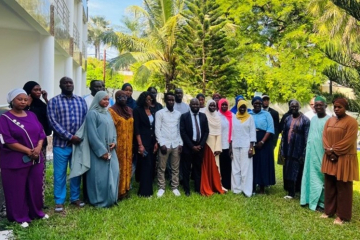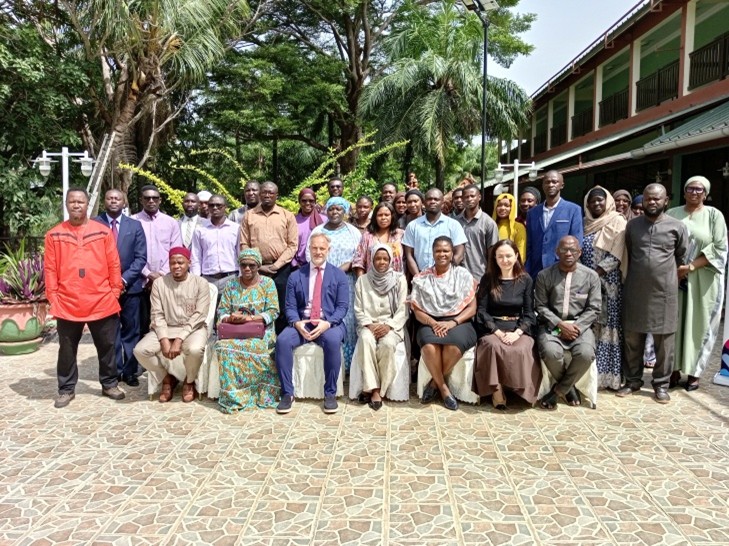
The workshop, currently underway at a hotel in Kololi, brings together key stakeholders to review and validate a draft policy designed to unlock the vast potential of the country's creative economy and position the sector as a major contributor to national development.
Speaking at the opening ceremony, Yusupha Keita, ITC Country Representative, underscored the significance of the initiative in transforming the creative sector into a powerful engine for economic growth, job creation and cultural preservation.
“This policy will help unleash talent, protect creative works, support commercialisation and contribute meaningfully to national development,” he said.
Mr Keita explained that, through the European Union Youth Empowerment Project, the ITC has been working to strengthen institutions critical to the development and regulation of the creative sector, including the Ministry of Tourism, Arts and Culture, the National Centre for Arts and Culture, the Music Union, the Collecting Society and the Arts Academy.
According to him, these institutions form the foundation for a thriving and sustainable creative industry.
The workshop builds on recommendations made during a national dialogue held in Bakadagi last year, where stakeholders called for increased investment in skills development and infrastructure across the sector.
Mr Keita disclosed that specialised training programmes for sound engineers, music producers, vocalists and artisans, including weavers, fashion designers and tie-dye specialists, are scheduled to commence next month with support from international experts.
He emphasised that the proposed policy framework would be practical and responsive to the realities faced by creative practitioners.
“This policy will define how musicians, artisans and event managers are registered, financed, protected and connected to markets,” he stated.
The ITC representative expressed appreciation to the European Union for its continued support and commended the Ministry of Tourism, Arts and Culture for its leadership throughout the process. He also acknowledged the contributions of the Ministry of Trade, Regional Integration and Employment, the technical committee and creative industry associations.
Speaking on behalf of the Ministry of Tourism, Arts and Culture, Deputy Permanent Secretary Isatou Drammeh welcomed participants and highlighted the importance of the workshop in advancing the development of the country's creative economy.
She thanked the ITC for its sustained partnership and the European Union for its support through programmes aimed at strengthening tourism and the creative industries.
“This collaboration has been instrumental in bringing us to this milestone,” she said. “Today marks the culmination of a journey that began with a clear recognition that The Gambia’s creative industry is not simply a source of cultural pride, but also a powerful and underutilised driver of economic growth, employment and national identity.”
Ms Drammeh noted that since 2024, the Ministry and its partners have undertaken extensive consultations, assessments and public-private dialogue engagements, supported by the dedicated work of a technical committee.
She said these efforts have helped move the process from identifying challenges to developing practical solutions and a concrete policy framework for the sector.
According to her, the workshop's primary objective is to rigorously review and validate the draft framework to ensure it is responsive to the needs and aspirations of the industry.
“This is not a symbolic exercise,” she stressed. “It is a critical step in a whole-of-nation approach to shaping the future of The Gambia’s creative economy.”
Ms Drammeh further highlighted the principles of inclusivity and sustainability that underpin the proposed policy, noting that it seeks to create quality employment opportunities for young people and women, promote investment and market access, and safeguard the country's rich cultural heritage.
She added that the framework is also intended to position Gambian creative entrepreneurs to compete effectively within the African Continental Free Trade Area (AfCFTA) and international markets.
“This workshop provides an opportunity to ensure that the policy is practical, credible and actionable,” she told participants. “I encourage everyone to engage actively, share their expertise openly and contribute to a final framework that is ambitious and reflective of The Gambia’s development aspirations.”
The workshop is expected to culminate in the validation of a policy framework that will guide the future growth of The Gambia's creative industries, enabling the sector to play a greater role in economic development, youth empowerment and the preservation of the nation's cultural identity.