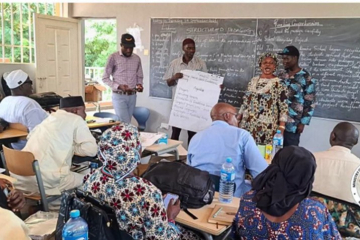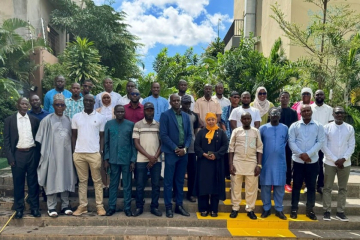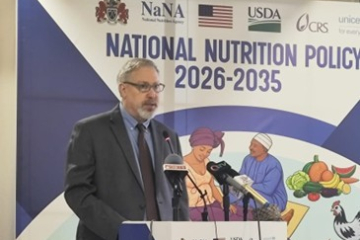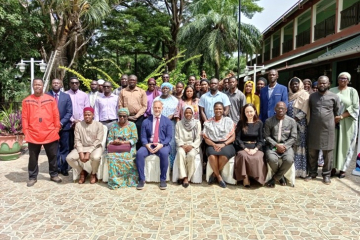
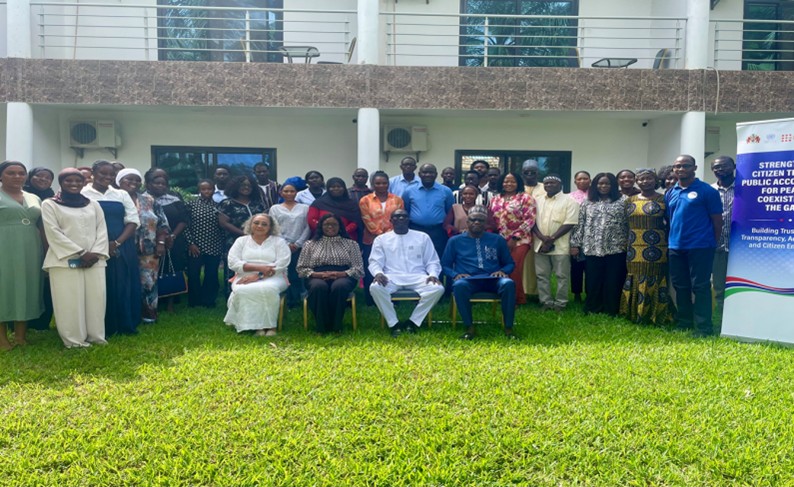
The training, which began on Wednesday, 23 September 2026, at Metzy Hotel, focuses on Access to Information and Personal Data Protection and Privacy. Participants are being equipped with the knowledge and skills needed to exercise their right to access information, monitor public institutions and utilise information for evidence-based advocacy and accountability.
Speaking at the opening ceremony, Deputy Chairperson of the Information Commission, John Charles Njie, said the workshop was designed to deepen participants’ understanding of the two key laws being implemented by the Commission: the Access to Information Act and the Personal Data Protection and Privacy Act.
He noted that the three-day engagement would provide participants with an opportunity to examine the legislation in detail and better understand their role in ensuring its effective implementation across the country.
Mr Njie also commended the support of the United Nations System in The Gambia, particularly the United Nations Population Fund (UNFPA), the United Nations Development Programme (UNDP) and the Office of the United Nations High Commissioner for Human Rights (OHCHR), for their continued partnership with the Commission.
He further disclosed that, with support from the UN System, the Commission had recently conducted sensitisation activities in three regions targeting both government institutions and local communities.
Chairperson of the Association of Non-Governmental Organisations (TANGO), Yadicon Njie Eribo, described access to information and data protection as critical components of the daily work of civil society organisations.
She noted that CSOs engage directly with communities, conduct research, implement development programmes, monitor public service delivery, advocate for policy reforms and hold public institutions accountable. To effectively carry out these responsibilities, she said, organisations require accurate, timely, reliable and relevant information from government ministries, departments and agencies, local authorities and other public institutions.
According to Ms Eribo, access to information legislation provides CSOs with a vital mechanism for obtaining information necessary to understand government policies, programmes, budgets, decisions and the delivery of public services.
“Evidence-based advocacy depends heavily on the ability of civil society organisations to access and verify information from relevant public institutions and officials,” she said.
She also underscored the importance of safeguarding personal information collected by CSOs, particularly data relating to beneficiaries, children, persons with disabilities, survivors and other vulnerable groups.
For her part, Evelyn Edroma, Deputy Resident Representative of UNDP, said the capacity-building programme would strengthen collective efforts to advance transparency, informed citizen participation and public accountability in The Gambia.
She emphasised that the initiative supports broader national efforts to enhance transparency and accountability in governance, expand civic engagement and safeguard fundamental human rights.
Ms Edroma expressed optimism that the training would empower civil society organisations to play a more effective role in promoting good governance while ensuring that personal data is handled in a responsible and rights-based manner.