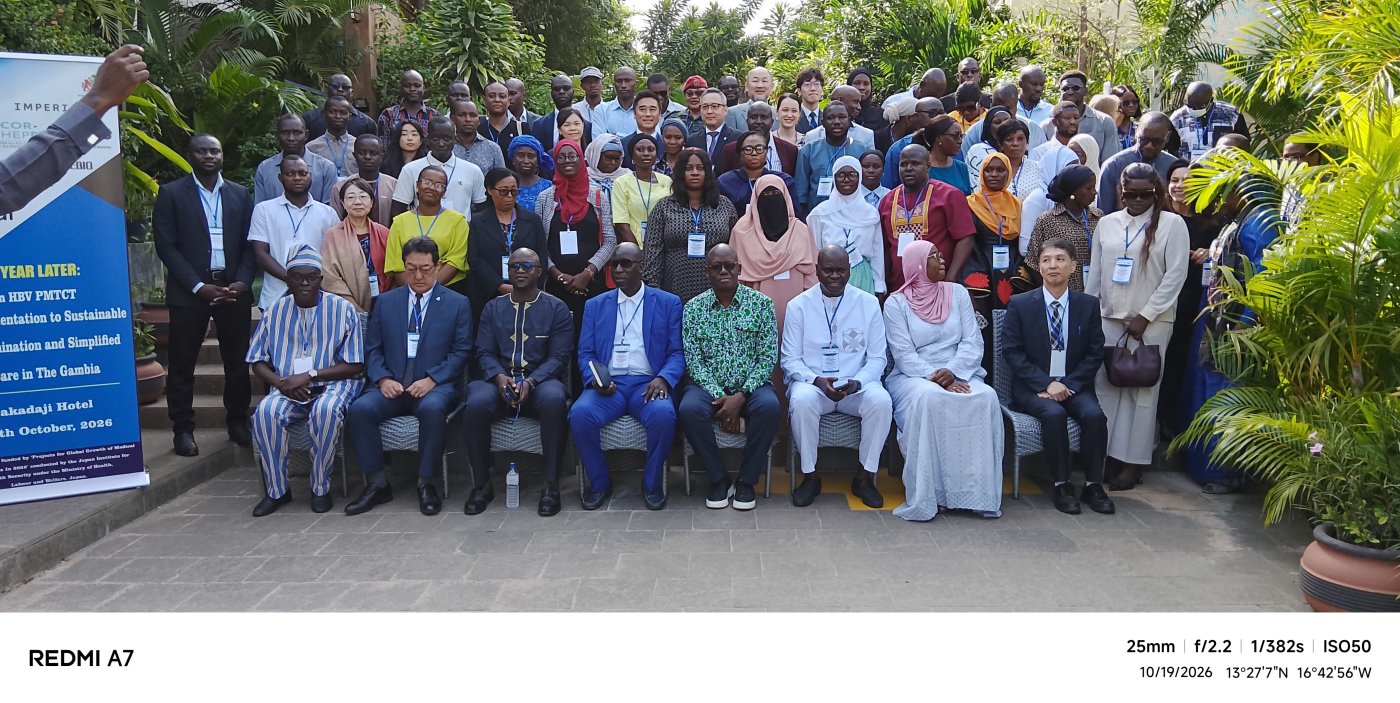
The Gambia is aiming to make history as one of the first countries in Africa to eliminate mother-to-child transmission of HIV, syphilis and hepatitis B.
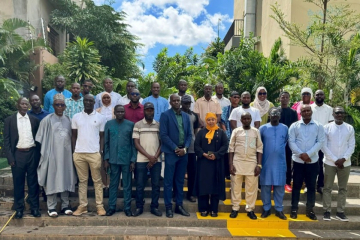
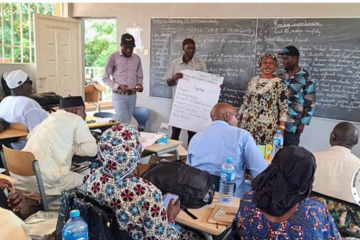
That ambition took centre stage on Monday as the National Hepatitis Control Programme (NHCP) of the Ministry of Health, in collaboration with the Medical Research Council The Gambia at LSHTM, the Center for Clinical Science, Japan Institute for Health Security (JIHS) and other multinational partners, convened a national stakeholder engagement on the triple elimination drive.
Officials say The Gambia has already made substantial progress in strengthening maternal and child health services — from prevention of mother-to-child transmission (PMTCT) of HIV and syphilis, to antenatal care and hepatitis B birth-dose vaccination in all health facilities. Building on that, integrating hepatitis B PMTCT into the existing health system is seen as the next critical step.
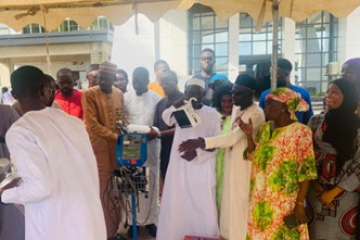
The one-day engagement was therefore an opportunity to review findings of a nationwide assessment of hepatitis B service availability and readiness, progress since the first national workshop in October 2025, and the training and implementation of the DETECT-B pilot project in seven health facilities.
Addressing the gathering, Dr. Watara Sugiura, Director General of the Centre for Clinical Science, JIHS, recalled that for many years they have worked to tackle hepatitis B as a public health challenge.
“Over the past year in The Gambia, through the dedication of health workers and researchers, a pilot project to prevent mother-to-child transmission of hepatitis B has turned that longstanding commitment into concrete action in health facilities, and has been evaluated with great care,” he said.
The Gambia, he added, offers an exceptional setting for this work, with strong government commitment, a well-coordinated health system and a longstanding partnership between the Ministry, national programmes and research institutions.
Tomonao Ouki, Head of Global Research and Development for Fujirebio, recalled that last year they discussed how to integrate hepatitis B prevention into existing maternal and child health care and how innovative diagnostics could help achieve that goal.
“The workshop resulted in a roadmap for integrating HBsAg testing with three concrete actions, including strengthening training, improving national reporting systems and preparing for broader implementation.”
Dr. Nathan Nsubuga Bakyaita, WHO Country Representative, on behalf of the UN family, commended the Ministry of Health, the MRCG, the Coalition for Global Hepatitis Elimination and all partners for convening the timely dialogue.
“Today’s meeting comes at a critical moment. The Gambia has long been recognized globally for its contributions to hepatitis B research and for pioneering interventions that have shaped global understanding of hepatitis B prevention and control,” he said.
Building on this legacy, he noted, the country is demonstrating leadership once again by integrating prevention of mother-to-child transmission of hepatitis B into routine maternal and child health services and the broader triple elimination initiative.
“The WHO strongly recommends and supports the global and regional ambition to eliminate mother-to-child transmission of HIV, syphilis and hepatitis B.”
Given current geopolitical challenges, he called for more South-to-South collaboration, noting that The Gambia’s small size is in fact its greatest advantage.
“It’s easier for us to roll out things. It’s easier for us to monitor what’s happening. It’s easier for us to report the results so that we can share with the whole world the great work that is happening in The Gambia.”
Representing the Minister of Health, Musa Camara, Deputy Permanent Secretary-Technical at the Ministry, extended appreciation to the MRCG at LSHTM, JIHS and all technical and research partners for their continued collaboration.
He said elimination of mother-to-child transmission of HIV, syphilis and hepatitis B is an important national and global public health priority.
“The Gambia has made significant progress in maternal and child health, particularly through the expansion of antenatal care, the prevention of mother-to-child transmission and the implementation of routine infant hepatitis B vaccination across all health facilities.”
However, he acknowledged that vaccination alone, while essential, is not sufficient to achieve elimination.
“We must strengthen the entire continuum of care — from screening and diagnosis to risk assessment, timely antiviral prophylaxis, treatment and long-term follow-up.”
Integrating hepatitis B prevention and care into existing maternal, newborn and child health services, he said, offers a practical and sustainable approach that aligns with the Sustainable Development Goals for health.
By building on established platforms, the country can improve access, reduce missed opportunities and ensure that more pregnant women and their infants receive needed interventions.
DPS Camara referenced the national workshop held in October 2025, where the Ministry through the DETECT-B Project led pilot implementation in seven health facilities in the Western Two Health Region.
“These activities have generated valuable practical evidence in integrating hepatitis B services into antenatal care,” he said.
He noted that ambition must now extend beyond pilots, translating evidence and lessons into sustainable national programmes.
He lauded collaboration between the Government, MRCG at LSHTM, Japanese institutions, Institut Pasteur, WHO, UNICEF, Africa CDC, Global Fund and other partners as demonstrating the value of combining national leadership with scientific expertise and international cooperation.
Dr. Mamadou Moustapha Diop, Director of Disease Control at Senegal’s Ministry of Health and Social Action, also spoke at the event.