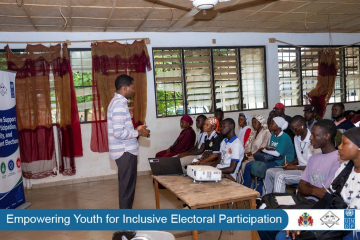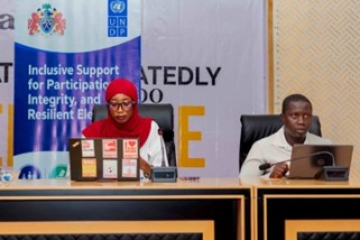
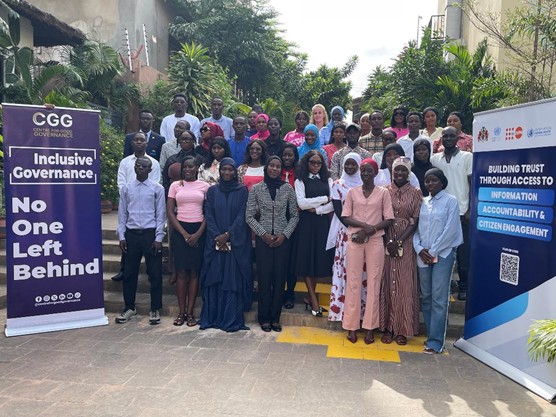
The Center for Good Governance (CGG), with support from the United Nations Development Programme (UNDP), UNFPA and the United Nations Peacebuilding Fund, has commenced a two-day training for students on The Gambia’s Access to Information Act, 2021.
The initiative is aimed at promoting transparency, accountability and good governance, as well as arming participants with practical knowledge of the law and how to use it to obtain information from public institutions.
The training attracted students from the Media Academy for Journalism and Communication (MAJaC), the University of The Gambia (UTG) and Supdeco.
At the opening, Yahya Sowe, Coordinator of CGG, described access to information as an important research tool that enables students and citizens to obtain official records rather than rely on assumptions.
“Imagine conducting research on a government policy and accessing the actual official records rather than relying on assumptions,” he said.
Sowe noted that the law could help citizens investigate public spending, strengthen research and hold public institutions accountable.
Commissioner Emil Touray of the Information Commission described access to information as a fundamental right essential to a democratic society.
“We cannot consolidate our country’s democratisation process if we do not have a basic understanding of the concept of rights,” he said.
He stressed that freedom of expression and access to information are essential pillars of democracy, noting that the Act should empower citizens to demand accountability from public institutions.
The two-day training exposedstudentstopractical steps for using the law, including identifying the appropriate public institution, preparing effective information requests and pursuing formal procedures when information is withheld.
Awa Jaiteh, MAJaC Students’ President, said young people need reliable information to understand their rights, engage decision-makers, challenge misinformation and contribute to national development.
She urged participants to exercise the right responsibly by verifying information, respecting the rights of others and promoting peace, tolerance and constructive dialogue.
The training brings together student leaders and young people from different institutions to share experiences and strengthen civic participation, with organisers expecting participants to apply the knowledge gained in their academic work and future professional roles.