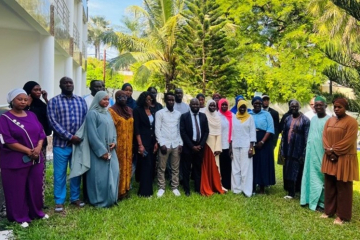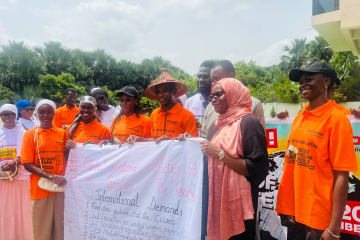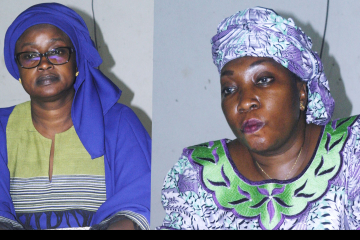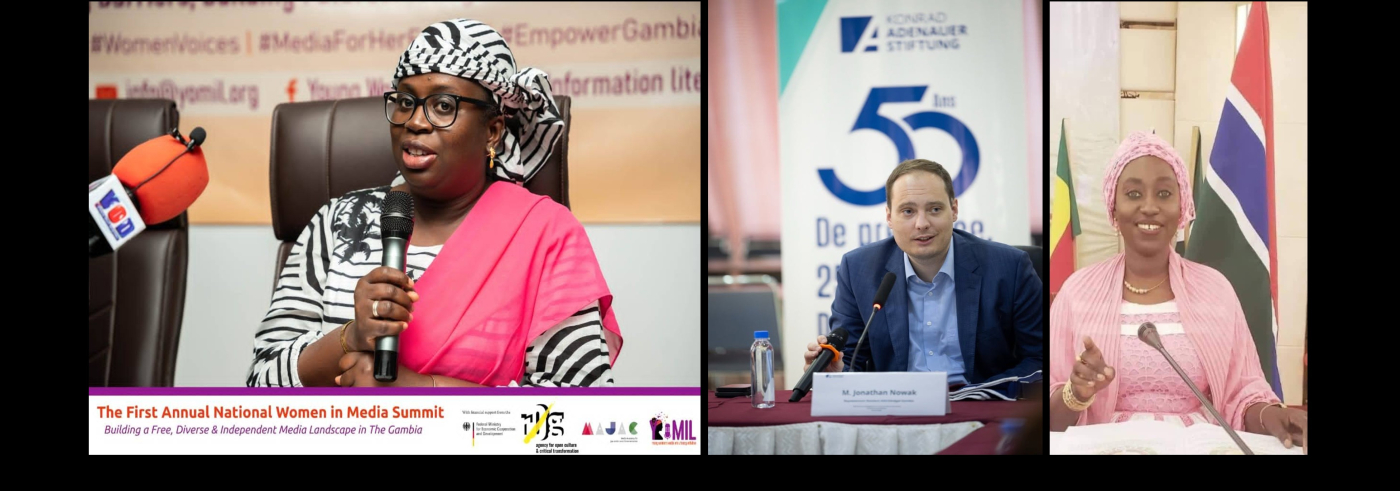
The session seeks to advance women’s political participation and representation in The Gambia. Held under the theme “Women in Power: Advancing Women’s Political Participation and Representation in The Gambia,” the initiative forms part of FLAG’s broader effort to contribute to a more inclusive political and governance system.
At the event, FLAG President Anna Njie, said the partnership reflects a shared commitment to democracy, rule of law, and gender equality.
“As an association of female legal practitioners in The Gambia, FLAG has, since its establishment in 2006, worked to advance the rights of women and children through legal aid, advocacy, public interest litigation, policy engagement, and collaboration with national and international partners,” Njie stated.
For FLAG, she added, women’s political participation is not merely about increasing numbers.
“It’s about ensuring that women have a meaningful voice in the laws, policies, institutions, and decisions that shape their lives and communities. It is also about strengthening democracy, accountability, representation, and national development.”
Njie thanked KAS Senegal for partnering on the initiative, and acknowledged the support of Gender Committee of the National Assembly and for gracing the event.
“It is my hope that by the end of today, we will leave with renewed commitment and practical steps,” she said, emphasising the word practical. “We always find ourselves in forums where we make commitments, but we don’t end up with practical solutions.”
Jonathan Nowak, Resident Representative of KAS Senegal, said the consultation addressed a matter fundamental to democratic governance, social justice, and sustainable development: the meaningful inclusion of women in political and decision-making processes.
“While significant progress has been made in promoting gender equality, women continue to face numerous barriers that limit their participation and representation in leadership positions across political and public institutions,” Nowak noted.
He said the consultation provides a platform to examine legal, institutional, economic, and socio-cultural challenges hindering women’s political advancement. “More importantly, it offers an opportunity to engage in constructive dialogue, share experiences, and identify practical and sustainable solutions.”
“Our collective objective is to strengthen gender-responsive laws and policies, promote more inclusive political systems, and create enabling environments where women can fully exercise their leadership potential and contribute to national development,” he added.
Nowak observed that achieving gender-balanced representation is not only a matter of fairness and equality, but is also essential for enhancing the quality of governance, strengthening democratic institutions, and ensuring diverse perspectives in public decision-making.
National Assembly Member for Banjul South, Fatoumatta Njai, said the timing is critical as the country approaches a new electoral cycle in December.
The initiative, she added, will not only help them to prepare for elections, but also to reflect on the state of women’s political participation and representation in this country.
Citing the 2024 Population and Housing Census, she noted that women constitute 51% of The Gambia’s population, about 1.24 million women and girls, yet remain significantly underrepresented in elected and decision-making roles.
“Despite this, women remain significantly underrepresented in electoral and decision-making positions,” she said. “This disparity underscores the urgency of our discussions today, and the need for deliberate measures to advance women’s political participation and representation.”
The Banjul South lawmaker indicated that this underrepresentation is not simply a gender issue, but rather a democratic challenge.
“As democracy cannot fully realize its potential with the voices, experiences, and perspectives of half of its population underrepresented in institutions where decisions that affect them are made. As someone who has personally navigated the challenges of electoral politics as a woman, I truly understand the barriers facing women.”