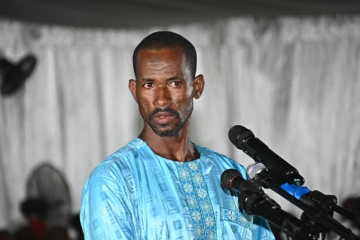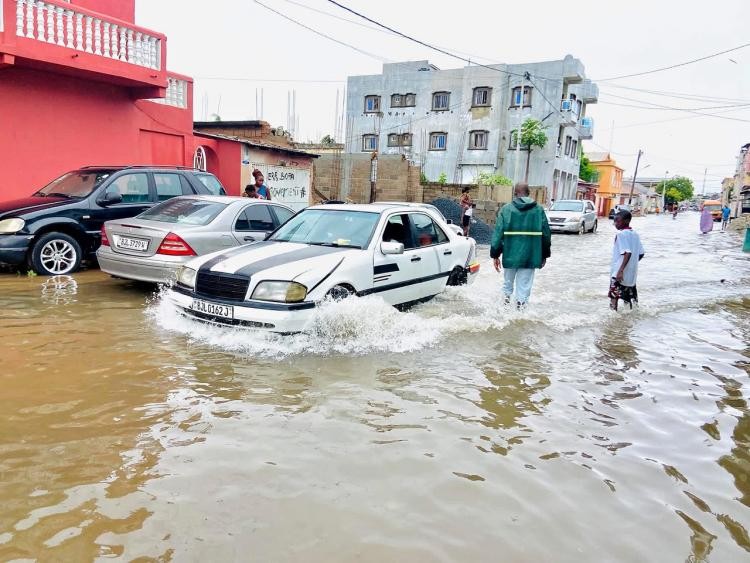
According to the lawmaker, preliminary assessments from communities indicate that several low-lying areas in Banjul North and other parts of the city were severely affected, with many families forced to deal with floodwater entering their compounds.
“From my assessment and reports on the ground, homes and businesses in low-lying areas of Banjul North and beyond were submerged, including roads and walkways. Many families spent the moment with water in their compounds,” he said.
Hon. Bah explained that a rapid assessment was being conducted to determine the full extent of the damage and the number of households affected.
The Banjul North lawmaker said his office immediately established a constituency rapid response team following the rainfall to identify challenges affected residents face and coordinate with relevant stakeholders.
“My office has set up a constituency rapid response team and we were on the ground immediately when the rain stopped. We identified some of the problems and are ready to work together with all the relevant stakeholders in the city to resolve them,” he said.
However, he stressed that emergency responses alone would not solve Banjul’s flooding crisis, arguing that the country must move towards sustainable flood prevention measures.
Hon. Bah said the annual flooding experienced in Banjul cannot continue, particularly as climate change and rising sea levels increase the vulnerability of the low-lying city.
“This cannot continue every rainy season. Banjul is low-lying and with sea level rise, the problem will only get worse if we don’t act,” he warned.
Among the solutions he is advocating for are the establishment of water retention ponds across the city using unused government and council lands to capture excess runoff.
He said such ponds should be developed with proper drainage systems and regularly maintained to prevent health risks such as mosquito breeding.
The lawmaker also called for stronger planning and enforcement measures, including stopping construction in flood-prone areas, protecting mangroves, enforcing waste management regulations and ensuring drains remain free from garbage.
He further proposed annual pre-rainy season desilting of drains and the creation of community flood monitoring teams in every ward to provide early warning and support rapid responses.
Hon. Bah said addressing Banjul’s flooding problem requires collaboration between the central government, Banjul City Council, disaster management agencies, civil society organisations and residents.
He said the central government must provide funding for major infrastructure projects, disaster relief support and coordinate with development partners, while the Banjul City Council should take the lead in drainage maintenance, waste collection, identifying areas for retention ponds and enforcing building regulations.
He also highlighted the role of institutions such as the National Disaster Management Agency (NDMA), Red Cross and NGOs in providing rapid assessments, relief assistance and public health interventions.
The MP urged residents to also play their part by keeping drains clear, reporting blockages and supporting efforts to maintain public infrastructure.
Meanwhile, residents of Banjul have expressed frustration over the recurring floods, with some blaming inadequate preparation and poor maintenance of drainage systems.
One resident, who preferred not to be named, said authorities should have taken preventive measures before the rainy season began.
“Before the rainy season, they should have come at least to clear the blockages at the roads. We are not even experiencing heavy rainfall and Banjul is flooding. What would happen if the rains were very heavy and constant?” the resident questioned.
The resident said residents have raised concerns over drainage problems for years, adding that many people are now demanding accountability and practical solutions.
“People are saying different things about the causes of the flooding, but whatever the case might be, the Member of Parliament for Banjul should help the people. This is painful and disturbing,” the resident added.
Another Banjul resident, Sulayman Njie, described the floods as a major setback for families and businesses across the city.
He said the flooding has disrupted businesses, damaged homes, restricted movement and affected the daily livelihoods of many residents.
“Many families have been forced to spend time and resources cleaning their homes, while others have lost valuable household items. Beyond the physical damage, the floods have created emotional stress and financial uncertainty for many residents,” Njie said.
According to him, some families lost food supplies and essential household items after floodwater entered their homes, while businesses suffered losses due to damaged goods, interrupted operations and reduced customer access.
Njie said that at the time of his engagement with affected communities, no significant assistance had been reported from authorities or humanitarian organisations.
However, he stressed that residents are more interested in lasting solutions rather than relying only on emergency support after disasters.
“Their greatest priority is a long-term solution. They want the drainage system to be rehabilitated and properly maintained to prevent these recurring floods rather than relying solely on short-term relief after disasters occur,” he said.
Njie identified inadequate drainage infrastructure, poor maintenance, solid waste blockage and environmental degradation as major contributors to Banjul’s flooding challenges.
He said many drains are clogged with silt, sand and waste, reducing their ability to carry rainwater effectively.
He also raised concerns about the impact of urban development, noting that increased concrete surfaces have reduced the city’s natural ability to absorb water.
Another major concern, he said, is the continued pressure on the Tanbi Wetland, which serves as an important natural water retention area for Banjul.
“Industrial development and land reclamation within this environmentally sensitive area have reduced its ability to absorb excess water, increasing the city’s vulnerability to flooding,” he said.
Njie called on authorities to move beyond blame and ensure that institutions fulfil their responsibilities.
He urged the government to ensure that investments in roads, sewage and drainage infrastructure under the Banjul Rehabilitation Programme deliver the intended results.
He also called on the Banjul City Council to prioritise routine cleaning, desilting and maintenance of drainage systems before every rainy season.
“Not every piece of land should be treated as commercial property. Some areas are critical natural assets that protect lives, livelihoods and the environment. The Tanbi Wetland is one of those areas,” he said.
As Banjul continues to face increasing flood risks, residents and lawmakers are calling for urgent investment in resilient infrastructure, environmental protection and stronger urban planning to prevent future disasters.
Matarr Jobe, a resident of Banjul, said he was shocked to return home and find his house flooded after heavy rains. He explained that while he was in Farato, he was unaware of the extent of the rainfall in Banjul, but upon arrival, he found water everywhere inside his home. “My chairs, drone, camera, television, clothes in my wardrobe, everything was wet,” he said, adding that the flooding caused significant damage to his belongings.
Jobe said he has not received any form of support or visits from authorities, noting that the only person who came to check on affected residents was Hon. Modou Lamin Biram Bah, the Banjul North National Assembly Member. He appealed to the Banjul City Council (BCC) to provide tools and materials to help residents clean blocked gutters, while urging councillors to be more proactive in addressing the challenges facing communities. He added that he would have to purchase new chairs for his living room due to the damage caused by the floodwaters.
According to Jobe, one of the major causes of the flooding is the blockage of waterways during road construction, coupled with practices by some residents who dump sand around gutters, leading to obstruction of water flow. He called on the government to work closely with the council and develop a coordinated plan to support affected communities, stressing the need to put political differences aside and focus on finding lasting solutions to the recurring flooding problem.