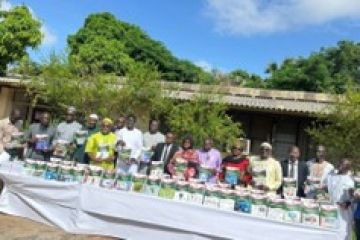
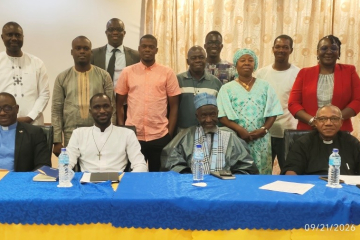
The call was made during the National Agroecology Forum held on Wednesday at the Sir Dawda Kairaba Jawara International Conference Centre under the theme: “Action and Impact: Transforming Agriculture Through Agroecology and Equitable Fertiliser Access.”
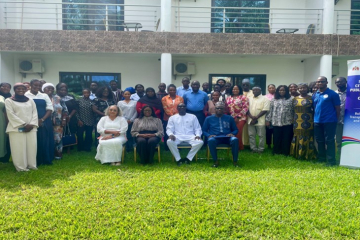
The forum brought together government officials, farmers, civil society organisations, development partners, researchers and other stakeholders to explore climate-resilient agricultural practices, improve soil fertility and identify sustainable solutions to enhance farmers’ access to affordable inputs.
Speaking at the event, Fafa O. Cham, head of programmes and policy, ActionAid International The Gambia, described agroecology as a practical and sustainable approach to food production that places nature, local knowledge and environmental stewardship at the heart of farming systems.
“Agroecology is an approach to farming and food systems that works with nature rather than against it,” Cham said.
He noted that many traditional farming methods already practised by Gambian farmers, including composting, seed preservation and the integration of livestock with crop cultivation, reflect core agroecological principles.
“What we need to do now is recognise, strengthen and scale up these practices through appropriate policies, research and investment,” he added.
Cham further warned that recurrent droughts and increasingly severe flooding were heightening the vulnerability of farming communities to climate-related shocks.
According to him, healthier soils, improved water retention, crop diversification and the integration of trees into farming systems are among the measures that can help farmers build resilience against the impacts of climate change.
Also addressing the forum, Emile Van Caenegem, Programme Manager for Agriculture at the European Union, reaffirmed the EU’s commitment to supporting sustainable agriculture and improving the livelihoods of Gambian farmers.
Meanwhile, SOS Children’s Villages The Gambia called for stronger government support for the production and use of locally manufactured organic fertiliser.
Speaking on behalf of the organisation’s Country Director, Alieu S. Bojang highlighted the organisation’s project, Monetising Waste for the Promotion of Organic Fertilisers in The Gambia, which supports women gardeners in Fatako, Tabajara, Sukuta and Brufut.
He explained that organic compost fertiliser can be produced through effective waste management practices, while urging greater investment in local fertiliser producers and a gradual reduction in reliance on chemical fertilisers.
Representing the Minister of Agriculture, Livestock and Food Security, Dr Saikou Sanyang said the government increasingly views agriculture as a viable business sector with the potential to create jobs, generate income and reduce poverty.
“Today, we are looking at agriculture as a business,” Dr Sanyang said.
He further disclosed that the government had fulfilled an earlier commitment to procure 10,000 tonnes of organic fertiliser, describing the move as part of broader efforts to promote sustainable agricultural production and strengthen food security across the country.
The forum concluded with renewed calls for increased collaboration among government, development partners and farming communities to expand agroecological practices and improve access to affordable, environmentally sustainable fertiliser solutions for Gambian farmers.