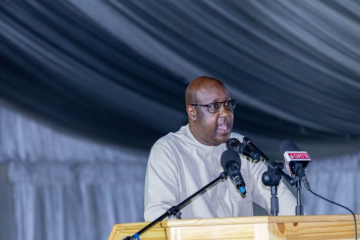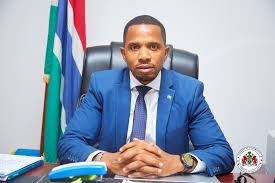
Speaking on Coffee Time with Peter Gomez, Ceesay acknowledged that crime is a challenge but argued that it should not be portrayed as a national crisis. He said tackling crime requires a collective effort involving government, parents, community leaders and religious leaders, rather than relying on harsher punishments.
“There is no empirical evidence which suggests the death penalty curbs crime, crime is a challenge everywhere in the world.”
He pointed to parts of the United States where the death penalty remains in force but murders continue to occur, arguing that executions alone cannot solve criminality.
“Our priority as a government is to make sure every Gambian is protected in their homes, schools, workplaces and businesses. We don’t want any Gambian to die in this country.”
The minister accused critics of exaggerating isolated incidents to create the impression that insecurity is widespread.
“They take a small problem and amplify it like it’s a systemic problem. It’s not a systemic problem,” he said.
Beyond security, Ceesay said electricity supply had stabilised after weeks of disruptions and urged critics who had condemned the government during the difficult period to also acknowledge the improvement now that power has returned.
“If things go wrong and you come hard on the government to criticise, if things go right, let us also give commendation where it is due,” he said.
The minister also defended President Adama Barrow’s overall record, arguing that the administration has exceeded expectations by first restoring national unity, strengthening democratic and economic institutions, and then expanding infrastructure across the country.
“The president has over-delivered his mandate,” Ceesay said.
He cited investments in roads, schools, hospitals and other public infrastructure, while dismissing criticism over flooding on roads still under construction. According to him, unfinished drainage works have been deliberately misrepresented by opponents.
Ceesay, further defended the refurbishment of the Independence Stadium, saying the facility is nearly complete after the government decided to replace the athletics track alongside the football pitch.
He also explained that any reduction in fuel prices would depend on movements in the international oil market, saying The Gambia does not determine global fuel prices but responds to them.