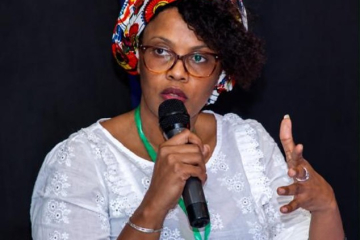
For Isatou Secka, weaving is more than a craft. It is a family heritage, a means of livelihood and a way of preserving the cultural identity of The Gambia while creating opportunities for young people and promoting locally made products beyond the country’s borders.
As the founder and Creative Director of Secka Unique Glamour, Secka has transformed a skill she inherited from her father into a growing enterprise producing handwoven fabrics, clothing, bags, accessories, notebooks and other products inspired by Gambian and African traditions.
Her journey into weaving began during childhood, when she spent time beside her father, a weaver, watching and learning the craft. She also accompanied him to the market and helped sell the fabrics he produced.
Although she later became a civil servant, her early exposure to weaving continued to influence her. Determined to deepen her skills and explore new possibilities for Gambian fabrics, she trained in sewing at Ida’s Idea.
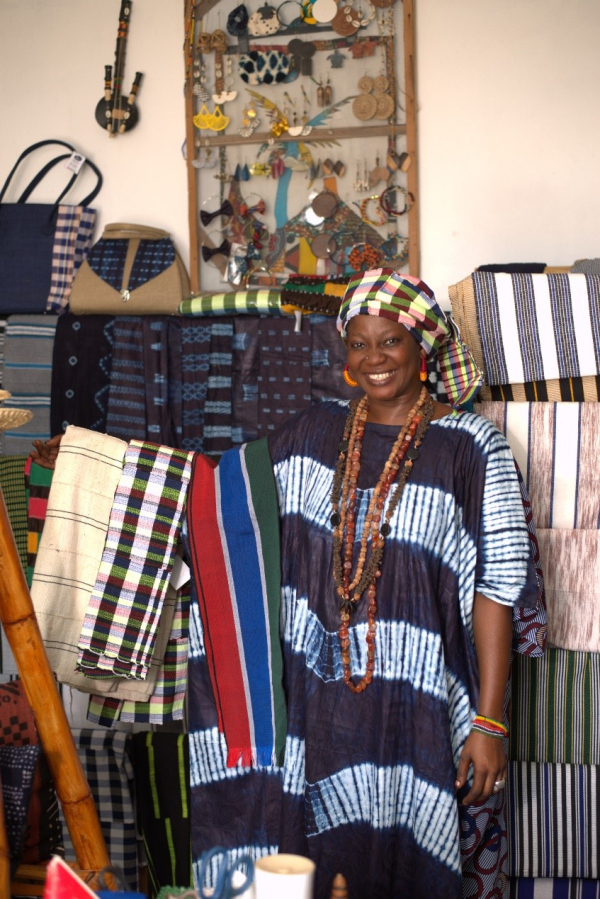
For Secka, the goal was clear: to move Gambian traditional fabric beyond its conventional use at naming ceremonies, weddings and other cultural occasions and turn it into products that could be used every day.
“I want to bring back the beauty of making the Gambia weaving,” she says.
She began asking herself why Gambian fabrics could not be transformed into modern clothes, bags, accessories and other products, just as traditional textiles from other countries have become internationally recognised brands.
Her father remains her greatest inspiration, she says, but her motivation is also rooted in a desire to preserve Gambian culture and take it to national and international platforms.
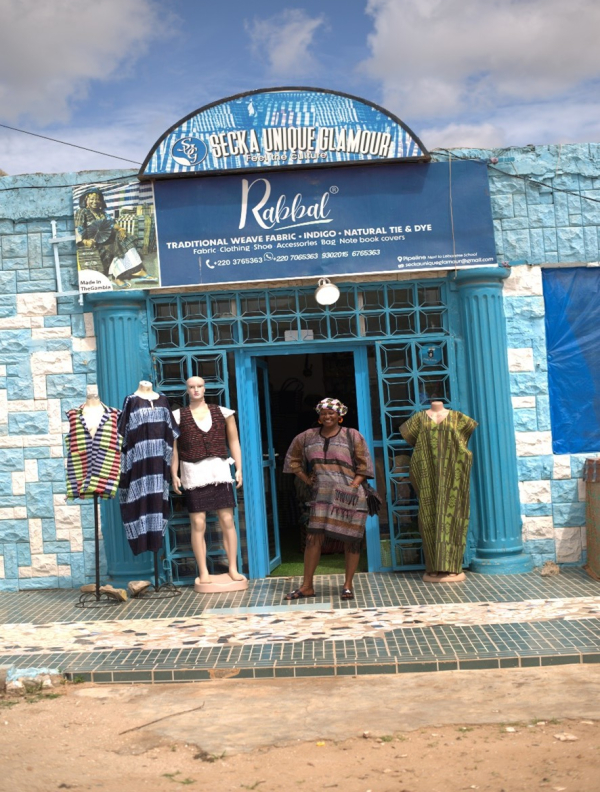
Today, Secka Unique Glamour produces both men’s and women’s clothing, gifts, notebooks, bags and other accessories. The business operates from her shop at Pipeline, near the Lebanese School, while sales are also conducted through Facebook, Instagram and WhatsApp.
Her products have also travelled beyond The Gambia. Secka has participated in exhibitions and trade fairs in Senegal and Nigeria, where she encountered entrepreneurs producing and promoting products from their own countries.
Those experiences, she said, strengthened her belief that Gambian entrepreneurs can also compete internationally if they believe in their products and maintain standards.
“I learn a lot because most of the entrepreneurs that I meet are making their own country products,” she said. “I also say the Glamour will take the Gambian name to the international level by making our own products and taking them to international fairs.”
Her skills have continued to expand through training and collaboration. She learned natural tie-and-dye techniques from young entrepreneur Adama Jatta and travelled to Senegal to learn how to make notebooks and bags.

At the heart of her business philosophy is quality. Secka says her company prioritises “quality before quantity”, arguing that quality products are essential for building loyal customers and accessing international markets.
She distinguishes between the different materials used in her products, including 100 percent cotton handwoven fabric and a blended fabric containing cotton and polyester. She also produces natural tie-and-dye using materials such as indigo and kola nut, alongside chemically dyed products.
For her, the distinction is important because she wants customers to understand what they are buying and appreciate the cultural value behind each product. “It means when you wear it you feel the culture,” she said.
Her commitment to Gambian products extends to the source of her raw materials. According to Secka, she obtains 100 percent Gambian cotton from areas including Basse, Njao and Samba Sira, where farmers cultivate the crop.
She believes the decline in cotton farming presents a challenge to the development of the textile industry but is encouraged by signs that cotton production is beginning to recover.
Beyond business, Secka sees entrepreneurship as a vehicle for empowering young people. Through her foundation, she provides skills training to young Gambians, including school dropouts, teaching them areas such as tie-and-dye, handicrafts, notebook making, hand fans and earrings.

Her vision is to ensure that young people do not only seek formal employment but also acquire practical skills that can help them become self-employed and support their families.
However, funding the training programmes remains a challenge because much of the cost currently comes from her business.
She believes greater support from government, development partners, individuals and non-governmental organisations could enable her to train more young people and expand the initiative.
Secka also dreams of establishing a dedicated production and training centre where weaving, tie-and-dye and other traditional skills can be practised, taught and showcased.
Such a centre, she believes, could become both a production hub and a cultural learning space where Gambians, tourists and young people can see how traditional fabrics are made.
Her engagement with tourists already provides an example of this vision. Visitors to her shop can be taken to weaving sites to see looms and the weaving process, while some are taught how to make natural tie-and-dye.
She also participates in local exhibitions, fashion shows and cultural events, including the Gambia Chamber of Commerce and Industry (GCCI), Gambia Women’s Chamber of Commerce (GWCC) and Gambia Startup and Creativity Chamber trade fairs, Lumos, the Cotton Festival and Nyambureh Festival.
Her participation in these platforms has helped expose her brand to wider audiences while promoting the “Made in The Gambia” message.
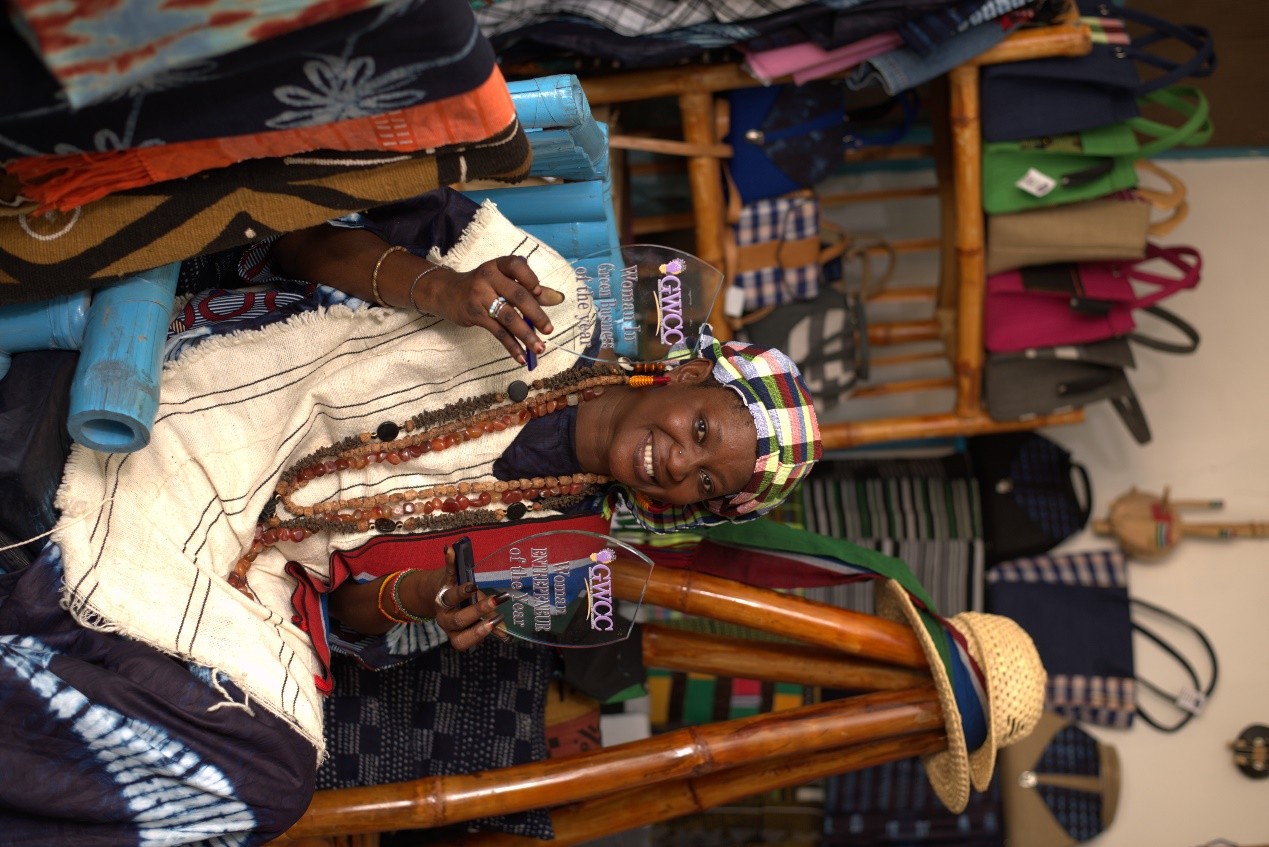
Her efforts have also earned recognition. Secka has received two awards from the Gambia Women’s Chamber of Commerce, including Women Entrepreneur of the Year and Green Business of the Year. She has also received recognition from institutions and business chambers for her efforts to promote Gambian products.
Yet despite these achievements, she says access to markets remains one of her biggest challenges. She wants to see Gambian products reach more international exhibitions, retail outlets and customers, but says limited financing, production facilities, raw materials and access to international markets continue to constrain expansion.
For Secka, the answer lies in investment in local production and people. She wants a future where young Gambians can graduate and confidently choose to learn weaving, sewing, tie-and-dye and other creative skills as viable livelihoods.
Her message is therefore bigger than the story of one entrepreneur. It is about what can happen when cultural heritage is combined with innovation, entrepreneurship and determination.
Through Secka Unique Glamour, she is seeking to prove that Gambian traditional craftsmanship can be preserved without being confined to the past.
Her ambition is to see Gambian fabrics worn, used, exhibited and appreciated both at home and internationally, while ensuring that the young people who inherit these skills can turn them into sustainable livelihoods.
For Secka, every woven thread carries a piece of Gambian identity. Her mission now is to ensure that identity travels far beyond the borders of the country.