President Adama Barrow leads the presidential voting-intention poll with 37.9 percent despite a 52% public dissatisfaction with the government’s delivery on promises, according to a new survey by the Centre for Policy, Research and Strategic Studies (CepRass).
The findings present an interesting picture of the country’s political climate ahead of the December 5 presidential election, with the incumbent maintaining a lead while respondents express concerns about economic conditions and government performance.
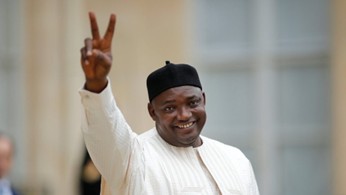
According to the survey, 37.9 percent of respondents with valid voter cards indicated their intention to vote for Barrow, followed by United Democratic Party (UDP) leader Ousainou A.N.M. Darboe with 24.2 percent and Talib Ahmed Bensouda with 11.3 percent.
However, the poll found that 52 percent of respondents considered the government’s delivery on its promises ineffective or very ineffective.
Public assessment of the economy was also largely negative, with 80 percent rating the national economy badly, while 43 percent identified the cost of living as the country’s biggest concern.
The findings raise questions about the factors sustaining support for the incumbent despite dissatisfaction with aspects of government performance.
The survey identified candidate competence as the leading consideration influencing voting decisions, cited by 39 percent of respondents. Policies and manifestos accounted for 22 percent, while integrity was cited by 16 percent.
However, the report does not establish whether these considerations explain respondents’ support for Barrow or identify the specific reasons behind their preference for the incumbent.
The findings therefore highlight the complexity of voter behaviour, suggesting that dissatisfaction with government performance does not necessarily translate into a decision to support an alternative candidate.
CepRass interviewed 1,180 respondents across 118 enumeration areas in all eight local government areas between October 17 and November 1, 2026.
The research cautioned that the figures reflect public perceptions at the time of fieldwork and should not be interpreted as a forecast of the final election results.