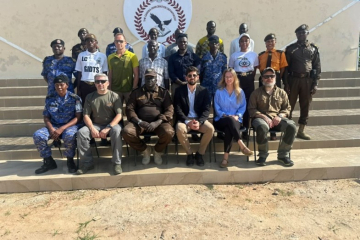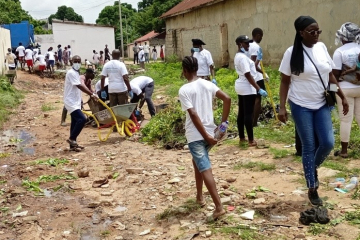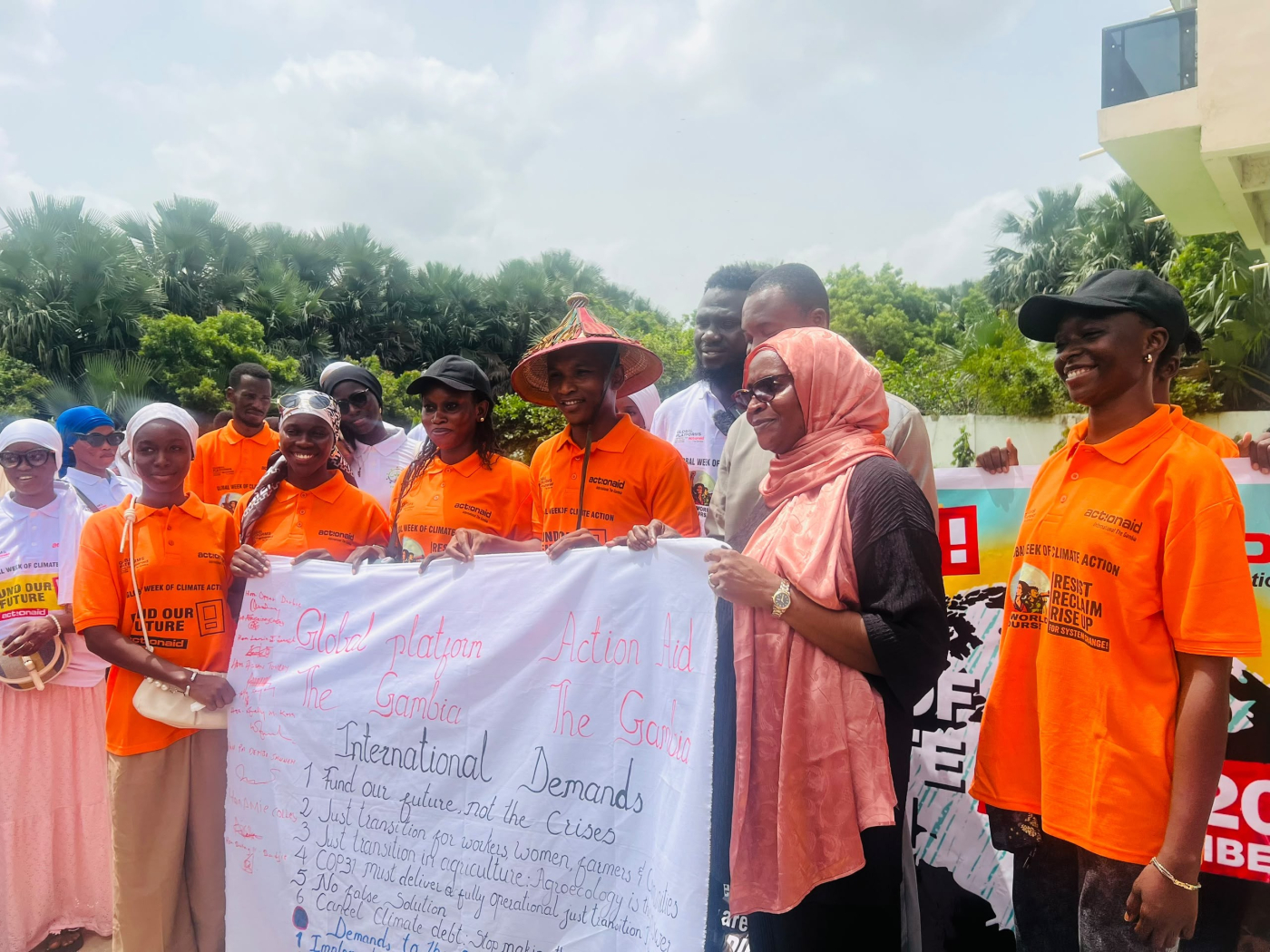
The event, held in Abuko on 19 September 2026, was organised by Global Platform The Gambia, a youth movement that has been operating in the country for three years and focuses on climate justice, feminism, human rights, democracy and youth leadership.
Addressing participants, Ousman Baldeh, Programme Manager of Global Platform The Gambia, said the gathering reflected the determination of young people to secure a better future.
“This gathering is blessed because it is made up of motivated young people who are ready to fight for their future,” Baldeh said.
He recalled that last year the platform organised a climate justice caravan to remote communities, where demands were collected from farmers and later presented to the Ministry before being taken to COP30 in Brazil.
“Today, I want to celebrate every member of Global Platform and our partners because these demands were ultimately presented by the Government of The Gambia at COP30 in Brazil,” he said.
Baldeh described climate justice as a call to hold major polluters accountable, noting that The Gambia contributes less than one per cent of global greenhouse gas emissions, while Africa contributes less than five per cent.
Speaking on behalf of ActionAid International The Gambia, Saikou Bah, Project Manager for the SAPOP Project and Training Coordinator for Global Platform, said the organisation was proud to support the initiative.
“On behalf of ActionAid, we are pleased to be part of this activity. We also thank the Ministry for hosting us and for accepting the demands we are presenting today,” he said.
Bah disclosed that the document had already received endorsement from members of the National Assembly.
“What we are presenting today is a document that has already been endorsed by National Assembly Members. What we need now is for the Ministry to amplify it,” he said.
Fatoumatta Bittaye, described by organisers as the “Iron Lady” of Global Platform, urged the Government to ensure young people are represented at international climate forums.
“As young people, this is the right time for us to fight because we are at the most energetic and creative stage of our lives,” she said.
She further called on government representatives to advocate for the concerns of Gambian youth on the global stage.
“When you go to international climate forums, please represent our dreams and our demands. Tell the West that we know they are largely responsible for the climate crisis we are facing,” she said.
Responding to the demands, Lamin Jammeh, Climate Focal Person at the Ministry, said the Government stood in solidarity with young people and welcomed their engagement on climate issues.
“We have taken time away from our routine engagements during the weekend to be here and receive you. I think that sends a clear message of solidarity,” Jammeh said.
Explaining the concept of a just transition, he stressed that any shift away from fossil fuels must be gradual and carefully managed.
“If we decide to phase out fossil fuels overnight, what would be the implications? Some people would not be able to attend school, ambulances are powered by fossil fuels, and many people would be unable to get to work,” he said.
The Deputy Permanent Secretary at the Ministry of Environment, Bintou Gasama, formally received the demands on behalf of the Government.
“We welcome the climate justice demands being presented today. We particularly acknowledge the emphasis on a just transition, accessible and adequate climate finance, and the issue of climate debt,” she said.
Assuring participants that young people would be included in The Gambia’s delegation to COP31, Gasama emphasised the importance of youth participation in climate decision-making.
“Your voice matters, your participation matters, and your ideas are an important part of shaping the climate future of our country. Anything for the youth without the youth is not for the youth. We are going with you, and you will represent yourselves,” she said.
The demands submitted by the youth coalition include calls on the international community to prioritise investment in sustainable development over activities that worsen the climate crisis, redirect between five and ten per cent of annual fossil fuel financing into the green economy, establish a fully operational mechanism for a just transition, cancel climate debt, provide grants instead of loans, and reject what activists describe as false solutions such as carbon credit schemes.
The group also urged the Government of The Gambia to strengthen the implementation of environmental legislation, including anti-littering regulations, phase out subsidies on chemical fertilisers in favour of organic alternatives, honour commitments under the Maputo Declaration on Agriculture, operationalise the National Climate Change Fund, and implement measures to protect coastal communities threatened by rising sea levels.