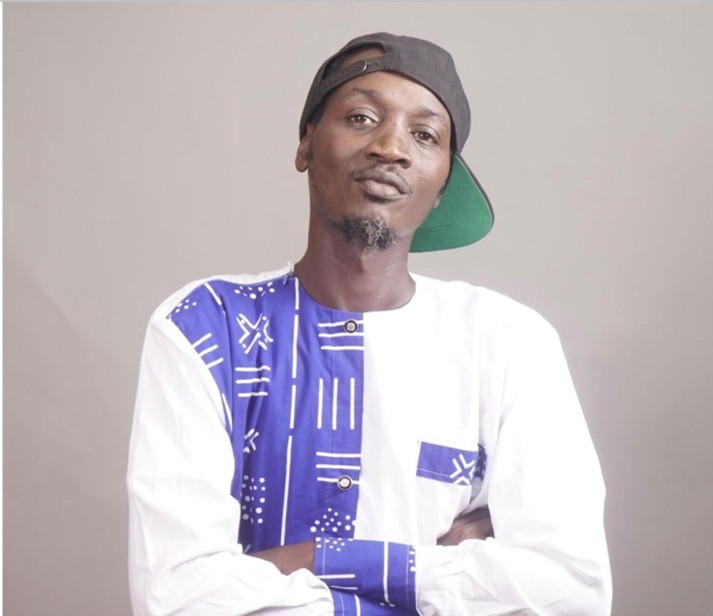
From the streets of New York's Bronx to the frontlines of activism in The Gambia, rapper and human rights advocate Killa Ace has spent more than two decades using music as a powerful tool for social and political change.
Born Ali Cham, Killa Ace moved to New York with his parents at the age of five, where he developed a passion for hip-hop inspired by his late brother, Matar Cham, and some of America's leading rap artists. He began writing and performing music at just 12 years old.
However, it was his return to The Gambia in 2000 that transformed his worldview and artistic direction. Witnessing children selling water by the roadside and experiencing the realities of poverty and underdevelopment inspired him to use music to address social issues affecting ordinary Gambians.
In 2003, he teamed up with Abdul Bashir to form DLC (The Lyrical Cypher). Through songs such as In the Ghetto, the group highlighted poverty, hardship and the determination to overcome challenges. A decade later, Killa Ace released his debut solo album, A.C.E: Another Critical Experiment, while helping establish The Cypher, a platform that empowered young people through rap battles and open-mic performances.
As political repression intensified under former President Yahya Jammeh, Killa Ace became increasingly outspoken. Inspired by Senegal's youth movement Y'en A Marre, he questioned the silence of Gambian artists in the face of injustice.
His politically charged song Ku Boka Sigitigi (Ku Boka C Geta G) challenged the political establishment and quickly gained widespread attention. Recorded in Senegal due to security concerns, the song encouraged many young Gambians to speak out ahead of the 2016 presidential election.
The growing threats against him eventually forced Killa Ace, his wife and daughter into exile in Senegal in June 2015. There, he expanded his work beyond music, becoming actively involved in civil society and humanitarian initiatives. Following the political crisis triggered by Jammeh's rejection of the 2016 election results, he and his team assisted more than 2,000 displaced Gambians through the Help Gambia initiative.
Returning home in March 2017, Killa Ace launched Lyrical Revolution, a movement promoting civic engagement and accountability. However, he remained critical of what he viewed as the slow pace of institutional reform.
His activism continued through songs such as Go Gotta Go, which addressed police brutality, and campaigns led by Team Gom Sa Bopa against corruption, abuse of power and environmental degradation.
Today, his advocacy extends to prison reform through The Uplift Project and the promotion of artistic freedom under the Pan African Network for Artistic Freedom.
Despite arrests, personal sacrifices and ongoing challenges, Killa Ace remains committed to social justice and collective action. For him, music remains one of the most effective tools for inspiring change.
"Let's not underestimate the power of art," he says, a message that continues to define both his music and his activism.