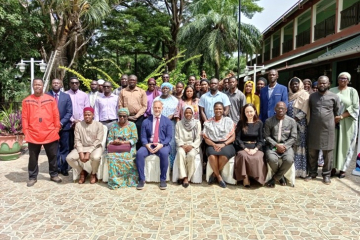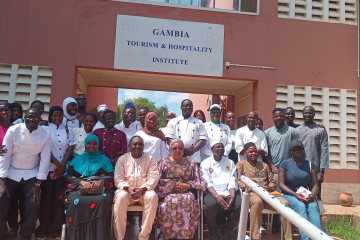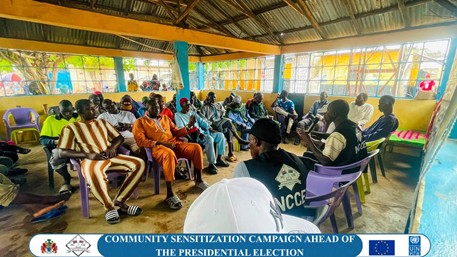
The campaign is aimed at equipping citizens with knowledge of their political rights and responsibilities under the 2025 Electoral Act, while promoting peaceful participation, political tolerance and responsible civic engagement throughout the electoral process.
The initiative also seeks to counter misinformation and disinformation, encourage dialogue among citizens and political actors, and strengthen national unity in an increasingly competitive political environment.
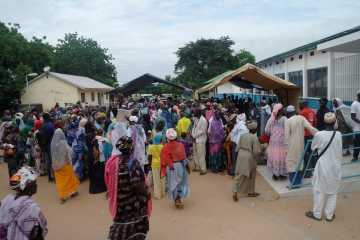
As part of the outreach, community sensitization sessions were held in Baja Kunda and Limbambulu Bambo in URR, as well as Timpa and Lamin Koto in CRR North. The sessions provided residents with an opportunity to discuss issues surrounding elections, democratic participation and the responsibilities of citizens before, during and after polling.
The NCCE emphasized that peaceful elections are not the responsibility of political parties and electoral institutions alone, but require the active participation of citizens. Community members were therefore encouraged to exercise their political rights responsibly while respecting the rights and choices of others.
Discussions also highlighted the importance of rejecting political violence, provocation and divisive rhetoric, particularly during campaign activities. Participants were reminded that differences in political opinions should not be allowed to undermine relationships within families and communities.
Speaking during the sensitization campaign, Ousman Jawo of Jamwelly village in CRR North urged citizens to embrace tolerance and refrain from actions that could trigger political conflict.
“Let us avoid creating problems during political campaigns simply to distract or provoke others. Politics should not create divisions among us. We should be able to support our individual political parties without fighting,” he said.
Mr Jawo stressed that The Gambia’s multiparty political system means citizens will naturally have different political preferences and should learn to coexist peacefully despite those differences.
“The Gambia is a multiparty state, and we cannot all support the same party. Many of these conflicts are caused by ignorance, which we must work together to overcome,” he added.
The NCCE said sustained civic education remains critical to building an informed and responsible citizenry capable of contributing meaningfully to democratic governance.
The council’s outreach forms part of broader efforts to promote a peaceful, inclusive and credible electoral process, while ensuring that citizens understand both their rights and responsibilities as participants in the country’s democracy.
With the presidential election approaching, the NCCE continues to call for greater tolerance, dialogue and respect for democratic principles, stressing that political competition should not come at the expense of national peace and unity.
The council maintains that strengthening civic awareness at the community level is essential to safeguarding democracy and ensuring that citizens remain actively engaged in shaping The Gambia’s democratic future.