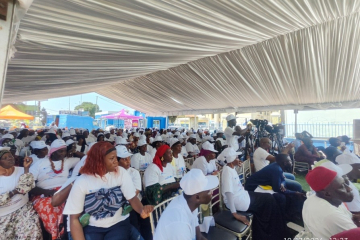
The exercise is being spearheaded by NaNA Director General Malang Fofana in collaboration with members of the National Alliance on Food Fortification. The initiative forms a key component of the Food Fortification Regulation 2020, which seeks to ensure that food producers, importers and distributors comply with national fortification standards as part of efforts to address micronutrient deficiencies.
As part of the exercise, the monitoring team has visited the Nassim Flour Mill factory in Banjul, the Giboro and Soma border posts, as well as a salt production centre in Foni Bintang Karanai in the West Coast Region.
The monitoring exercise follows the findings of a survey conducted in July 2026 by NaNA, the Food Safety and Quality Authority and other stakeholders, which revealed alarmingly low levels of compliance with food fortification requirements nationwide.
According to the survey, 96 per cent of salt, 91.9 per cent of wheat flour and 75.8 per cent of edible oil consumed in The Gambia were found to be unfortified.
Officials described the findings as a serious public health concern, warning that the continued consumption of unfortified foods could have significant health consequences, particularly for pregnant women and children under the age of five, who are among the groups most vulnerable to micronutrient deficiencies.
The ongoing monitoring exercise is therefore intended to identify the factors contributing to the low compliance rate, evaluate the practices of producers and suppliers, and strengthen enforcement of the country's food fortification regulations.
Food fortification is widely recognised as an effective public health intervention that helps prevent micronutrient deficiencies through the addition of essential vitamins and minerals to commonly consumed food products.
At the conclusion of the five-day exercise, a comprehensive report will be produced outlining key findings and recommendations.
The report will be shared with relevant stakeholders to facilitate timely action and reinforce compliance with food fortification standards across the country.
NaNA and its partners emphasised that sustained monitoring, stronger enforcement measures and continued collaboration among stakeholders will be essential to ensuring that fortified foods reach consumers and contribute meaningfully to reducing micronutrient deficiencies in The Gambia.