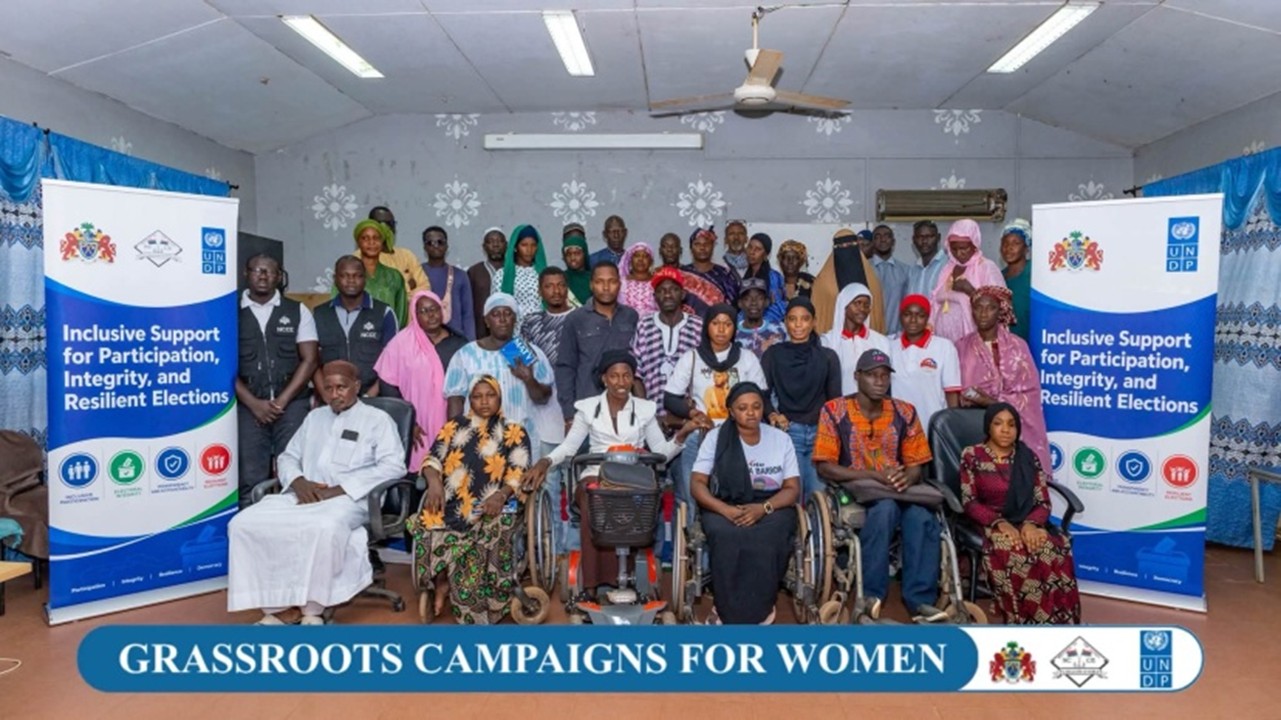
The National Council for Civic Education (NCCE), with support from the United Nations Development Programme (UNDP) through the INSPIRE Project, has launched a nationwide grassroots sensitisation campaign aimed at promoting inclusive democratic participation across The Gambia.
The initiative, themed “Empowered Voices, Peaceful Choices: Women and Youth Shaping Inclusive Democracy,” began with town hall meetings in Basse, Upper River Region (URR), and Essau, North Bank Region (NBR). The outreach forms part of a broader national campaign that will be rolled out across all seven administrative regions of the country.
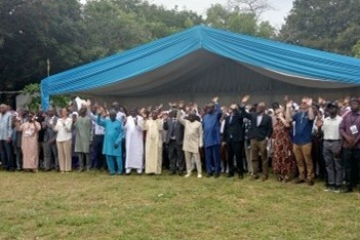
The town hall engagements brought together women’s groups, market associations, youth organisations, rural cooperatives, faith-based leaders and persons with disabilities (PWDs) to discuss challenges affecting their participation in governance and democratic processes.
According to organisers, the campaign seeks to promote inclusive participation in public affairs, empower women to overcome structural barriers, strengthen citizens’ understanding of electoral processes and raise awareness about the dangers of hate speech, divisive rhetoric and inflammatory political discourse.
Participants underscored the importance of safeguarding peace and national unity before, during and after elections, stressing that democratic participation should be guided by tolerance, dialogue and mutual respect.
Speaking during the discussions, Babanding Camara, Chairperson of the Village Development Committee (VDC) of Chamoi, called on citizens to maintain harmonious relationships regardless of political affiliation.
“Party affiliation should not divide us. We should embrace peace over conflict. The outcome of election results should not lead us into conflict,” he said.
Also addressing the gathering, Abdoulie Mballow of the Rural Support Organisation for the Disabled highlighted the need for meaningful and sustained inclusion of persons with disabilities in civic and political processes.
He noted that inclusion must extend beyond invitations to public events and address the practical barriers that continue to limit the effective participation of persons with disabilities in decision-making and governance.
Discussions in both Basse and Essau highlighted the vital role of community-based civic education in creating platforms where citizens can openly share their experiences, concerns and aspirations. Participants observed that such engagements are essential for strengthening democratic participation, promoting social cohesion and fostering an informed and active citizenry.
The NCCE said the nationwide outreach programme will continue in the remaining regions as part of ongoing efforts to support a peaceful, inclusive and participatory democratic environment in The Gambia.
The campaign is expected to further amplify the voices of women, young people and other underrepresented groups, while encouraging greater citizen engagement in governance and democratic processes across the country.