Thirty-two years after the killing of their loved ones on 11th November 1994 by the AFPRC regime, families of the slain soldiers have renewed their call for justice and accountability to find closure.
They also appealed to the authorities to hand over the remains of their loved ones to enable them to accord them a befitting burial.
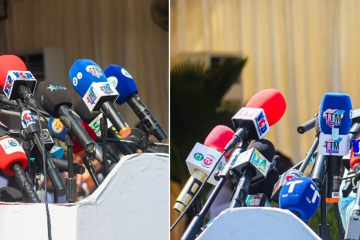
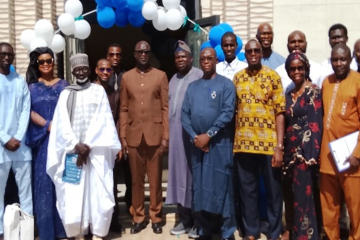
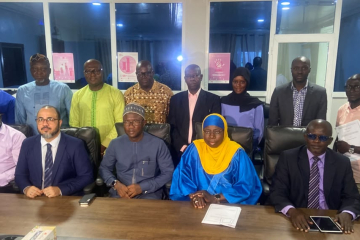
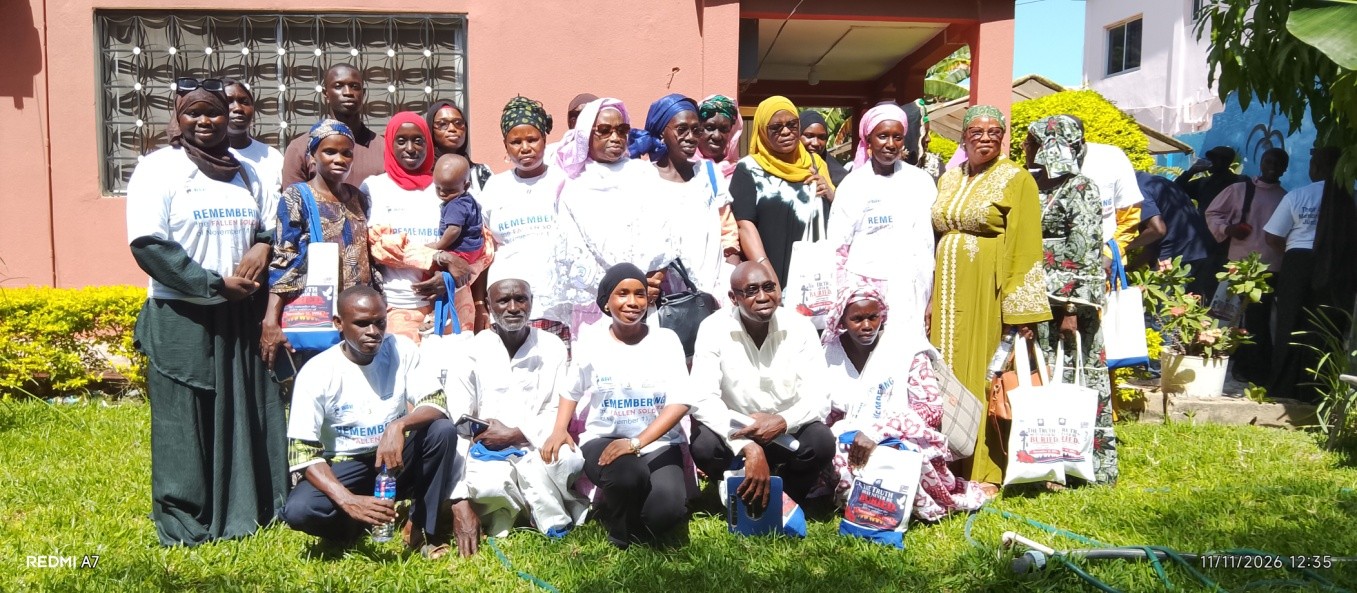
The calls were made on Wednesday during a solemn ceremony organised by the Women's Association for Women and Victims' Empowerment (WAVE-Gambia) in collaboration with the Legal Empowerment Fund to mark the 32nd anniversary of the extra-judicial killing of Gambian soldiers by the then AFPRC Military Junta led by Second Lieutenant Yahya Jammeh.
The theme for this year's event was "Remembrance and Justice".
Addressing the gathering, Balo Saidykhan, Chairman of the November 11 Victims Family Foundation, recalled that 32 years ago, gunfire shattered more than the silence at Fajara and Yundum Barracks.
"It shattered families, ended lives, and left wounds that time alone cannot heal. Behind every name we remember was a human being, a son, a brother, a husband, a father, whose life mattered and whose absence is still felt."
He said they gathered not merely to recall how they died, but to affirm that their lives must never be forgotten, their families must never be abandoned, and the search for truth must never be silenced.
"To truly honour the victims, The Gambia must turn remembrance into responsibility: establishing the truth, pursuing justice through due process, supporting survivors and bereaved families, and ensuring that no authority can ever again place itself above human dignity and the law."
He described the day as the darkest chapter in the nation's history, widely described as a "foiled coup attempt" orchestrated by the AFPRC, which led to brutal executions targeting loyal officers and soldiers.
However, he said testimonies from survivors and military insiders have challenged that narrative, suggesting instead that the events were part of a calculated purge to consolidate power by eliminating perceived enemies within the armed forces.
He noted that the Truth, Reconciliation and Reparations Commission (TRRC) uncovered compelling evidence supporting these accounts, including mass graves at Yundum Barracks where many victims were buried without proper ceremonies. Testimonies, he said, implicate high-ranking officials, including former President Yahya Jammeh, who is alleged to have ordered the executions.
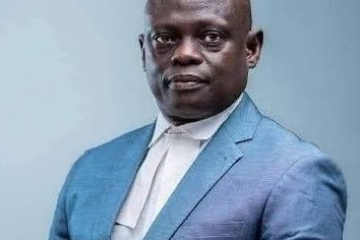
Speaking at the event, Magistrate Peter A. Che said victims still lack closure despite promises from government and steps taken since the TRRC.
"When shall we have closure? There have been so many promises from the government, and I want to acknowledge that steps have been taken."
Fatou Njie, Policy Analyst at the Office of National Security, speaking on behalf of Ida Persson, Head of the TRRC Post Unit, extended sympathy and solidarity to victims and commended the courage and resilience of victims' families.
Mafugi Sonko, an eyewitness and victim, also pointed to the chilling, barbaric and inhumane treatment some of his colleagues went through before their assassination. He said some families have waited far too long and now seek justice and accountability.
Isatou Jammeh, a member of The Gambia's Reparations Commission, said the Commission started its mandate last year and is working to ensure reparations are paid to victims, not just compensation but also rehabilitation, restitution, medical support, school support for children of victims, and psychosocial support.
On payments, she disclosed that they started in December last year and are continuing. "Two weeks ago, we've received $2.5 million from the United States, which is going towards reparations."