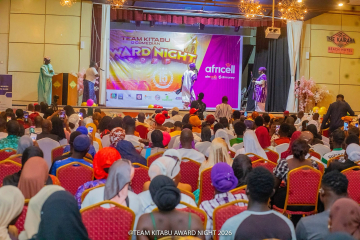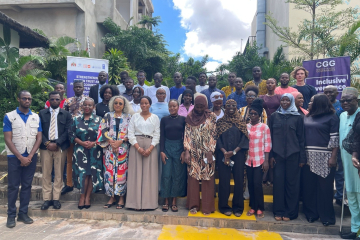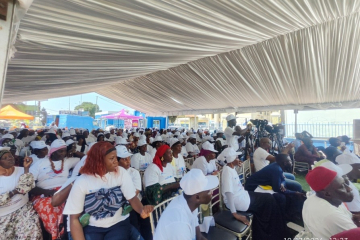
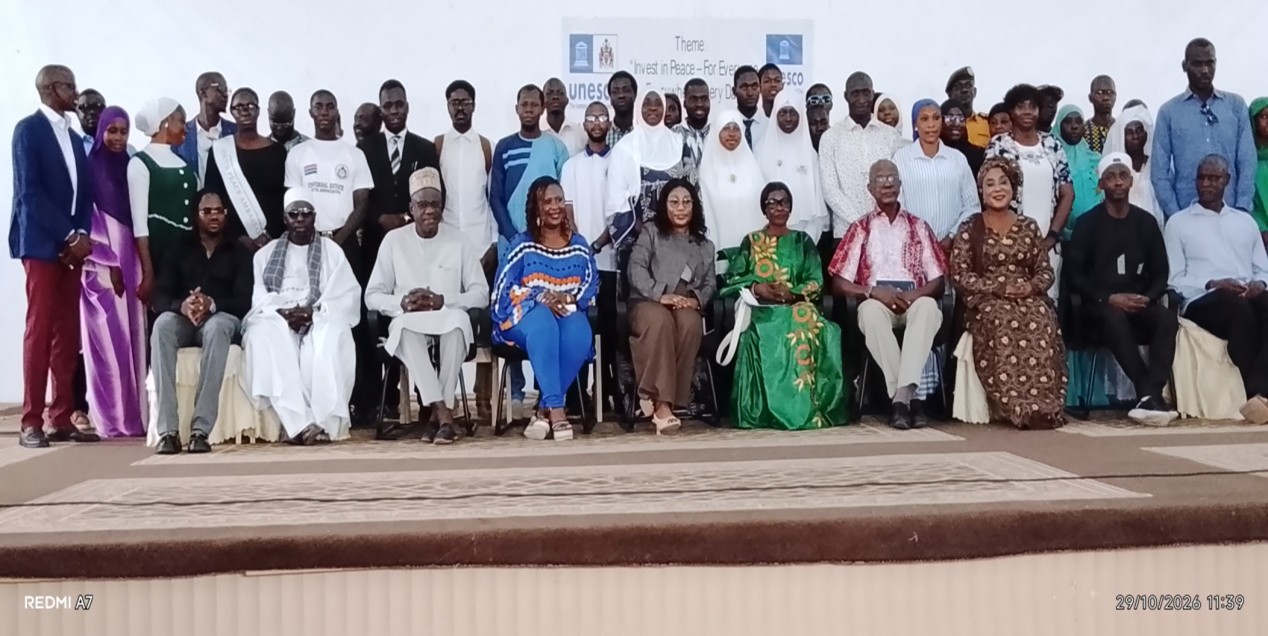
The Gambia National Commission for UNESCO (NATCOM) recently convened a Peace Circle and Intergenerational Dialogue aimed at fostering meaningful conversation, mutual understanding and collaborative action towards peacebuilding and social cohesion within communities.
The day’s event attracted youth, community leaders, elders, civil society actors, development partners and other stakeholders to engage in open and constructive dialogue on issues affecting peace, inclusion and community resilience.
Welcoming the gathering, Maimuna Sidibeh, Secretary-General of the UNESCO Gambia Office, reminded participants that peace is built through dialogue, mutual understanding and respect for diversity, and the willingness to work together despite differences.
“Spaces such as peace circles create valuable opportunities for young people and older generations to exchange perspectives, share experiences and wisdom,” she said.
Peace, she added, is everybody’s responsibility, and every generation has something valuable to contribute.
She said the day’s event also provides an opportunity to recognize and celebrate the important role of UNESCO and partners in advancing peacebuilding efforts across the country.
“Since its establishment, NATCOM has championed the principle that lasting peace must be founded upon the intellectual and moral solidarity of humanity,” she said.
She referenced that through its work in education, culture, science, communication and intercultural dialogue, UNESCO continues to empower individuals and communities to become agents of peace, tolerance, social cohesion and sustainable development.
“Through UNESCO's Participation Programme and the support of the United Nations Peacebuilding Fund, important initiatives have been implemented to strengthen peace and social cohesion across communities in The Gambia,” she noted.
She acknowledged UNESCO's contribution to peacebuilding, noting that its continued support for intercultural understanding, youth engagement, global citizenship education and the preservation of cultural diversity has significantly contributed to building peaceful societies and bridging divides across generations and communities.
Pa Modou Cham, President of the National Federation of Gambia UNESCO Clubs and Centres (NAFGUC), gave a brief background on the work of UNESCO, reminding that the organization was born with a very clear mandate:
“Since wars begin in the minds of men, it is in the minds of men that the defences of peace must be constructed.”
This, he said, is exactly what the National Federation has been doing as a voluntary civil movement.
He highlighted the role of the Federation, saying as the official partner of NATCOM at the grassroots level, its primary role is to bring UNESCO closer to the people and the people closer to UNESCO.
“Through the ASPnet schools and UNESCO Clubs in lower, upper basic and senior secondary schools, as well as community groups and our community radio stations across the country, we teach our members that peace starts with tolerance, dialogue and respect for diversity,” he said.
Ms Golda Keng, Coordinator of the United Nations Peacebuilding Fund for The Gambia, reminded participants that peace is not built through speeches, but when people listen to one another, address their differences and work together to solve problems affecting their communities.
Ramatoulie Sarr, Deputy Permanent Secretary at the Ministry of Basic and Secondary Education, representing the Minister, underscored the importance of the event, which she said provides an opportunity not only to celebrate peace but also to reflect deeply on our collective responsibility to nurture and sustain it.
“In doing so, we join millions of people around the world who are affirming their commitment to human dignity, solidarity, dialogue and mutual understanding,” she said.
Peace, she added, is often defined as the absence of conflict or war, yet peace is far more profound.