The World Trade Organization (WTO) has warned that declining development assistance and limited access to finance are threatening efforts to help the world’s least developed countries (LDCs) benefit from global trade, with their merchandise exports accounting for just 1.04% of the world total.
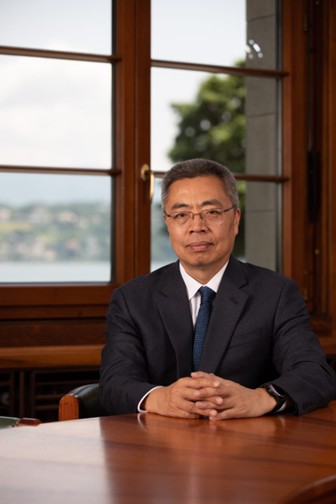
Xiangchen Zhang, WTO Deputy Director-General, said despite progress in improving market access and strengthening trade capacity, LDCs continued to face significant barriers to fully realising their economic potential.
In an article titled “Turning Ambition into Action: Making Trade Work for the Most Vulnerable,” Zhang said the international community must strengthen partnerships and protect trade-related support to prevent vulnerable economies from falling further behind.
His remarks come halfway through the 10-year United Nations Doha Programme of Action, launched in 2022 to help LDCs become more active participants in global trade by 2031.
Zhang said geopolitical tensions and disruptions had made the international trading environment increasingly challenging, while recent cuts to development assistance threatened to undermine progress.
According to him, LDCs account for only 1.04% of global merchandise exports, 0.5% of global services exports and 0.2% of digitally delivered services exports.
He said these figures highlighted the need for stronger international cooperation to expand trade opportunities and enable vulnerable countries to participate more meaningfully in the global economy.
Over the past two decades, LDCs have received more than US$223 billion in trade-related development assistance to improve infrastructure and strengthen productive sectors.
WTO members have also taken steps to improve market access for LDC exports, including duty-free access to destination markets, alongside measures to support services trade and facilitate countries’ transition out of the LDC category.
However, Zhang said progress remained uneven, with more than a quarter of official development assistance to LDCs cut last year. Aid for Trade, which accounts for about one-fifth of total official development assistance, faces uncertainty as pressure on aid budgets increases.
He called for action on three fronts: protecting trade support, addressing gaps in trade policy knowledge and helping LDCs develop more effective negotiating strategies.
On financing, Zhang said private investment alone could not replace concessional development assistance, which helps prepare projects, reduce risks and create conditions for investment.
He cited Zambia’s corn flour processing plants and a US$25 million soybean processing facility in Togo as examples of how cooperation and targeted support can encourage local processing, investment and job creation.
Zhang also highlighted limited funding for trade policy and regulations, noting that only 2% of Aid for Trade to LDCs goes towards these areas, while approximately 98% targets infrastructure and productive sectors.
Since 2022, more than 16,600 participants from 42 LDCs have received WTO training on trade rules and their implementation.
He urged LDCs to move beyond defensive negotiating positions and identify emerging opportunities in areas such as digital trade and investment facilitation.
Zhang said stronger partnerships would be essential to ensure vulnerable countries help shape the future of global trade.
The issues are expected to feature in discussions at the WTO Global Review on 29 October.