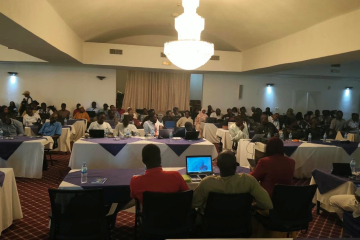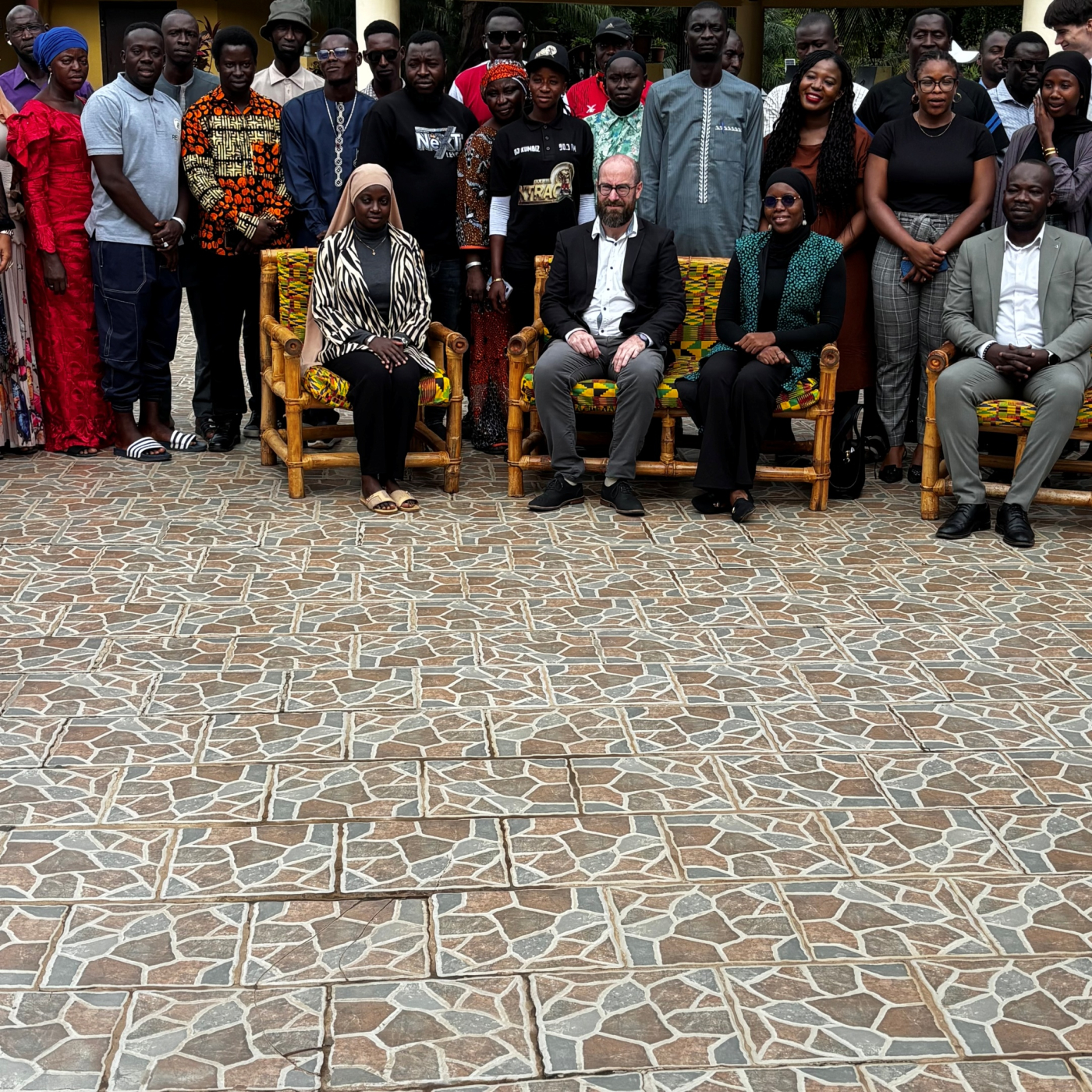
The training, held at the Senegambia Beach Hotel, brought together community media practitioners to deepen their understanding of child rights, ethical journalism and responsible reporting when covering issues involving children.
The initiative, supported by UNICEF The Gambia, seeks to equip journalists with practical knowledge to report on children in a manner that informs the public while protecting their dignity, privacy, safety and best interests.
Speaking at the training, Michael Gyan Nyarko, Deputy Executive Director of IHRDA, described the discussion as timely, particularly as The Gambia is engaged in dialogue on the proposed Broadcasting and Online Content Regulations 2026 and broader media reforms.
He said some aspects of the proposed regulations directly address harmful media exposure of children, stressing that journalists and media houses have a responsibility to understand and apply child-protection standards in their daily work.
“To the media houses and the editors, this is part of your risk management checklist. That is the added benefit to you as a commercial or corporate entity,” Nyarko said.
He explained that capacity building on human rights standards remains a central component of IHRDA’s work, noting that the organisation has operated across Africa for nearly three decades from its base in The Gambia.
According to Nyarko, IHRDA works to strengthen the effectiveness of the African human rights system through legal advocacy, litigation before regional human rights mechanisms, education and research.
He said IHRDA has one of the largest case dockets before the African Committee of Experts on the Rights and Welfare of the Child, with child-protection cases from several African countries.
The organisation, he added, also provides journalists and other actors within the human rights value chain with knowledge of the African human rights system and relevant human rights standards.
“We are a resource to you, and we affirm our partnership and our unwavering support to the cause of human rights in The Gambia and the work of a free and open press, supported by the right tools, capacity building and accompaniment,” Nyarko told journalists.
He identified female genital mutilation, child exploitation in tourism, child marriage and child labour as among the issues requiring particularly careful and responsible media coverage.
Gambia Press Union President Isatou Keita said journalists are often the first people to bring cases of harm against children to public attention, making responsible reporting particularly important.
“When a child is harmed in this country, it is often a journalist who tells that story first. How we tell it matters. Told well, it protects the child and informs the public. Told carelessly, it can cause a second harm, on top of the first,” Keita said.
She noted that the rapid growth of radio, television and social media means that stories can reach thousands of people within minutes, increasing the responsibility of journalists to ensure that their reporting does not expose children to further harm.
Keita urged journalists to reflect on the public-interest value of a story before publishing or broadcasting it.
She said journalists are agenda-setters who influence public discourse and therefore must avoid allowing sensationalism or social-media trends to overshadow important ethical considerations.
“When you write stories or try to tell stories, pause and ask yourself this question: Is this of public interest?” she said.
She further stressed that stories involving children require even greater consideration because information published about them can follow them throughout their lives.
According to Keita, community journalists are particularly well positioned to tell children’s stories because of their proximity to communities and their understanding of local contexts.
She urged journalists to ensure that they are properly equipped and willing to tell such stories accurately, sensitively and with the necessary context.
UNICEF Programme Manager Emmanuel Machad said the training forms part of a broader partnership aimed at strengthening the capacity of the Gambian media sector on child rights and protection.
He said UNICEF’s continued investment in such initiatives reflects the important role journalists, particularly community media practitioners, play in placing children’s rights issues on the public agenda.
“As media professionals, and I think it is even more important in your case because I understand that most of you are coming from community media, you really have significant control to influence and position children’s rights issues on the public agenda in your community, but also at the national level,” Machad said.
He cited previous reporting on incidents in Majalis, including a scabies outbreak and a fire outbreak, as examples of how media coverage can draw public and government attention to challenges affecting children.
He said such reporting contributed to increased advocacy and discussions among duty bearers and decision-makers, including efforts that led to advocacy for the establishment of a multisectoral task force bringing together government institutions, civil society organisations and religious leaders to address conditions affecting children in Majalis.
Machad encouraged journalists to continue reporting on critical developments affecting children’s rights, while ensuring that their approach remains accurate, ethical and sensitive.
The two-day training is expected to strengthen community journalists’ practical understanding of child-sensitive reporting and reinforce the media’s role in protecting children while ensuring that issues affecting them remain firmly on the public agenda.