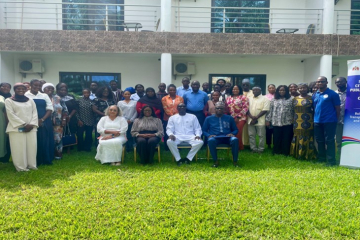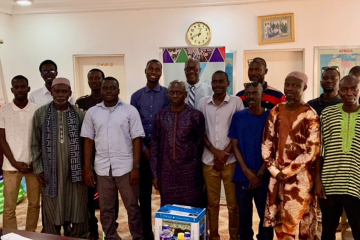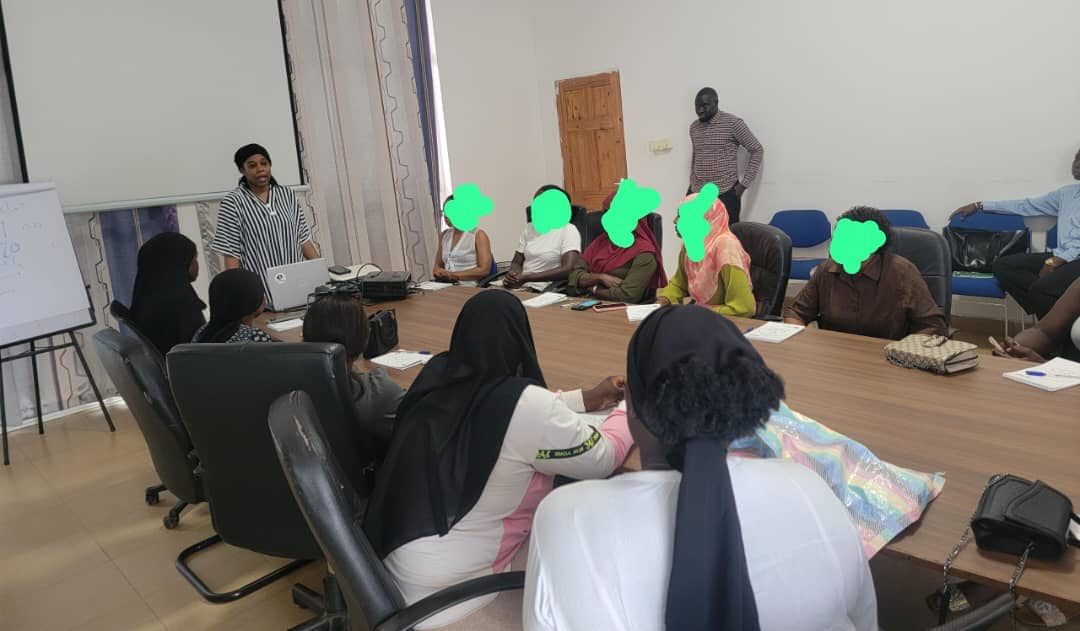
The training, which focuses on practical handicrafts and entrepreneurship, is designed to help participants develop income-generating skills while strengthening their ability to establish, manage and sustain businesses.
The 20 inmates are undergoing training in tie-and-dye, batik and beading, while the ex-inmates have already undergone training in tailoring, makeup and hairdressing.
Beyond the practical skills, participants are being introduced to key aspects of entrepreneurship, including business planning, cash-flow management, product pricing, budgeting and leadership. Organisers believe these skills will enable beneficiaries to turn their talents into sustainable livelihoods.
Speaking at the opening ceremony, Theresa Diarra, Director of Operations at GCCI, welcomed the participants to the Chamber and assured them that the institution’s doors remain open to people seeking to develop their businesses.
She explained that GCCI, which she described as the “home of business,” is committed to supporting entrepreneurs and helping businesses grow.
“This training is for you to uplift you and to help you in everything that you are doing in your businesses,” Diarra told the participants, urging them to make full use of the opportunity.
She stressed that the training should be seen as a starting point rather than an end in itself, particularly for participants who already operate businesses or are considering starting one.
According to her, entrepreneurship requires more than having a good business idea, as prospective entrepreneurs also need to understand how to develop their ideas, manage their finances and, where necessary, recruit and manage employees.
“This training is just the start. It is a stepping stone for you,” she said, adding that GCCI’s objective is to see businesses become stronger, grow and contribute to the economic empowerment of their owners.
Diarra also encouraged the participants to engage with GCCI beyond the training whenever they need guidance, recommendations or assistance related to their businesses.
She particularly welcomed the participation of women, noting the importance of ensuring women’s inclusion in entrepreneurship and capacity-building programmes.
Meanwhile, Isatou Jallow of Jollof Care Center expressed gratitude to GCCI for providing the opportunity and said she was pleased with the number of participants benefiting from the initiative.
Jallow clarified that the programme is not exclusively for ex-inmates and returnees, noting that slots have also been provided for people currently serving sentences at Mile II.
She explained that many of the beneficiaries already possess practical skills, but the entrepreneurship component is intended to help them understand how to transform those skills into viable businesses.
“They already have their skills. This training is to help them understand entrepreneurship and how to manage their businesses,” Jallow said.
She further assured the participants that she remains available to support them beyond the training, including helping them establish businesses and exploring opportunities to mobilise funds that could assist them in building sustainable livelihoods.
The partnership between Jollof Care Center and GCCI comes at a time when skills development and economic empowerment are increasingly being viewed as important components of rehabilitation and reintegration.
For the beneficiaries, organisers hope the training will provide not only practical skills, but also the confidence and business knowledge needed to become economically independent and contribute positively to their families and communities.
The initiative ultimately seeks to demonstrate that rehabilitation can extend beyond incarceration or release, by creating opportunities for participants to acquire livelihoods, build businesses and pursue productive futures.