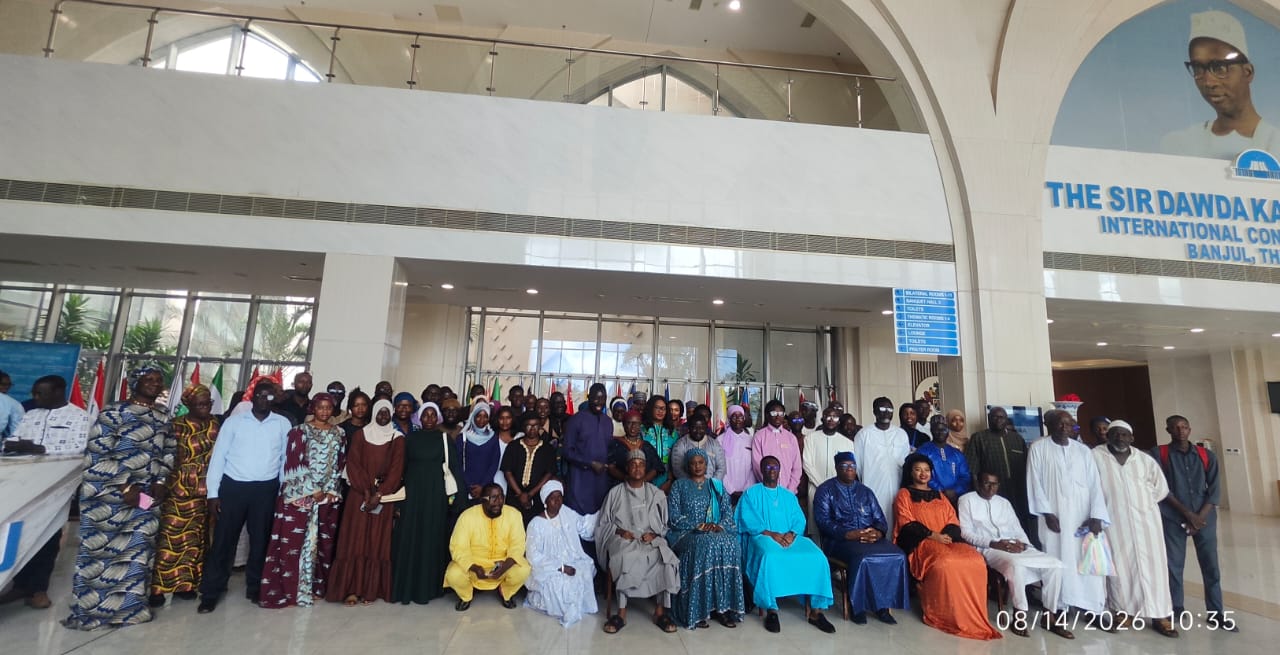
Prof. Gomez made the remarks on Friday August 14, 2026, during the validation of the draft National Apprenticeship Policy at the International Conference Center in Bijilo.
He said the policy is closely aligned with the Recovery-Focused National Development Plan, the National TVET Policy 2021-2030, the Gambia National Qualifications Framework, and broader commitments to the Sustainable Development Goals, particularly Goal 4 on Quality Education and Goal 8 on Decent Work and Economic Growth.
In line with the Recovery-Focused National Development Plan 2023-2027, Prof. Gomez described the validation as a milestone in efforts to reform and strengthen the Technical and Vocational Education and Training, (TVET) system.
“It reflects our collective determination to ensure that skills development remains responsive to the changing needs of our economy and the aspirations of young people,” he said.
The minister noted that government recognises human capital as the country’s most valuable resource.
“Therefore, our ability to achieve sustainable economic growth, create decent employment opportunities, improve productivity, and compete in the global economy depends largely on the knowledge, skills, competencies, and innovation of our workforce,” he said.
Despite significant progress in expanding access to education and training, Prof. Gomez said many employers still report shortages of appropriately skilled workers. At the same time, many young graduates struggle to secure meaningful employment due to lack of practical workplace experience.
“Bridging this gap between training and the labour market remains one of our greatest national priorities,” he added.
He said apprenticeship provides one of the most effective mechanisms for addressing this challenge by combining structured institutional learning with supervised workplace training. Apprentices, he noted, will acquire not only technical competencies but also professional attitudes, work ethics, digital skills, entrepreneurial capabilities, and problem-solving abilities.
According to the minister, the policy represents a significant shift from informal training arrangements to a structured national apprenticeship system built on quality, accountability, inclusiveness, and industry relevance.