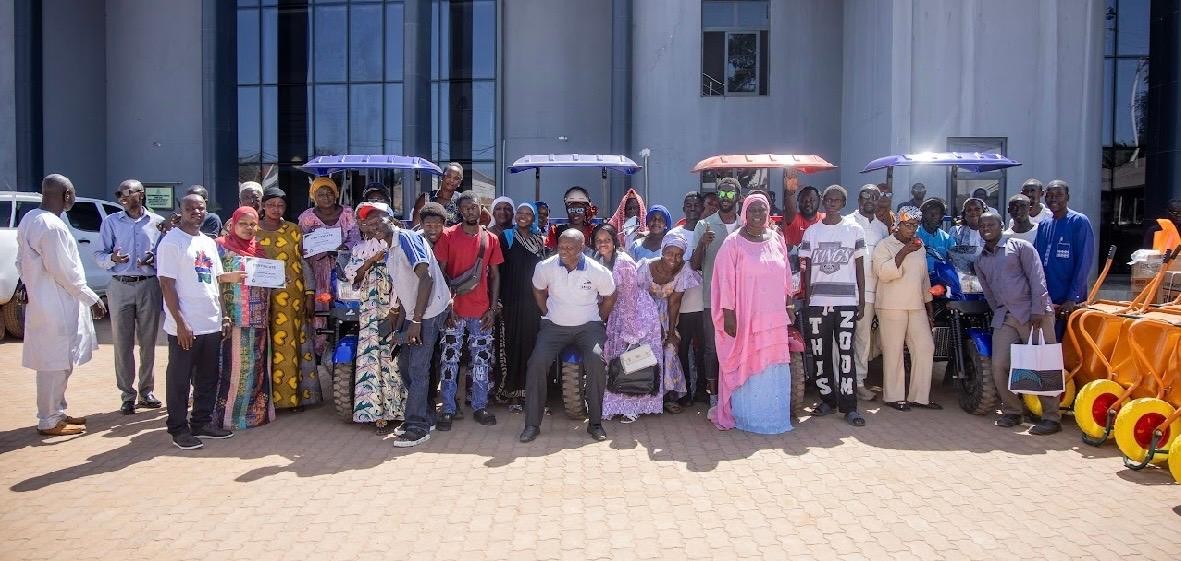
WasteAid Gambia, a community-based group, has invested about D1.3 million in equipment and start-up financial support for 40 participants trained in plastic waste management, as part of efforts to strengthen community-based waste collection and create economic opportunities.
The support, provided to participants from Bakau, Tallinding, Fajikunda and Abuko, includes tricycles, wheelbarrows, rakes, safety boots, reflective jackets, hanging scales, electric saws for cutting, gloves and start-up capital to help them establish and sustain their waste collection activities.
The beneficiaries received the support on Saturday, November 14, following technical training in plastic waste management, entrepreneurship, health and safety under WasteAid's First Step Resource Management Programme.
At the graduation ceremony, Lamin Sanyang, Country Programme Manager of WasteAid, said the initiative was aimed at transforming waste from an environmental challenge into an economic opportunity.
"This occasion is more than just a graduation ceremony. It is a testament to the determination, resilience, and commitment of individuals who are transforming waste from an environmental challenge into an economic opportunity," he said.
Sanyang said WasteAid, which has been operating in The Gambia since 2015, had established 11 plastic collector groups across the Greater Banjul Area to strengthen the capacity and livelihoods of informal waste collectors.
KMC Mayoress Binta Janneh commended WasteAid and its partners, noting that addressing plastic pollution required community participation, skills development and economic empowerment.
She described plastic pollution as a significant environmental challenge, particularly for communities within and around the Tanbi wetlands.
"Beyond the training, what makes today's ceremony more significant is the provision of essential tools, materials, personal protective equipment, and tricycles to support the graduates in their waste collection activities," she said.
WasteAid Head of Strategy and Impact, Angela McDermott, said the success of the initiative should be measured not only by the number of people trained or equipment distributed but also by the environmental impact created through sustainable waste collection.
A representative of Rio2 congratulated the graduates, encouraging young people to embrace environmental entrepreneurship and contribute to national development.
One of the beneficiaries, Yama Danso, thanked the organisers for the opportunity and assured them that participants would use their acquired skills to help reduce plastic pollution in their communities.