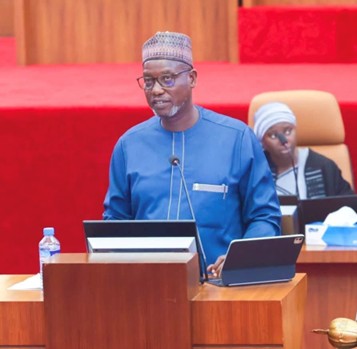
The Minister of Interior Abdoulie Sanyang, has called on communities and families to support the police in tackling youth gang activities, saying public cooperation is crucial to identifying and addressing gangs operating within neighbourhoods.
The minister made the remarks at the National Assembly while responding to an oral question from Hon. Sulayman Jammeh, Member for Bundungka Kunda Constituency, who asked about measures in place to address gang activities among young people.
In his response, the minister said the police were conducting extensive patrols, including extending their operations to foot patrols, as part of efforts to tackle the problem.
He said one of the challenges facing the police was obtaining information from communities, despite gang members living among residents who may know their identities and activities.
“One of the problems, all these gangs, as young as they are, they live in the society, within a community,” the minister said, adding that the police needed community members to provide information about where gang members operate.
He observed that people often speak out only after incidents have occurred, rather than sharing information that could help the police address the problem beforehand.
The minister also expressed concern about the age of people involved in criminal activities, recalling that when he joined the police, offenders were generally older than him, whereas many offenders today are young.
He called on families and communities to take action and help the police fight what he described as a menace.
The discussion also touched on the rehabilitation of young offenders under the age of 18 who are arrested in connection with gang activities.
The minister said the prison service had rehabilitation programmes designed to reform young offenders and prepare them for reintegration into society after release.
He explained that the programmes include basic education from Grade One to Grade Six, depending on the educational level of each young person before detention.
Other opportunities include tailoring, carpentry, gardening and agricultural activities, which are intended to equip young offenders with practical skills for self-reliance.
The minister said the objective was not merely to keep young people in custody but to educate them, correct their behaviour and help them build productive lives after release.
He added that the government’s prison reform agenda recognised the need to expand rehabilitation programmes for young offenders to help reduce reoffending.
The minister maintained that addressing youth gang activity requires both police action and the support of families and communities.