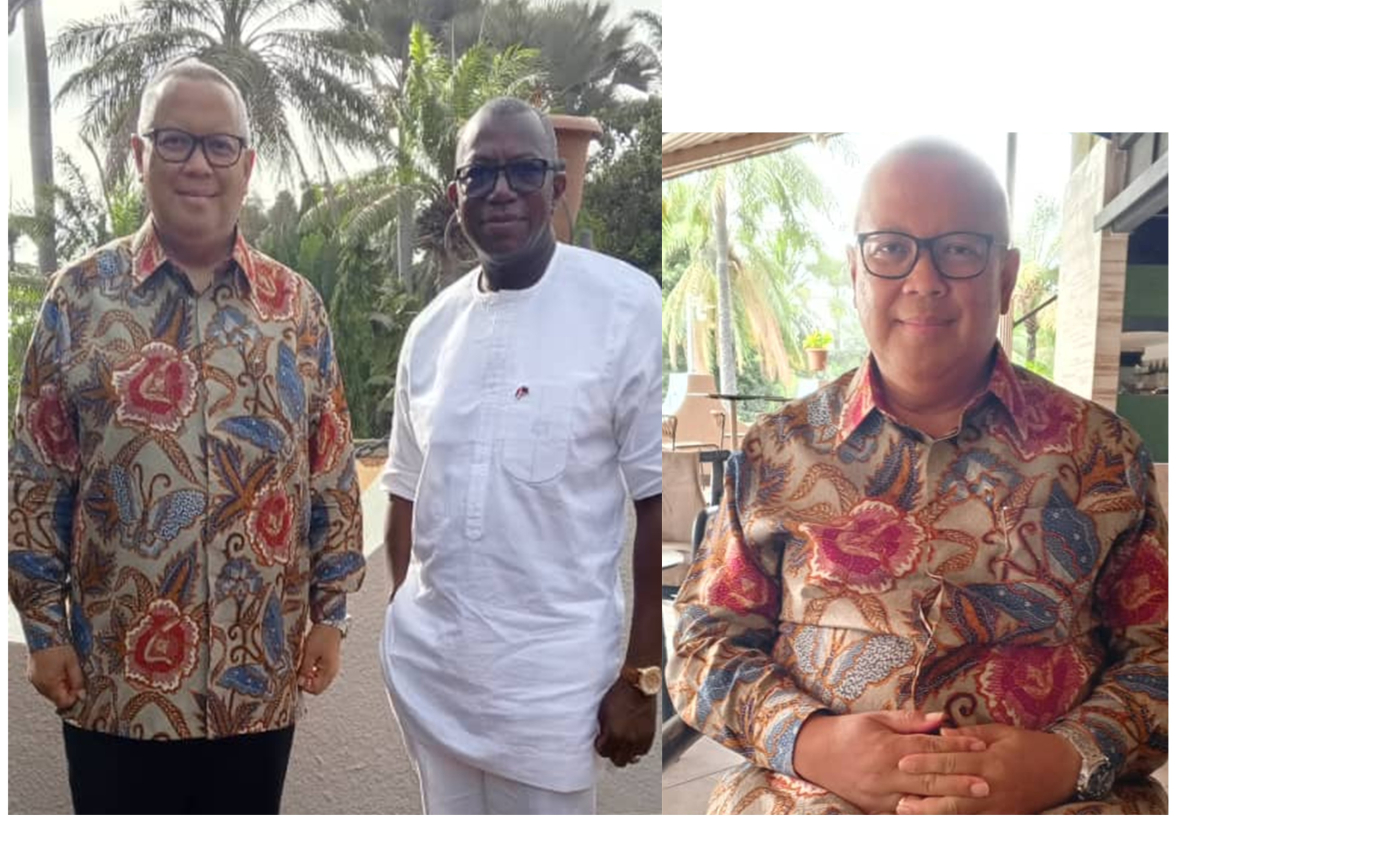
“Indonesia and The Gambia established diplomatic relations in 1982, and over the years we have developed extensive cooperation on how Indonesia can support The Gambia, especially in key sectors. That is why, in 1996, the Governments of Indonesia and The Gambia agreed to establish an agricultural training centre for West Africa in The Gambia. Alhamdulillah, since 1998, the training centre has been in place,” Ambassador Wicaksono said in an interview with The Point.
The Jenoi Agricultural Rural Farmers Training Centre, established more than two decades ago, has recently been renovated to accelerate its contribution to agricultural development and food security in The Gambia and the wider sub-region. Ambassador Wicaksono said both countries are working to further transform Jenoi into a leading Regional Training Centre of Excellence for West Africa.
“I think it is very important for the development of cooperation between Indonesia and The Gambia to make the centre useful for The Gambia in agriculture and food security, as well as for other countries in West Africa,” he said. “With the rehabilitation and innovation of the facility, we can undertake more and better programmes for capacity building—not only in agriculture, livestock and food security, but also in innovation, technology, digitalisation, and global issues such as the impact of climate change on agriculture.”
He added that Indonesia would continue to assess the needs of the Gambian Government, particularly in training and capacity building, to support human capital development. “We can adjust from our side to prepare a joint programme and joint research with The Gambia. I believe this is one of the foundations of the good relations between Indonesia and The Gambia,” he said.
While Indonesia will continue to support The Gambia’s agriculture and food security sectors, Ambassador Wicaksono said his country also intends to expand cooperation in commerce, education and research, parliamentary and legislative exchanges, institutional strengthening and capacity building, mutual support in international organisations, and a broader framework agreement.
The agreement, he noted, is intended to strengthen collaboration across economic, social and cultural spheres, building on the longstanding friendship and shared values of both countries, including democracy, good governance and respect for international law. Indonesia, Southeast Asia’s largest economy with a GDP of more than US$1 trillion, is regarded as a rising economic powerhouse.
“The Gambia and Indonesia have tremendous potential for cooperation,” said Indonesia’s Honorary Consul in The Gambia, Alieu Secka, a former chief executive officer of the Gambia Chamber of Commerce and Industry and former president of the Gambia Hotel Association.