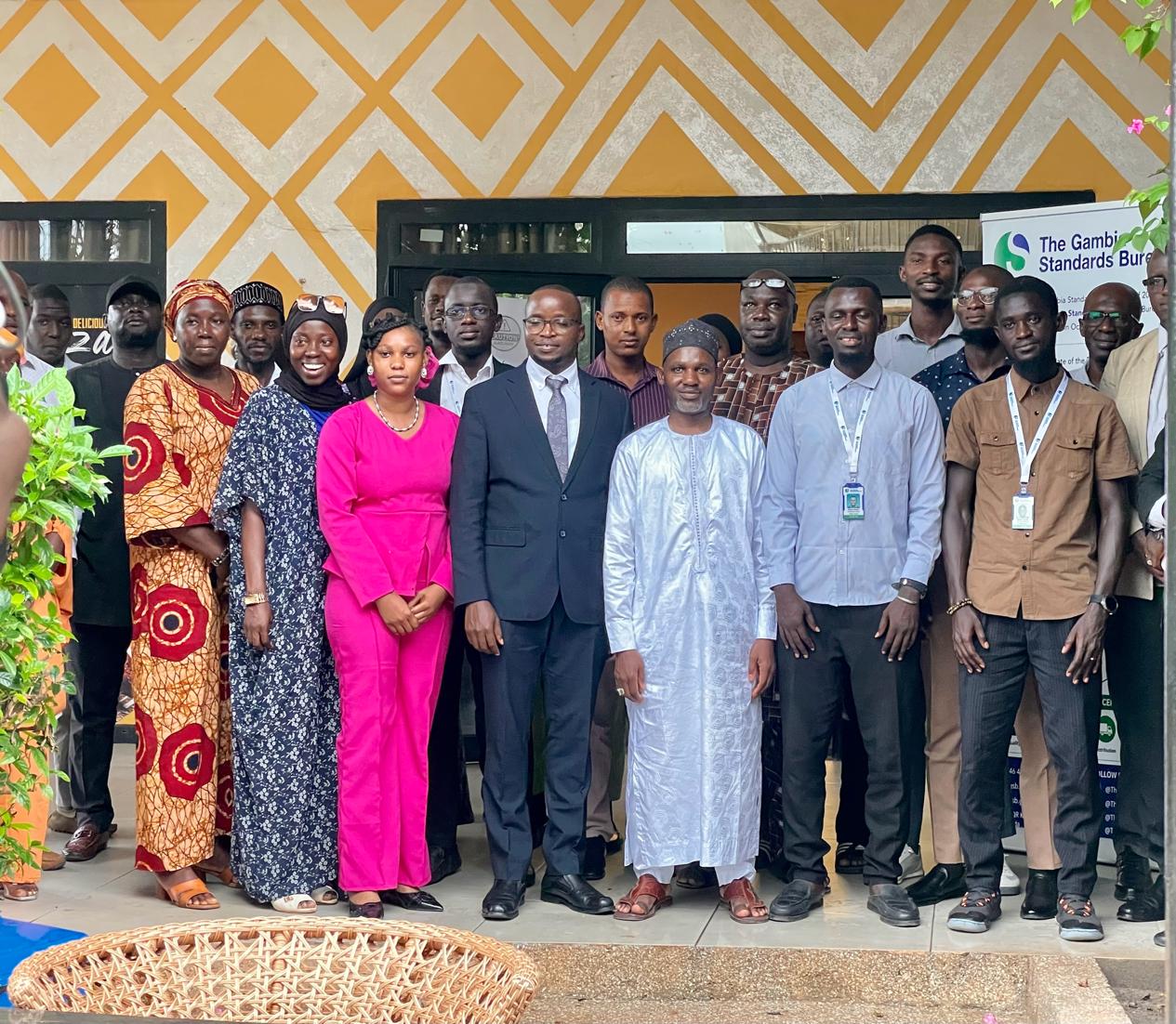
The move was highlighted Tuesday during a National Electrotechnical Committee (NEC) meeting held as part of the official visit of Wafula Collins, Country Officer of the International Electrotechnical Commission (IEC) Africa Regional Centre.
Speaking at the meeting, Ebrima Musa Jallow, Director of the Standardization Division of the Gambia Standards Bureau, said the Bureau has adopted 123 IEC standards, a development that contributed to the country’s upgrade from ISO affiliate member to affiliate plus status.
He said the NEC, comprising stakeholders in the electrotechnical sector, plays an important role in examining and adopting standards relating to electrical products.
Mr Jallow said the visit was timely because adopting standards must be accompanied by building the capacity of stakeholders to implement them.
He said the training would strengthen understanding of IEC standardization processes and conformity assessment, particularly to ensure that electrical products entering The Gambia conform to nationally adopted standards.
Ousman Njie, of the Gambia National Electrotechnical Committee, said expanding electricity access must be matched by ensuring that electrical equipment is safe, accessible and fit for purpose.
“As we have electricity supply expanding all over the country, we are buying equipment every day,” he said, noting that standards are necessary to ensure such equipment meets minimum safety and performance requirements.
He explained that conformity assessment helps determine whether products, processes and systems meet requirements designed to protect people, equipment and electrical installations.
Wafula Collins, IEC Africa Regional Officer, said the work of the NEC was indispensable to the lives of Gambians, particularly as the country seeks to expand electricity access and participate in regional trade.
He said standards were critical to Africa’s development ambitions, including the African Continental Free Trade Area and the aspiration for a single African electricity market.
“If, as Gambia, you want to trade your peanuts from here, you have a buyer in Kenya. They will ask you about the standards,” Mr Collins said.
He assured The Gambia of IEC’s support in strengthening its national electrotechnical standardization and conformity assessment systems.
Meanwhile, Papa Secka, Director General of the Gambia Standards Bureau, said the country’s limited testing capacity makes conformity assessment particularly important.
He disclosed that, apart from a state-of-the-art laboratory for testing lighting products, the country does not yet have a fully-fledged laboratory for testing electrical appliances.
Mr Secka said the Bureau signed the Affiliate Conformity Assessment Status declaration in September 2025, giving it access to IEC systems and training.
He said the framework would enable the country to use internationally recognized test reports and certificates to assess the safety and quality of electrical products while efforts continue to establish national testing capacity.