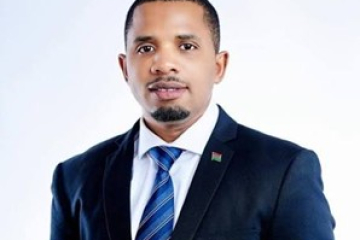
Providing context, especially as it relates to one of the causes (unemployment), the young political scientist stressed Gambia's youthful population, talking about the youth bulge, a demographic pattern where a country has unusually large number of children and young adults (typically 15 to 35 years) compared to the rest of the population. This often comes with mass unemployment, economic pressure and a greater risk of social and political inability.
He said, in no uncertain terms, that when the larger population or the young people lack productive engagement, it could proliferate crimes, violence and social unrest, because when young people lack the legitimate pathway to get economic advancement or to earn, then they will resort to informal or illicit activities. He added that this could be one of the main causes of crimes.
He also flagged institutional paralysis as another cause on top of those mentioned earlier. "Because our police are not that well-equipped. They are not well-trained. All these things are a cause for concern. Some of the people will in fact go further to say that they don’t believe the ordinary police can protect them," he said, adding that this may make people rely on other means of protection to protect themselves.
Notwithstanding, while highlighting the unfriendly nature of the environment and the volatility of the current situation, the young political scientist and lecturer of political science was quick to emphasise that such phenomena often characterise countries in transition.
"If you dig into many literatures, you will find that authoritarian governments, when they are moving away to a more democratic system and those governments try to start relaxing the coercive control, it can produce a spike in visible crimes. Because citizens or the criminals will try to test the boundaries of the new democratic order. So because of these things, it can also be as a result of this that the current state of security is not that as we are used to before."