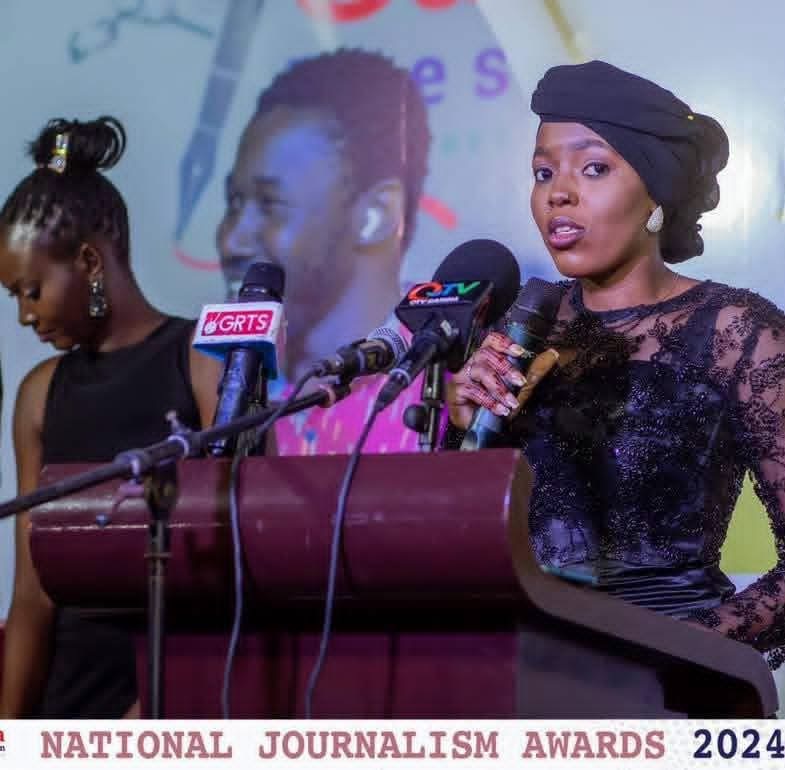
Her warning comes amid concerns over reporting of sensitive incidents involving the death of a Senegalese National during a patrol by the Drug Law Enforcement Agency Gambia officials (DLEAG) where irresponsible reporting could fuel threats, calls for revenge and tensions between the two countries.
Keita noted that The Gambia and Senegal are not simply two countries separated by a border, but share families, communities, history, culture, trade and deep social connections.
She therefore urges media practitioners to exercise particular caution when reporting incidents that could have implications for relations between the two countries.
In a statement titled “Journalism Is a Public Trust, not a Weapon”, Keita said journalism is not simply about being the first to publish, conducting an interview, going live or generating thousands of views.
“Journalism is a responsibility,” she said, stressing that it comes with ethics, verification, fairness, context and an obligation to understand the consequences of information placed into the public space.
Keita warned that serious allegations, particularly those involving death, abuse, corruption or criminal conduct, should not be presented to the public as established facts simply because someone made the allegation on camera.
“You verify, you seek the other side, you ask the relevant authorities and examine the evidence,” she said. Where facts have not been established, journalists must clearly state that, she cautioned, stressing that doing so is not protecting anyone but practising responsible journalism.
The GPU president also expressed concern that society is increasingly equating the number of views a journalist attracts with influence, while sensational questions are sometimes regarded as evidence of bravery.
“When the pursuit of clicks becomes more important than the pursuit of truth, journalism stops serving the public and starts serving the algorithm,” she warns.
Keita challenged journalists and audiences to examine their own role in promoting sensationalism, noting that people often share unverified claims and reward sensational contents with thousands of views, likes and shares before complaining about the consequences of misinformation.
She said the same ethical standards must apply whether the subject of a report is a friend, political opponent, government official, businessperson, foreign national or ordinary citizen.
Referring to the dangers of irresponsible reporting during periods of tension, Keita cited Rwanda’s 1994 genocide, where radio broadcasts were used to incite violence.
She also warned that footage and rumours circulating on social media during cross-border tensions can spread faster than facts can be established.
However, she stressed that responsible journalism does not mean shielding wrongdoing or avoiding accountability.
“We need journalism that is courageous enough to investigate power, but disciplined enough not to manufacture conclusions,” she said.
Keita further cautioned against using press freedom as a shield against accountability, noting that freedom to report and criticise does not remove the responsibility to verify, minimise harm, provide context and correct mistakes.
“A large following does not make someone a journalist. Going viral does not make a story accurate. And being first does not make you right,” she said, adding: “Journalism is not a weapon for public anger. It is a public trust.”