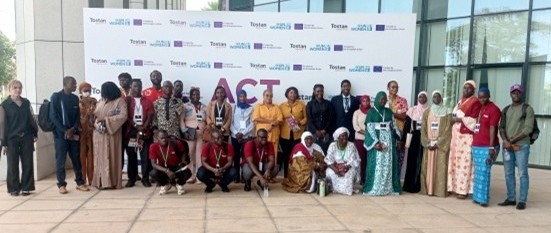
Communities in The Gambia, Senegal and Guinea-Bissau have reaffirmed their commitment to preventing cross-border gender-based violence (GBV) and Female Genital Mutilation/Cutting (FGM/C), pledging to sustain gains made under Tostan's Community Empowerment Programme.
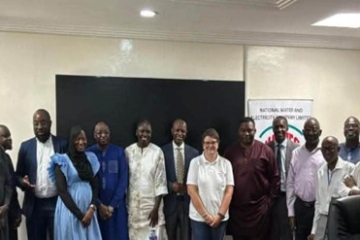
The commitment was made on the sidelines of the ongoing NGO Summit in The Gambia, which brought together policymakers, senior government officials, civil society organisations, development partners and Tostan participants from across the region.
Responding to questions on sustainability and efforts to prevent families from crossing borders to subject girls to FGM, representatives highlighted strong collaboration among border communities and Community Empowerment Committees.
Speaking for participants from Senegal, Mariatou Baldé said the programme had equipped communities with knowledge and tools to protect the rights of women and girls while fostering cooperation among neighbours.
"The project has empowered us tremendously. Through training and awareness, we now fully understand the harmful consequences of gender-based violence and female genital cutting. We work closely with Community Empowerment Committees and local leaders across our borders to ensure these practices are not tolerated," she said.
Baldé said communities in intervention areas maintain regular communication to discourage harmful practices, particularly in border settlements where perpetrators may exploit geographical boundaries.
"We have developed a strong partnership. No one will be allowed to cross into another country to carry out FGM/C or any other harmful practice. We are committed to protecting our children," she added.
Fatou Jola Jabbie, a Tostan participant from The Gambia, said the programme had helped women access the Women Enterprise Fund, improving their financial wellbeing.
"After applying, we were contacted within two weeks and received support. We are now utilising the fund through a revolving scheme, provided to women and repaid within six months so that others can benefit," she said.
Imam Fula Barry, a religious leader from CRR South, said the project complemented religious teachings on health and cleanliness.
"When the project came, some people were against it. However, I encouraged them to listen and understand its purpose. Most communities embraced it, and others have expressed desire for expansion," he said.
Deputy Director of the Women's Bureau, Neneh Touray, said the Ministry established the funds with a long-term vision of transforming them into a Women's Bank to ease women's access to finance.
Tostan National Coordinator Edrisa Keita said the side event was organised to bridge community voices and policymakers, enabling grassroots members to engage directly in local languages including Mandinka, Fula and Wolof.
He said Tostan's community-led approach places people at the centre of development and has generated demand for expansion due to its transformative impact.
Keita expressed hope that the 2026 NGO Summit would culminate in a landmark declaration reflecting the collective voice of Gambian civil society.