Vice President Mohammed B.S. Jallow has reaffirmed The Gambia’s commitment to the principles of the UN Charter, stressing the importance of international cooperation, multilateralism and collective action in addressing global challenges.
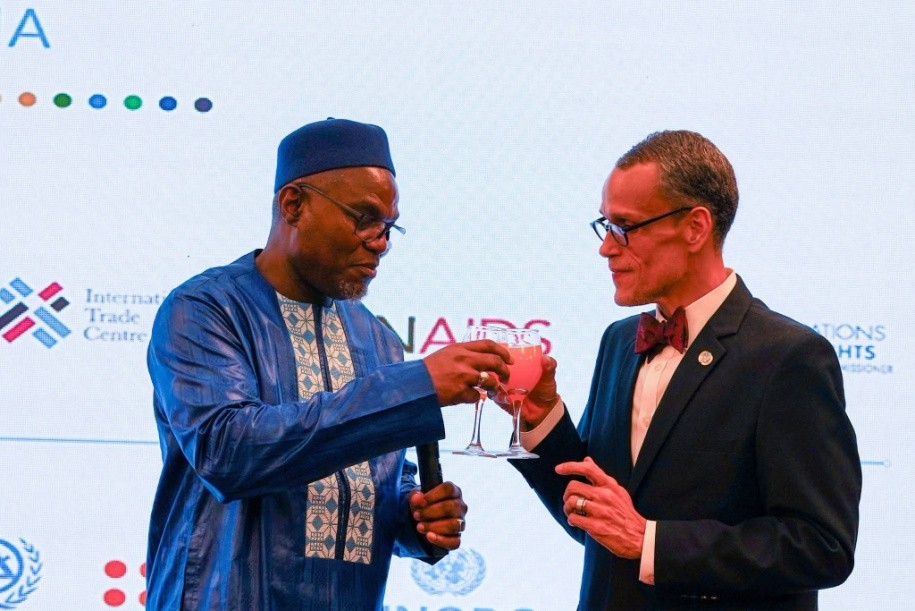
VP Jallow was speaking on Tuesday, October 27, 2026, at a reception marking the 81st United Nations Day at the Sir Dawda Kairaba Jawara International Conference Centre in Bijilo.
Held under the theme, “Restoring Trust, Managing Transformation: A United Nations That Delivers for All,” the celebration renewed calls for shared commitment to peace, human dignity and sustainable development.
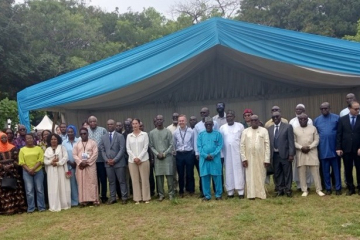
The event drew cabinet ministers, judges, members of the UN System in The Gambia, the diplomatic community and heads of government departments.
“As we celebrate this day, The Gambia joins other countries in reaffirming its commitment to the principles of the UN Charter, which are as relevant today as they were in 1945,” VP Jallow said.
He said development and human rights remain a shared responsibility, especially at a time of global challenges and uncertainties.
He commended the United Nations Country Team for its continued support towards the implementation of the National Development Plan, ‘YIRIWA’ 2023–2027, and the Sustainable Development Goals.
VP Jallow described this year’s celebration as significant, noting it underscores the urgent need for a United Nations that translates commitments into tangible improvements in people’s lives.
He said restoring trust requires transparency, accountability, effective delivery and measurable results, calling for stronger partnerships to advance peace, human rights and inclusive, sustainable development.
“Together, through solidarity and shared responsibility, we can build a better world and leave no one behind,” he said.
For his part, UN Resident Coordinator Karl Frédérick Paul recalled that eighty-one years ago, the world faced one major choice: cooperation over confrontation, dialogue over devastation, and international law over arbitrary exercise of power.
He referenced conflict-torn areas such as Sudan, Gaza, Ukraine and other places where civilians bear the consequences of failures of peace.
“Hunger, displacement and fear continue to affect millions of lives. Climate disruption accelerates while development resources are limited,” he said.
He noted that at a time when humanity needs solidarity, trust is being tested, but that should not weaken commitment to multilateralism. Rather, it should remind us of the need for a UN that is more effective, more responsive and accountable.
“International cooperation does not require countries to agree on everything. It requires them to work together despite their differences to address challenges that no nation can resolve alone,” he said.
He described The Gambia’s 2017 democratic transition as formidable, noting the country has shown that a nation can confront painful chapters of its past without losing sight of its future.
“Through its transitional justice journey that the UN supported, The Gambia has shown great courage towards truth, justice and national healing. The Gambian experience offers important lessons to Africa and to the wider world,” he said.
He said justice must move beyond recommendations to institutions that deliver tangible results, adding that reconciliation does not mean forgetting and accountability is a foundation for national unity.
He commended the government, Ministry of Justice, national institutions and civil society for their determination.
“Also, through its contribution to UN peacekeeping operations, The Gambia has shown consistent confidence and support,” he said, paying tribute to Gambians who have served under the UN flag.
“The Gambia has an opportunity to continue consolidating its own peace and is now a model of democratic resilience for the region and beyond. The UN will remain a partner in turning that promise into reality,” he said.
The event, which featured entertainment and video presentations on UN work, also saw an award presented to Nfamara Cham, one of the longest-serving UN staff in The Gambia, having served since January 6, 1988.