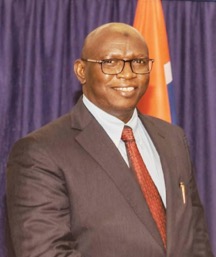
President Adama Barrow has cited the transformation of The Gambia's intelligence service as one of the clearest examples of security sector reforms under his administration.
Speaking in an exclusive interview with QTV journalist Ansumana Nyassi, popularly known as SO Nyassi, Barrow said significant reforms have been implemented, pointing to the evolution of the former National Intelligence Agency (NIA), now the State Intelligence Service (SIS).
"Before, when an NIA operative visited you, the first thing that came to your mind was how to find an escape route. Even if it was a friendly visit, you would still be thinking about how to get away," Barrow said.
"Today, even the Director General of the SIS can visit you and you do not need to worry. These are clear indications that there has been massive security sector reform under my administration compared to previous administrations."
An insider familiar with developments at SIS said one of the Director General's earliest directives upon assuming office was for officers to not merely reduce operational excesses, but eliminate them altogether. The source said that message has remained a defining principle throughout his nearly decade-long tenure.
Barrow's comments come against his key campaign promise before 2017 to reform security architecture and strengthen democratic governance.
Government has emphasized security institutions must operate professionally, respect rule of law and uphold citizens' fundamental rights.
As part of reforms, SIS recently validated the State Intelligence Service Bill, which seeks to replace the legal framework governing former NIA. The Bill is considered a key component of reform agenda.
Speaking on ECOMIG, Barrow said troops continue complementary role alongside Gambian services in maintaining peace and democratic governance.
"ECOMIG forces are not an occupation force. They are here to complement efforts of our national security services and to support The Gambia. They have also contributed to democracy we are enjoying today. When their time to leave comes, they will surely leave," he said.
Barrow reaffirmed commitment to comprehensive reform, citing adoption of national defence policy as milestone in strengthening security governance, aimed at building professional, accountable and democratic institutions operating within law while respecting citizens' rights and consolidating democracy.