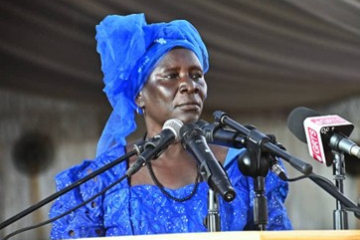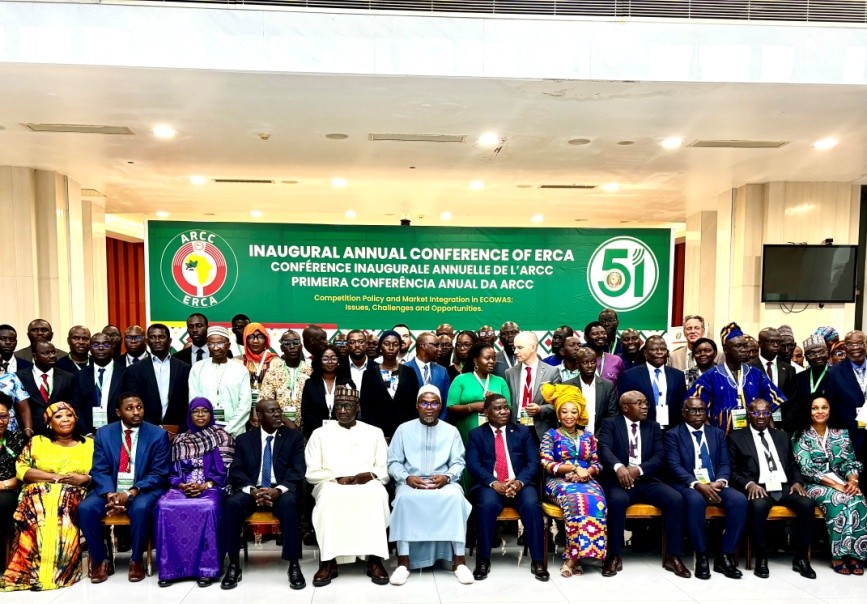
The call was made Tuesday at the inaugural Annual Conference of ERCA, held from September 15 to 17, 2026, at the Sir Dawda Kairaba Jawara International Conference Centre in Banjul, under the theme “Competition Policy and Market Integration in ECOWAS: Issues, Challenges and Opportunities.”
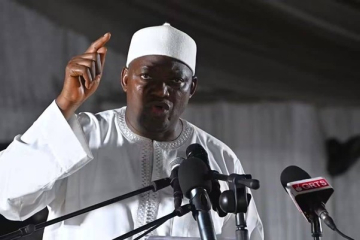
Opening the conference, ECOWAS Commission President, General Birame Diop said regional integration could not be achieved simply by removing trade barriers, stressing that markets must also be open, fair and competitive.
“An integrated market can deliver its full potential only when economic operators are able to compete on equitable terms,” he said, emphasizing that competition policy is a strategic economic instrument that promotes efficiency, innovation and investment while protecting consumers.
He said West Africa could no longer afford to operate as a collection of national markets functioning side by side, arguing that the region must build a genuine regional market where production, processing, financing and distribution can take place across borders with fewer artificial barriers.
According to him, ECOWAS has progressively developed its competition framework since the mid-2000s, including the adoption of the regional competition policy framework in 2007, community competition rules in 2008 and the establishment of ERCA.
ERCA’s headquarters were inaugurated in The Gambia in 2018, while the authority became operational in 2019.
General Diop said significant progress had since been made in strengthening the authority’s legal, institutional and operational framework, but stressed that the priority now should be effective implementation across member states.
He identified agriculture, agribusiness, energy, transport and logistics, telecommunications and health as strategic sectors requiring stronger competition oversight.
He also announced ERCA’s intention to launch the active phase of a market investigation into the cocoa value chain, particularly important to Côte d’Ivoire and Ghana, two of the world’s leading cocoa producers.
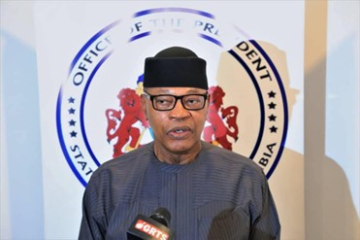
Delivering the keynote address on behalf of President Adama Barrow, Vice President Mohammed B.S. Jallow said competition policy was among West Africa’s most pressing economic priorities as regional economic integration accelerates.
He said fair competition could protect citizens from unfair pricing, create a predictable environment for local enterprises and attract sustainable foreign investment.
“By dismantling unfair practices, we will be better positioned to effectively safeguard the purchasing power of our citizens, particularly low-income families, women and young people seeking opportunities to thrive,” he said.
The Vice President disclosed that The Gambia was advancing legislative reforms, notably the
Competition and Consumer Protection Bill 2026, while major regulations are also expected to come into force this year.
He further announced that the government has formally allocated land for the construction of ERCA’s permanent headquarters and called on the ECOWAS Commission and development partners to support the financing and construction of the regional institution.
The conference is expected to examine market fragmentation, non-tariff barriers, divergent national laws, limited institutional capacity, market concentration and the growing challenges posed by digital markets, artificial intelligence, data governance and online platforms.
Speakers also stressed the need to strengthen cooperation between ERCA, national competition authorities, sector regulators and other regional institutions.
The conference brings together policymakers, regulators, competition authorities, businesses, academics, legal practitioners, economists, development partners and international experts to develop practical recommendations for strengthening competition enforcement and regional market integration.
The ultimate objective, participants emphasized, is to ensure that regional integration translates into tangible benefits for ordinary citizens including lower prices, greater consumer choice, improved quality, stronger small and medium-sized enterprises, increased investment and more employment opportunities.