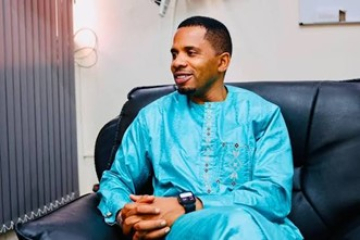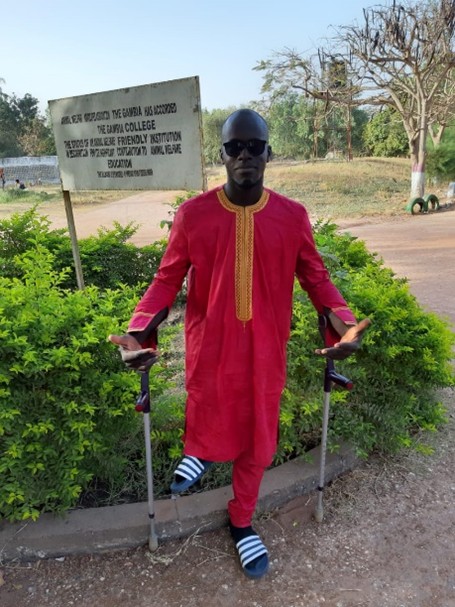
Central River Region’s Persons with disabilities across the region continue to struggle with severe challenges in mobility, education, and representation, according to activist Muhammed Baldeh.
Speaking on behalf of his colleagues, Baldeh described the daily struggles faced by many who are left behind due to lack of support and resources.
Access to basic mobility aids such as crutches, walking sticks, and wheelchairs remains a major hurdle. Baldeh recounted how he was confined at home for nearly five weeks without crutches, making movement impossible. “Even when wheelchairs are available, they come at a cost many cannot afford,” he explained, noting that some are forced to share old or worn-out equipment.
Students with hearing impairments face systemic neglect in schools. Teachers are rarely trained in sign language, leaving deaf students unable to follow lessons or succeed in exams. “How are you expecting them to pass exams when they cannot understand the teacher?” Baldeh asked. Similarly, visually impaired students struggle due to the scarcity of Braille materials and walking sticks.
Beyond education and mobility, Baldeh emphasised the lack of inclusion in decision-making. “We are only informed, but not participating,” he said, pointing out that persons with disabilities are rarely represented in village councils, regional offices, or even at the National Assembly. This exclusion, he argued, perpetuates marginalization and denies them a voice in shaping policies that affect their lives.
Baldeh urged government and regional stakeholders to prioritize the provision of essential materials such as wheelchairs, walking sticks, and braillers. He also called for community-wide training in sign language to foster inclusion. “If people are not learning sign language, how can they communicate with us?” he asked.
He further stressed the need for active representation: “In every region, we need a representative who moves around, sees the challenges, and renders service not just someone sitting in an office waiting for a salary.”
While acknowledging the existence of umbrella bodies such as the Gambia Amputee Association, Baldeh noted that many persons with disabilities remain unaware of where to lodge complaints or seek support. He urged representatives to engage more directly with communities to understand and address their needs.