When President Adama Barrow came into office in 2017, one of the clearest responsibilities before his administration was to fix the electricity crisis. Gambians understood that the sector was weak. They understood that NAWEC needed reform. They understood that electricity generation, transmission, and distribution required serious investment. What they expected was a government that could turn investment into reliable power.
Nine years later, in 2026, the verdict is painful but clear: President Barrow’s administration has failed the electricity sector. This failure cannot be dismissed as a temporary technical problem. It is a failure of leadership, planning, accountability, and national sovereignty. Above all, it is a failure that ordinary Gambians are now forced to live with every day.
Since 2017, hundreds of millions of dollars have been invested, borrowed, granted, or committed to NAWEC and the energy sector. The Gambia Electricity Restoration and Modernization Project alone is valued at about US$165 million. In addition, The Gambia has benefited from the ECOWAS Regional Electricity Access Project of about US$66 million, the African Development Bank-funded Electricity Access Project of about US$17.5 million, the OMVG regional energy project, EU and EIB solarisation funding, foreign power purchase arrangements, Karpowership payments, Senelec imports, fuel financing, and other donor-backed reforms and infrastructure programmes.
These are not minor interventions. They represent a massive financial commitment to a sector that was supposed to be transformed. Yet after all these resources, Gambians are still experiencing prolonged and frequent blackouts. Families are still sleeping in unbearable heat. Businesses are still shutting down because machines cannot run. Communities are still going for more than 24 hours without power, while others spend long nights without electricity. The money came, but the reliable electricity Gambians were promised did not.
That is the central failure. The Barrow administration cannot continue to speak of development while citizens cannot depend on electricity. Development is not measured by ceremonies, speeches, billboards, or ribbon-cutting events. It is measured by whether people can live with dignity. It is measured by whether a student can study at night, whether a mother can preserve food for her family, whether a sick person can rest in comfort, and whether a business can operate without fear of another day of losses.
Across the country, the human cost is real. Families are living through darkness. Children are struggling to study. People are unable to sleep because of the heat. Food is spoiling in homes and shops. These are not mere inconveniences. They are direct attacks on the wellbeing, productivity, and dignity of citizens.
Small businesses are among the worst affected. For welders, no electricity means no work. For carpenters, it means idle machines. For tailors, it means missed deadlines. For barbers, it means customers walking away. For cold store owners, it means rotten meat and fish. For restaurants, it means spoiled food and lost income. For printing shops, mechanics, technicians, metal workers, and small factories, unreliable electricity means uncertainty, debt, and possible closure.
When electricity fails, the economy does not simply slow down. It shuts people out of survival. Every blackout is a loss of productivity. Every outage is a cost passed on to businesses and families. Every failed promise on electricity makes it harder for young entrepreneurs to grow, harder for investors to trust the economy, and harder for ordinary workers to earn a living. A government cannot claim to support business while failing to provide the most basic condition for business to operate.
The crisis also exposes the weakness of the Barrow administration’s energy strategy. The Gambia cannot continue to rely so heavily on external arrangements, imported power, emergency supply contracts, and factors beyond our full control. Regional cooperation is important, but dependency is not sovereignty. Foreign partnerships can help, but they cannot replace the duty of a government to build strong domestic capacity.
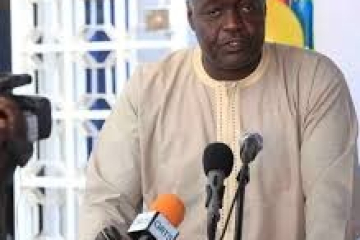
The President’s own comments reveal the problem. In responding to the crisis, he said: “For two years, we were having stable electricity in this country. But because it was stable, it’s good news — no noise. But two weeks, there is a lot of noise going on.” That statement lacks the empathy Gambians deserve from their President. The suffering of citizens is not “noise.” A welder who cannot work is not making noise. A family sleeping in heat is not making noise. A cold store owner losing goods is not making noise. A student studying in darkness is not making noise. They are citizens living through the consequences of government failure.
The President also said these are “technical issues” and that technical issues are “beyond our control.” That explanation is not good enough. Electricity systems are indeed technical, but energy security is a political responsibility. It is the responsibility of government to plan, invest, maintain, communicate, and prepare for technical failures before they become national crises. To say that such issues are beyond control after nine years in power is to admit that the administration has not built the resilience the country needs.
His comparison with America taking power from Canada also misses the point. The issue is not whether countries trade electricity. Many countries do. The issue is whether The Gambia has built enough domestic capacity to protect its people when imported supply fails, when regional systems are disrupted, or when external arrangements become uncertain. Energy trade is useful when it strengthens national security. It becomes dangerous when it replaces national capacity.
A sovereign country must be able to power its own homes, schools, hospitals, industries, and small businesses. Our energy future should not be so vulnerable to external shocks, unpaid foreign obligations, imported supply, emergency barges, and decisions made outside our borders. The Gambia needs enough local production capacity to meet its basic national demand. That should have been one of the central priorities of the past nine years.
This does not mean The Gambia should reject regional power trade. It means we must balance imported electricity with strong domestic generation. Imports should support national supply, not become the backbone of it. Government should urgently increase local generation capacity through solar, wind, battery storage, and properly maintained backup thermal generation while modernizing the grid to reduce losses and improve distribution. Renewable energy must become central to our national strategy because the oil market is volatile, fuel imports are expensive, and dependence on heavy fuel oil exposes citizens to global price shocks. Energy policy must be built around resilience: enough domestic production to meet essential demand, enough renewable capacity to reduce fuel dependence, and enough regional trade to improve flexibility without surrendering sovereignty.
President Barrow’s administration has failed to build that capacity. Instead, Gambians are left with a system that is expensive, fragile, dependent, and unreliable. When the lights go off, the explanation often comes late, if it comes at all. Citizens are left to speculate. Businesses are left to calculate their losses. Families are left to suffer in silence. This lack of communication shows a deeper lack of respect for the people.
A crisis of this magnitude requires clear and honest communication. The President, the Ministry of Petroleum and Energy, and NAWEC owe Gambians proper explanations. What exactly is causing the outages? How long will they continue? Which communities will be affected? What emergency measures are being taken? What is the plan to protect businesses from repeated losses? What long-term solution is being implemented to ensure this does not continue?
Gambians deserve answers, not excuses. NAWEC’s explanations at press conferences are not enough. Technical language cannot cover a political failure. The government must stop treating citizens as passive victims of a crisis they did not create. People have a right to know what is happening in a sector that affects every part of their daily life.
The PROGRESS vision is clear. Government must be people-centered, transparent, accountable, and rooted in responsible management of public resources. The PROGRESS manifesto recognizes that The Gambia’s development requires reliable and affordable power, comprehensive reform of NAWEC, investment in renewable energy, reduction of reliance on expensive fuel imports, and upgrading of the national grid to meet demand and support industrial activity.
That is the standard The Gambia needs: not publicity, but performance; not excuses, but accountability; not dependency, but self-reliance. After nine years, President Barrow cannot continue to blame the past. He has had the time. He has had the projects. He has had the financing. He has had the donor support. He has had the foreign partnerships. If after all of that Gambians still cannot rely on electricity, then the conclusion is unavoidable.
The Barrow administration has failed the electricity sector.
Electricity is not a privilege. It is a necessity. It is the foundation of health, education, business, safety, productivity, and dignity. A government that cannot keep the lights on after nine years cannot honestly claim to be delivering development.
Billions have gone into the sector, but Gambians are still paying the price in heat, lost income, spoiled goods, and broken trust. The lights going out across The Gambia are more than a technical problem. They are a symbol of a government that has failed to turn investment into results, promises into delivery, and power projects into power for the people.