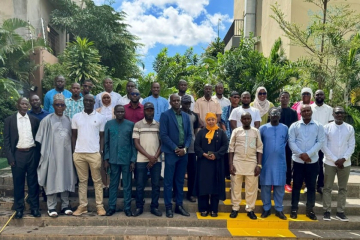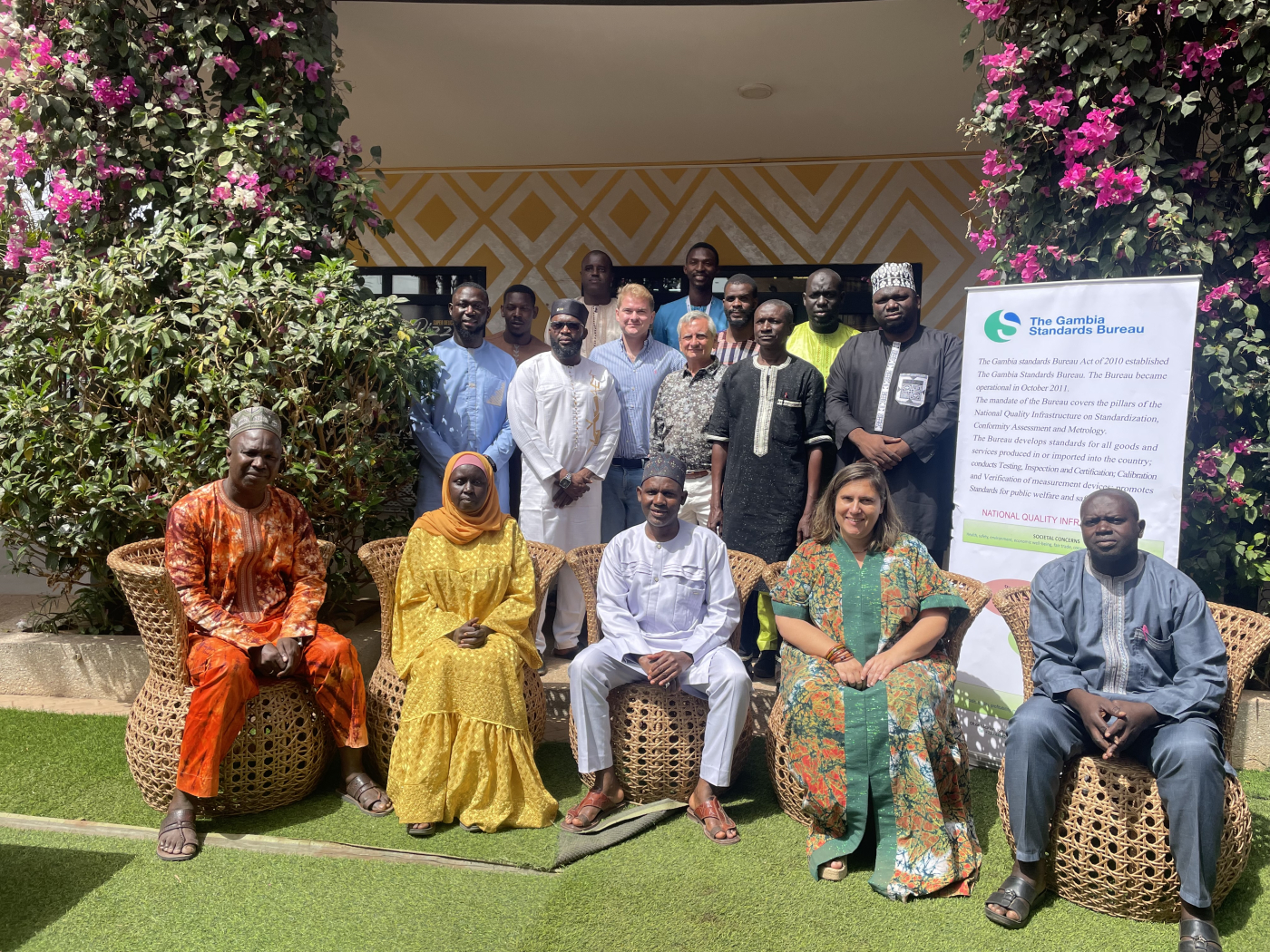
The inauguration held during a meeting brought together stakeholders from across the agricultural sector and form parts of efforts designed to formalise and regulate the production and use of organic fertiliser in the country.
The meeting also outlined plans to establish a technical working group that will review reference materials and draft standards for consideration by the subcommittee.Further, the development of organic fertiliser standards is part of broader efforts to support sustainable agricultural practices, improve soil health, and enhance productivity among farmers.
The initiative follows an agreement reached between TGSB and partners including Mbolo Association, CISS, and WasteAid with support from the European Union under the Civil Society Green Advocacy for Organic Fertiliser programme.
At the ceremony, Dr. Faye Manneh, chairperson of the Food and Agriculture Technical Committee, underscored the importance of organic fertiliser in improving soil fertility and crop production.
“The organic matter content of Gambian soils is very low, and continuous application of inorganic fertilizer is causing problems in terms of soil pollution and degradation,” she said.
She explained that a wide variety of organic fertiliser in the country is being introduced into the country without clear information on their composition or application rates.
“Without standards, farmers may not be able to know the nutrient level in those fertilizer or the different grades to be applied,” she added, citing disagreements among stakeholders on appropriate application rates due to the lack of standardisation.
Emile Henri Van Caenegem of the European Union noted that several EU-funded projects in The Gambia are focused on promoting organic fertiliser production and advocacy through partner organizations.
“We see really the need in The Gambia. The soils here are very sandy with low capacity for water and nutrient retention, so there is a need to enhance the organic matter.”
He observed that farmers are increasingly recognising the benefits of organic fertiliser, including lower costs and opportunities to generate income through waste recycling.
“It is a circular economy approach where vegetable and livestock waste can be reused to produce fertilizer,” he said.
For his part, Papa Secka, Director General of TGSB, noted that the establishment of the sub-committee is in line with the Bureau’s mandate to develop standards through technical committees.
He explained that the Agriculture and Food Technical Committee already has sub-committees on cereals and horticulture, and that the new sub-committee will focus specifically on organic fertiliser and related products.
“We have many producers and importers of organic fertilizer, but the methodologies and outputs differ, which creates challenges in quality,” he said.
The absence of standards, he observed, makes it difficult to determine appropriate application rates and to assess product quality.
“Government procurement is not based on uniform specifications, so evaluation depends on what suppliers claim,” he said. “Standards will provide objective criteria for assessing quality and value for money.”
The sub-committee, he added, will now work with a technical working group to review international standards and develop national guidelines tailored to The Gambia.
“All stakeholders are expected to contribute to ensure the standards are usable and meet expectations,” he said.