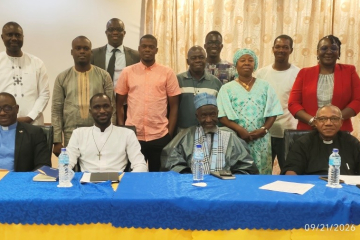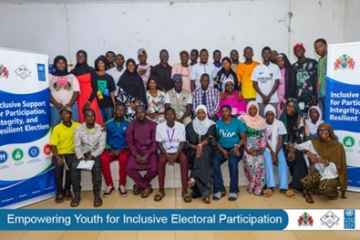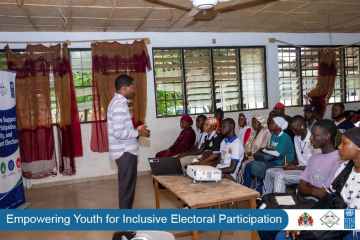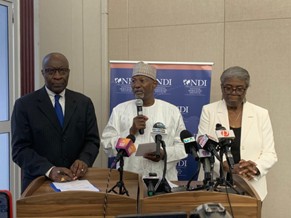
The NDI delegation, which engaged government officials, the Independent Electoral Commission (IEC), political parties, civil society and the media, declared that the transparency and credibility of the upcoming vote will serve as “an important marker of the health of the country’s democracy and a determinant of its future trajectory.”
Since the landmark 2016 election ended Yahya Jammeh’s two‑decade rule, The Gambia has witnessed “significant improvements in political, civic, and media freedoms.” Yet, Ambassador Linda Thomas‑Greenfield, former U.S. Ambassador to the United Nations and head of the NDI mission, cautioned that legal reforms remain “a work in progress,” with constitutional change stalled despite overwhelming public demand.
The 2026 election will be conducted under the 1997 Constitution and the Elections Act of 2025. While the Act introduced positive provisions — such as granting the IEC authority over police officers assigned to electoral security and strengthening dispute resolution mechanisms — it failed to address key recommendations from the 2021 polls. These include measures to improve accessibility for persons with disabilities and ending the controversial use of “attestations” in voter registration.
Diaspora voting also remains unresolved. Although the 1997 Constitution provides for Gambians abroad to vote, draft provisions were removed from the 2025 Act, forcing the IEC to halt preparations.
Ambassador Thomas‑Greenfield noted that preparations are advancing, with voter registration reviews set to begin in the Revising Courts. Learning from past mistakes, the IEC has created new units focused on legal compliance, disability access, and women’s participation. To rebuild trust, the Commission pledged to project results on public screens at collation centres.
The mission welcomed the IEC’s improved communication under its new chairman, including monthly briefings with political parties and civil society. However, it urged the Commission to expand outreach on social media to engage young voters.
Concerns persist over underage and non‑citizen registrations linked to attestations, with reports of fraudulent issuance by some local leaders. At the time of the mission, 1,694 objections awaited adjudication in the Revising Courts, whose sessions had yet to commence.
Beyond electoral logistics, NDI highlighted frustration over stalled constitutional reform. Two attempts to pass a new charter failed in 2020 and 2024, leaving the Jammeh‑era 1997 Constitution intact. It contains no presidential term limits, despite surveys showing 86% of Gambians support them.
The mission also warned that colonial‑era and autocratic laws remain in force, notably the Public Order Act of 1961, which requires police permits for demonstrations and grants broad discretionary powers to deny them.
Under the current Constitution, the president retains unchecked authority to appoint the IEC chair, Chief Justice, five National Assembly members and cabinet ministers — a concentration of power seen as undermining institutional independence.
As Gambians prepare for a decisive vote, NDI’s message is clear: the credibility of the 2026 election will not only test the nation’s democratic resilience but also shape its political destiny.