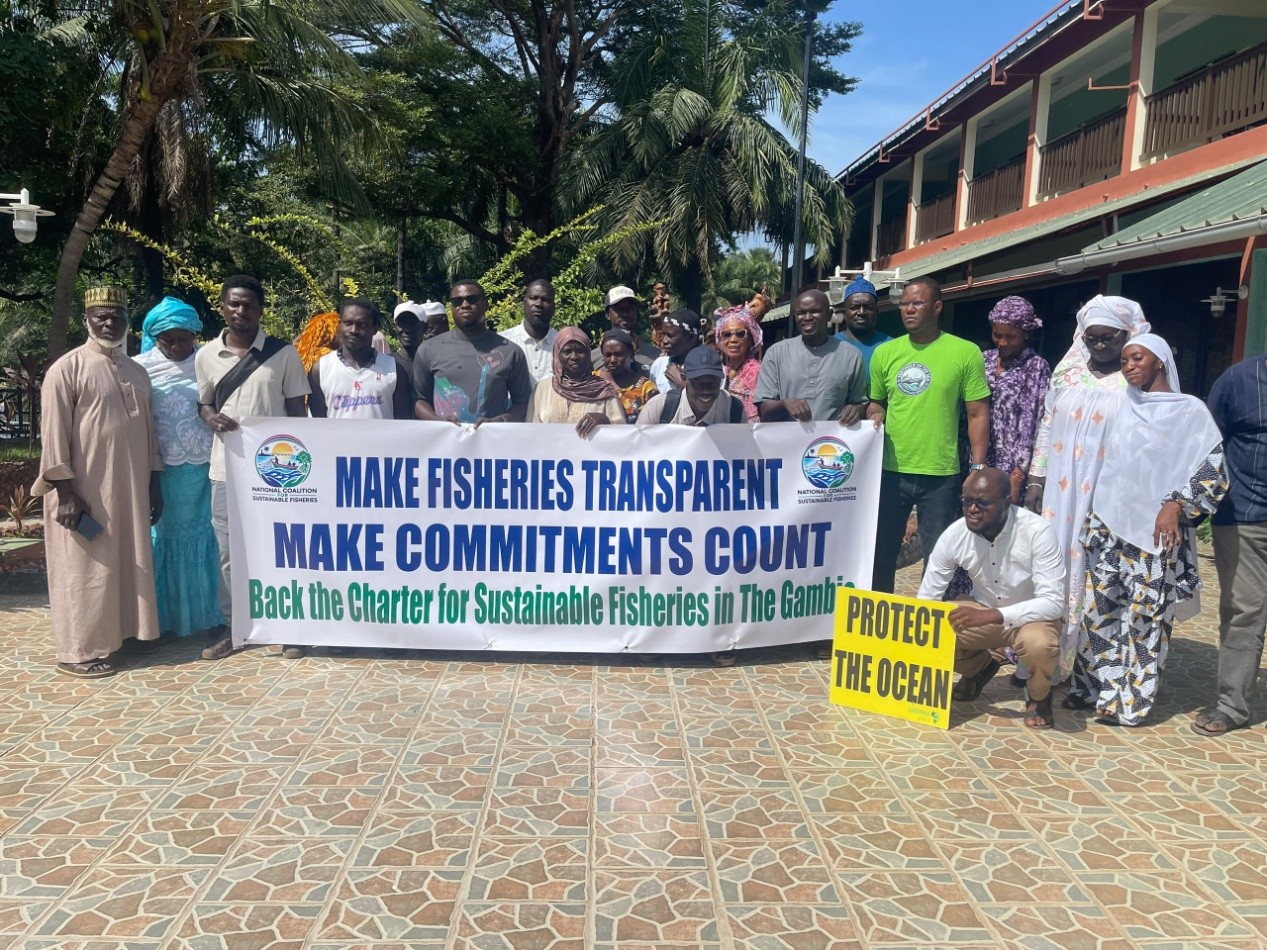
The National Coalition for Sustainable Fisheries in The Gambia has called for a freeze on the issuance of new industrial fishing licences, warning that increasing pressure on marine resources threatens fish stocks, food security and the livelihoods of local fishing communities.
The coalition said reducing fishing pressure, strengthening enforcement and allowing fish stocks to regenerate were critical to protecting the country’s fisheries resources for future generations.
Dawda Foday Saine, Secretary General of the African Confederation of Artisanal Fisheries Professional Organisations and coordinator of the coalition, said the proposed restrictions form part of broader conservation measures to allow depleted fish stocks to recover.
He explained that closed fishing seasons and protected fishing areas provide marine resources with a biological rest period to reproduce and regenerate.
Mr Saine also raised concerns over illegal, unreported and unregulated fishing, fishmeal production and competition between industrial fishing vessels and small-scale fishermen.
He particularly highlighted the overexploitation of bonga and sardinella, which are important sources of affordable food for Gambians.
He questioned the basis of fisheries agreements in the absence of adequate information on the country’s fish stocks, catches and production, arguing that such agreements should be guided by scientific evidence and the availability of surplus resources.
Meanwhile, Mamadou Kaly Ba, Ocean Campaigner at Greenpeace Africa, said the coalition was established to unite civil society organisations and fishing communities in addressing challenges affecting the country’s marine resources.
He disclosed that the coalition had developed a Sustainable Fisheries Charter containing 13 commitments towards achieving sustainable fisheries by 2030.
According to him, the Charter will be presented to presidential candidates ahead of the December 5 elections, urging them to endorse its proposals and commit to implementation if elected.
The demands include public disclosure of authorised fishing vessels and agreements, prioritising fish for human consumption, and strengthening the participation of women, young people and fishing communities in fisheries decision-making.
The coalition also plans to establish a committee to engage candidates and monitor their commitments, while continuing advocacy to ensure accountability.