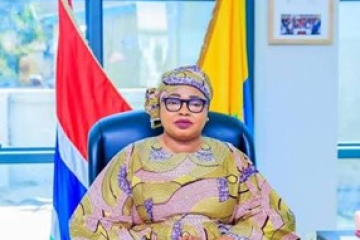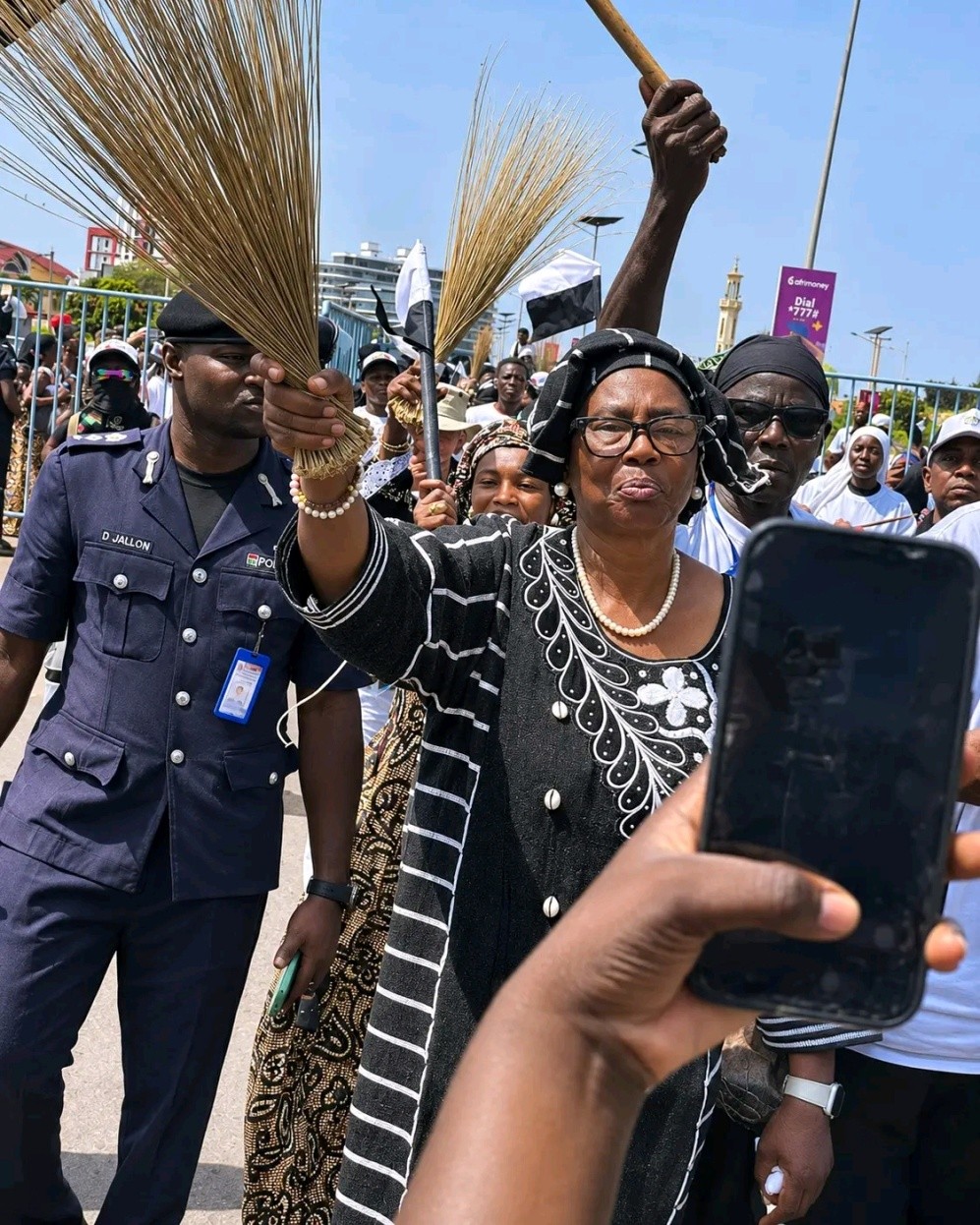
Former Vice President Dr. Isatou Touray on Wednesday, 4 November 2026, formally filed her nomination papers with the Independent Electoral Commission (IEC) as an independent presidential aspirant, setting up a direct contest against her former boss, President Adama Barrow.
Touray served as Vice President from 15 March 2019 until her removal in a cabinet reshuffle on 4 May 2022.
Day two of the nomination exercise also saw Democratic Party aspirant Yusupha A. Dumbuya file his papers, while the Gambia Action Party informed the IEC it would not be available for nomination as scheduled.
Touray was appointed Vice President to replace Ousainou Darboe, leader of the opposition United Democratic Party (UDP), who is also expected to file in the coming days.
She now returns not as an insider, but as an independent candidate asking voters to judge her on her record and her willingness to account for it.
Speaking after filing, Touray thanked the IEC and her supporters and accepted the nomination “with humility, a deep sense of responsibility, and an unwavering commitment to the people of The Gambia.” She noted her nomination is not yet final, as she has been asked to submit proof of secondary education, and she awaits the IEC’s decision within two days.
Rather than distance herself from the Barrow administration, Touray did the opposite.
“I served as Vice President under President Barrow, and I do not seek to distance myself from the government in which I served. I was part of that government, and I accept my share of responsibility for what it achieved, and importantly, what it failed to deliver,” she said.
That admission framed her critique of unfulfilled transition promises. She recalled that the 2016 coalition committed to a three-year transitional presidency, followed by constitutional and institutional reforms. That commitment, she said, was abandoned in favour of a full five-year term.
Barrow later supported a two-term limit, she added, yet constitutional reform failed and the country was left without the safeguards promised. The dispute over whether term limits should apply retrospectively, she said, was central to the failure of the 2020 draft constitution.
“These are not simply historical details. They go to the heart of public trust. Constitutional reform was one of the central promises of the political transition,” she said.
Touray linked that failure to daily life, saying too many poor and rural families still see no meaningful improvement in livelihoods and services. Development, she argued, must be measured not by headline figures but by whether people can feel the difference — a farmer with reliable support, a young person with genuine opportunity at home.
“This election must be about the future of Gambians, particularly the young people, not simply about the individual seeking to lead,” she said.
Her test will now move from the IEC filing desk to voters: whether her message of shared responsibility can distinguish her from the government she once helped lead.