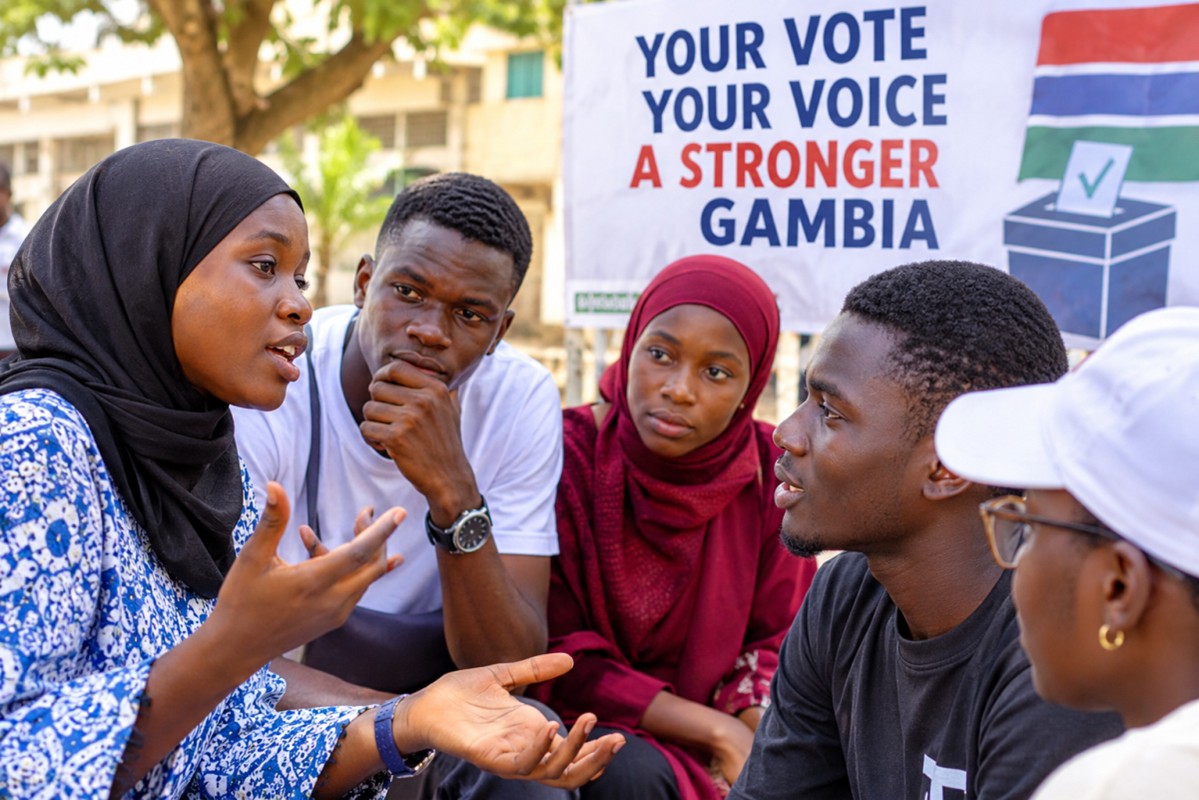
As The Gambia prepares for another presidential election, young people are looking beyond campaign promises, asking whether democracy can deliver the opportunities, accountability and representation they want.
For some, voting remains a way to influence the country’s future. For others, repeated disappointments have raised doubts about whether elections can bring meaningful change.
Omar Sarr has decided not to vote. He said successive elections and changes in leadership had not brought the improvements many young people expected, particularly in jobs and economic opportunities.
“Politicians remember young people when they need votes but often forget about them after elections,” he said.
Sarr said he still follows politics and might reconsider if leaders became more accountable, delivered on promises and included young people in decision-making beyond campaigns.
Haddy Ngum, who intends to vote for the first time, sees participation as a civic responsibility.
“Voting may not solve all our problems immediately, but it gives us an opportunity to influence who makes decisions on our behalf,” she said.
She wants leaders to address unemployment, quality education, skills training and the rising cost of living. She also urged young people to verify information before sharing it and respect supporters of other parties.
For Ismaila Fofana, who has voted once, the challenge is making politics feel relevant to everyday struggles. Unemployment, low wages and daily expenses, he said, can make politics seem less important to young people trying to survive. He said leaders must show practical commitment through policies on jobs, education, internet costs and business support.
Political analyst Essa Njie said young people’s confidence in elections is linked to whether governance makes them feel included. When jobs, economic policies and decision-making fail them, they begin to question voting.
He warned that disengagement could weaken advocacy, civil society and accountability, and urged parties to create meaningful roles for youth, women and persons with disabilities.
Civic education advocate Alieu Jobe said participation should not be measured by voting alone. Civic education, youth-led initiatives, digital engagement and leadership opportunities can make participation more meaningful, beyond election day.
Figures from the 2021 voter registration showed people aged 18 to 35 accounted for 57 per cent of 962,157 registered voters.
The latest 2026 registration puts voters at 1,146,474, representing 47.32 per cent of the 2,422,712 population recorded in the 2024 census.
For the young people interviewed, democracy must deliver more than choosing leaders. It must deliver opportunity, accountability and leaders who listen.