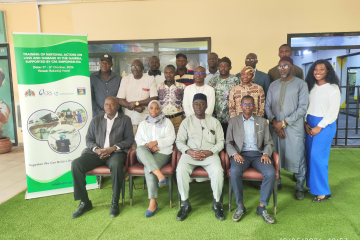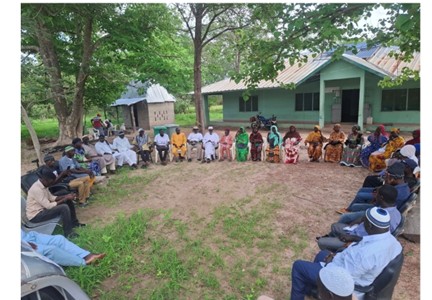
The capacity-building initiative was organised by the West Africa Biodiversity Conservation Network (WABIONET), The Gambia Chapter, under a project funded by the Global Environment Facility (GEF) Small Grants Programme.
The project, titled “Strengthening Integrated Field and Forest Fire Management and Assisted Natural Regeneration in Kiang West National Park, and Promoting Green Enterprise Development in Peripheral Villages of the National Park,” seeks to support communities to sustainably manage natural resources while developing alternative income-generating opportunities.
As part of the intervention, thirty (30) participants drawn from KWNP Site Management Committees, Village Development Committees (VDCs), village heads and extension agents received training on Enterprise Development using the Market Analysis and Development (MA&D) approach.
The training focused on developing community-based enterprises centred on Non-Wood Forest Products (NWFPs), with the goal of helping communities dependent on the park’s resources to establish sustainable businesses that contribute to conservation and economic resilience.
Speaking on the initiative, WABIONET Business Development Trainer, Mr Demba Sanyang, said the programme is designed to improve access to business, marketing and financial services for Site Management Committees to ensure the long-term sustainability of locally controlled enterprises.
“The core services earmarked are for the KWNP Site Management Committees to have improved access to business, marketing and financial services for the long-term sustainability of their locally controlled enterprises,” Mr Sanyang explained.
He added that the entrepreneurial support component will focus on establishing and strengthening enterprises such as beekeeping and Guinea fowl farming among Site Management Committees in Batelling, Dumbutu, Bajana, Kuli Kunda and Jali villages in Kiang West District.
The training also placed emphasis on empowering women and young people, who formed a significant part of the participants. According to WABIONET, 53 percent of the trainees were women and youth, reflecting the project’s commitment to inclusive participation and ensuring that vulnerable groups benefit from conservation-related economic opportunities.
Participants expressed high satisfaction with the training, noting that it addressed an important capacity gap in sustainable enterprise development and provided practical knowledge to improve livelihoods within communities surrounding the national park.
The programme resulted in the development of five draft Enterprise Development Plans (EDPs), focusing on beekeeping and Guinea fowl farming enterprises. These plans are expected to guide the establishment and management of community-based businesses linked to conservation and sustainable use of natural resources.
The draft Enterprise Development Plans will undergo validation within two weeks, following feedback from training participants after consultations with their respective communities.
The initiative forms part of broader efforts to strengthen community participation in environmental protection while creating sustainable livelihood opportunities for people living around Kiang West National Park.
Through improved business skills, access to enterprise support and increased involvement of local communities, WABIONET aims to promote a conservation model where protecting biodiversity goes hand in hand with improving the socio-economic wellbeing of communities.