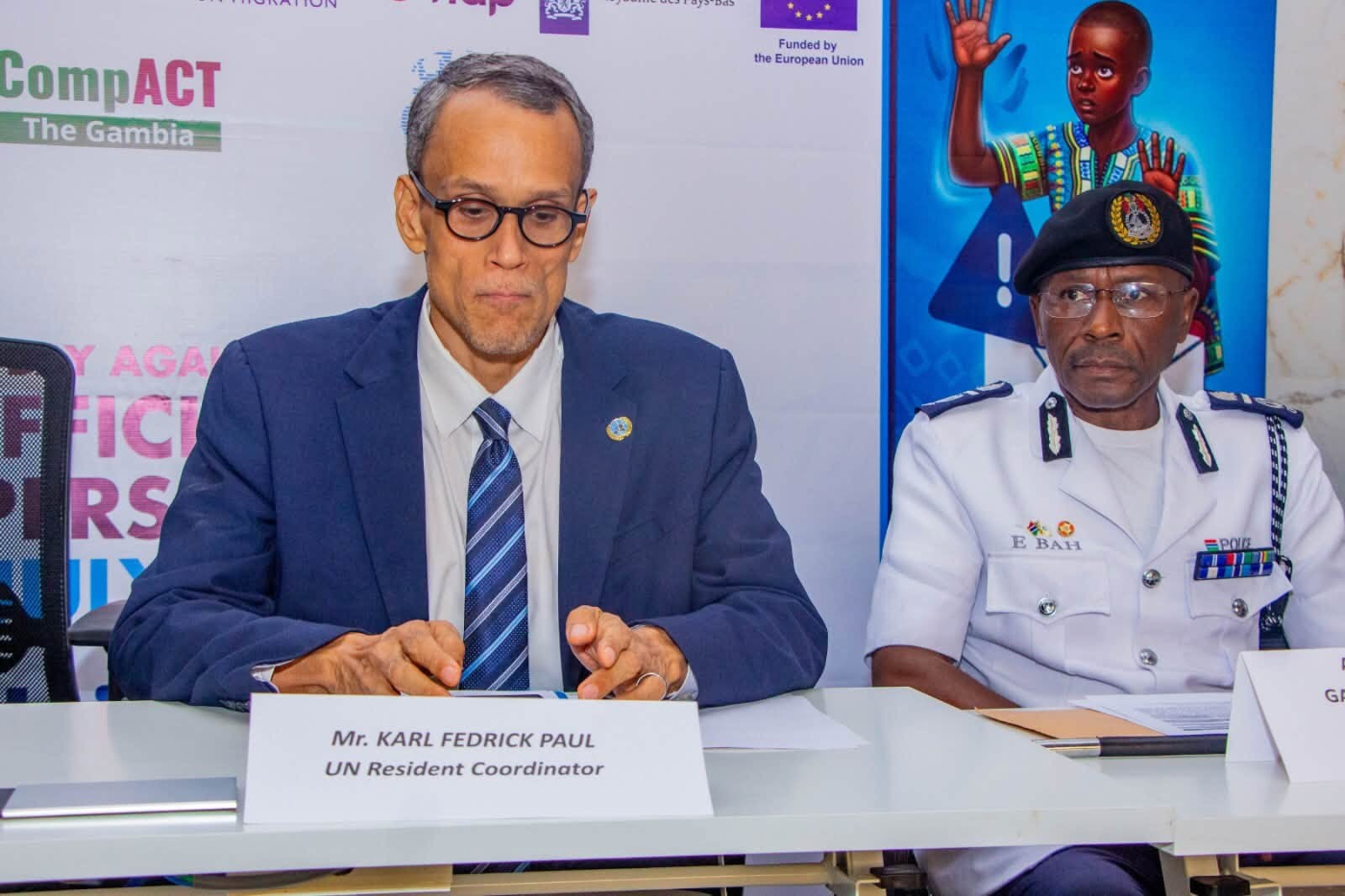
The UN official reminded that the day serves as a reminder that trafficking continues to evolve in form and method, noting that criminal networks are increasingly using digital platforms, deceptive online recruitment, fraudulent employment offers, fake educational opportunities, and other sophisticated scams to target vulnerable people.
“What often begins online as a promise of a better future can quickly become a reality of exploitation, violence and the loss of freedom. As trafficking evolves, we too must adapt our response,” he stated.
The UN Resident Coordinator noted that the newly developed National Action Plan against Trafficking in Persons, (NAP-TIP), and the National Training Manual provide a shared roadmap to guide anti-trafficking efforts over the next five years.
He outlined that trafficking in persons is not only a criminal justice issue, but also a human rights issue with important dimensions of migration, development, gender equality, and child protection.
Addressing it, he said, requires a coordinated, whole-of-society and whole-of-government response, adding that no single institution can effectively tackle the crime alone.
“Each UN agency brings its comparative advantage to strengthening institutions, protecting victims and survivors, promoting human rights, and addressing the root causes that increase vulnerability to trafficking,” he said.
He maintained that the success of the NAP-TIP and Training Manual will be measured by stronger institutions, better protection and support for victims and survivors, increased public awareness, effective investigations and prosecutions, and stronger partnerships.
However, he noted that implementation will require sustained political commitment, adequate resources, and continued collaboration from government, the United Nations, international development partners, the private sector, civil society, the media, and communities.
He said the process must remain centered on the human rights, dignity, and needs of victims and survivors.
Mr. Paul reaffirmed the United Nations’ full commitment to supporting The Gambia as it begins implementing the National Action Plan over the next five years, and commended the government and other stakeholders for the milestone.